8QZB image
Deposition Date 2023-10-26
Release Date 2025-08-06
Last Version Date 2025-08-20
Entry Detail
PDB ID:
8QZB
Keywords:
Title:
D-2-hydroxyacid dehydrogenase (D2HDH) from Haloferax mediterranei in complex with 2-ketohexanoic acid, NAD+ and chloride (1.16 A resolution)
Biological Source:
Source Organism:
Method Details:
Experimental Method:
Resolution:
1.16 Å
R-Value Free:
0.16
R-Value Work:
0.13
Space Group:
P 1
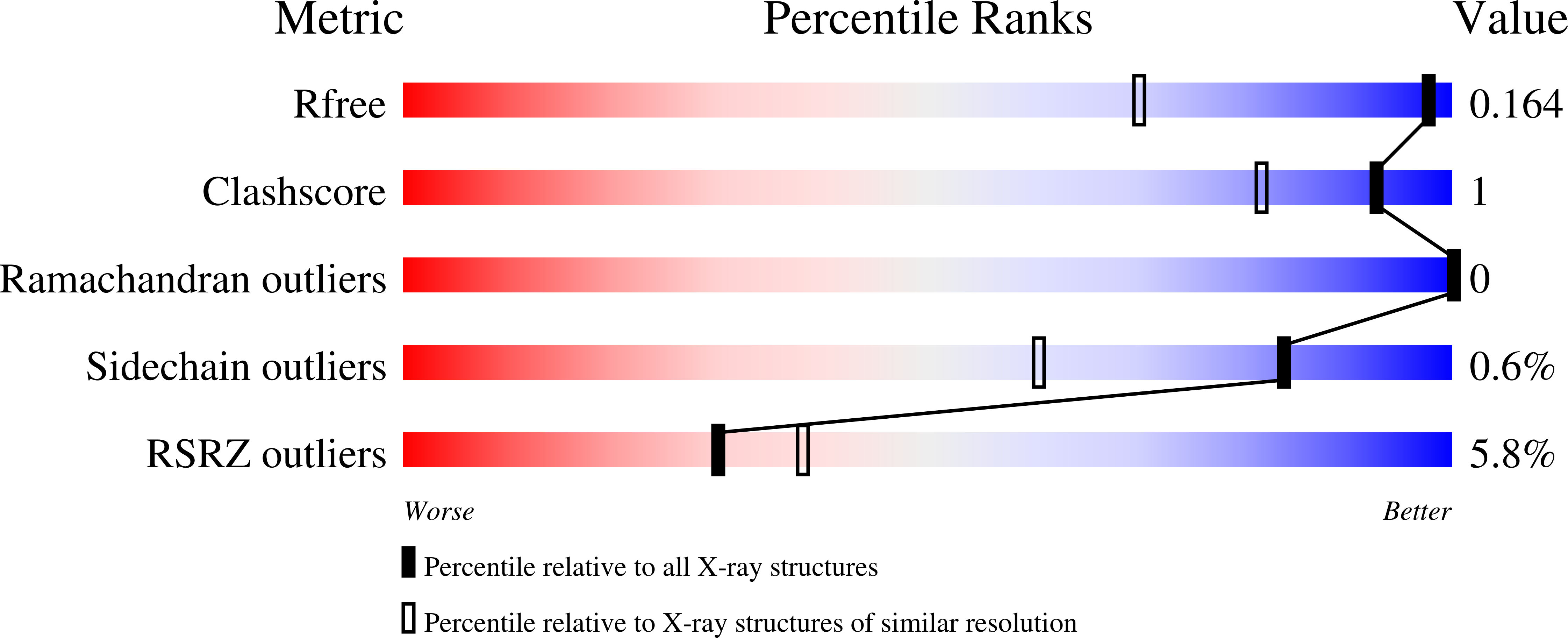
Macromolecular Entities
Structures with similar UniProt ID
Protein Blast
Polymer Type:polypeptide(L)
Molecule:D-2-hydroxyacid dehydrogenase
Gene (Uniprot):ddh
Chain IDs:A, B, C, D
Chain Length:308
Number of Molecules:4
Biological Source:Haloferax mediterranei
Primary Citation
Potassium binding by carbonyl clusters, halophilic adaptation and catalysis of Haloferax mediterranei D-2-hydroxyacid dehydrogenase.
Commun Biol 8 1170 1170 (2025)
PMID: 40770045 DOI: 10.1038/s42003-025-08587-7

Abstact

Enzymes from salt-in halophiles are stable in conditions of low water activity with applications in chiral synthesis requiring organic solvents, yet the origins of such stability remains poorly understood. Here we describe the molecular basis of the reaction mechanism and dual NADH/NADPH-specificity of D2HDH, a 2-hydroxyacid dehydrogenase from the extreme halophile Haloferax mediterranei, an organism whose proteins have to remain active in high intracellular concentrations of KCl. Halophilic adaptations of D2HDH include the expected acidic surface and a reduction in hydrophobic surface resulting from a lower lysine content. Structure determination of crystals of D2HDH grown with KCl showed that bound K+ ions were coordinated predominantly by clusters of main chain protein carbonyl ligands, with no involvement of the numerous exposed surface carboxyls. Structural comparisons identified similar sites in other halophilic proteins suggesting that the generic use of carbonyl clusters to coordinate K+ ions may also contribute in a carboxylate-independent way to the stabilisation of the folded state of the protein in its high salt environment.

Legend

Protein

Chemical

Disease

Primary Citation of related structures
Feedback Form
Name
Email
Institute
Feedback