8QVP image
Deposition Date 2023-11-02
Release Date 2025-08-13
Last Version Date 2026-02-11
Entry Detail
PDB ID:
8QVP
Keywords:
Title:
Cryo-EM structure of human islet amyloid polypeptide (hIAPP) mutant S29P, polymorph 1
Biological Source:
Source Organism(s):
Homo sapiens (Taxon ID: 9606)
Method Details:
Experimental Method:
Resolution:
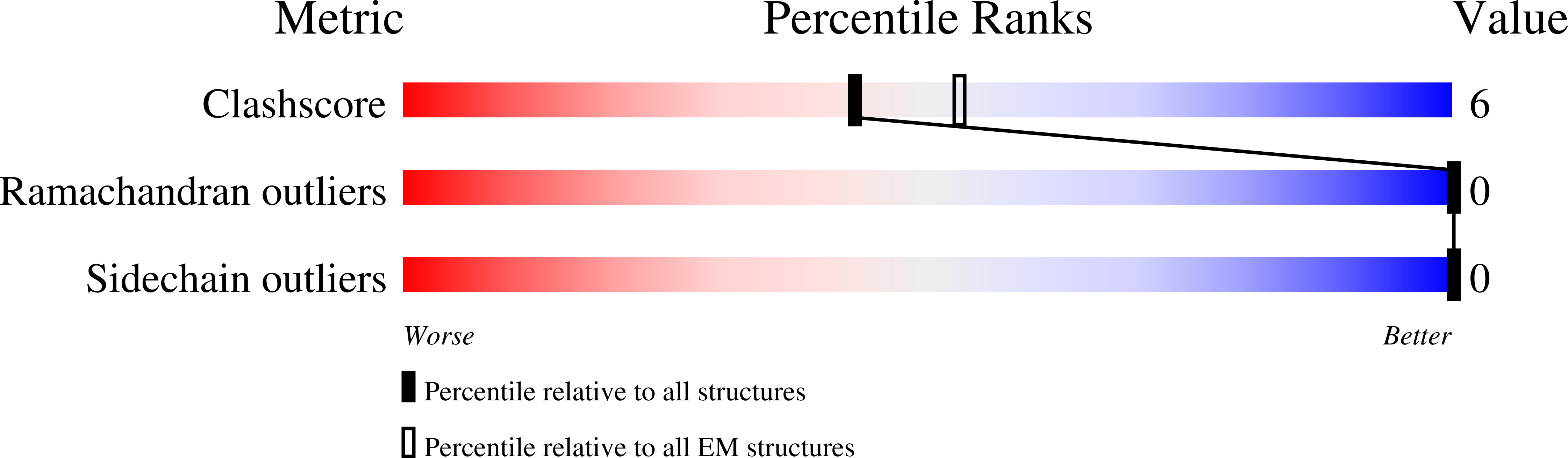
3.75 Å
Aggregation State:
FILAMENT
Reconstruction Method:
HELICAL
Macromolecular Entities
Structures with similar UniProt ID
Protein Blast
Polymer Type:polypeptide(L)
Molecule:Islet amyloid polypeptide
Gene (Uniprot):IAPP
Mutagens:S29P
Chain IDs:A (auth: H), B (auth: I), C (auth: J), D (auth: K), E (auth: L), F (auth: M), G (auth: N), H (auth: O), I (auth: P), J (auth: Q)
Chain Length:38
Number of Molecules:10
Biological Source:Homo sapiens
Ligand Molecules
Primary Citation
Cryo-EM exposes diverse polymorphism in IAPP mutants to guide the rational design of peptide-based therapeutics.
J.Mol.Biol. 437 169405 169405 (2025)
PMID: 40850490 DOI: 10.1016/j.jmb.2025.169405

Abstact

In the pursuit of potential therapeutic agents for type 2 diabetes, non-amyloidogenic forms of the human Islet Amyloid Polypeptide (hIAPP) containing site-specific mutations are of significant interest. In the present study, we dissect the three proline mutations present in the core region of the non-amyloidogenic rat IAPP into single-point mutations at A25P, S28P, and S29P sites. We apply high-resolution cryo-electron microscopy and solve the structures of 6 polymorphs formed by these mutants, revealing the peptide's self-assembly patterns and identifying critical interactions that reinforce these structures in the presence of the β-sheet breaker. A unique trimeric aggregate with C3 symmetry was identified in the A25P mutant, which we resolved with a 3.05 Å resolution, while asymmetric trimeric assemblies were observed in the other mutants. Guided by the high-resolution structural models of A25P and S28P fibrils obtained in our study, we successfully designed novel non-amyloidogenic mutants of IAPP with potential therapeutic value. Our findings demonstrate the immense potential of structure-based approaches in developing effective therapeutics against amyloid diseases.

Legend

Protein

Chemical

Disease

Primary Citation of related structures
Feedback Form
Name
Email
Institute
Feedback