8QU2 image
Deposition Date 2023-10-13
Release Date 2024-03-20
Last Version Date 2024-11-13
Entry Detail
PDB ID:
8QU2
Keywords:
Title:
NF-YB/C Heterodimer in Complex with a 16-mer NF-YA-derived Peptide Stabilized with C8-Hydrocarbon Linker
Biological Source:
Source Organism(s):
Homo sapiens (Taxon ID: 9606)
Expression System(s):
Method Details:
Experimental Method:
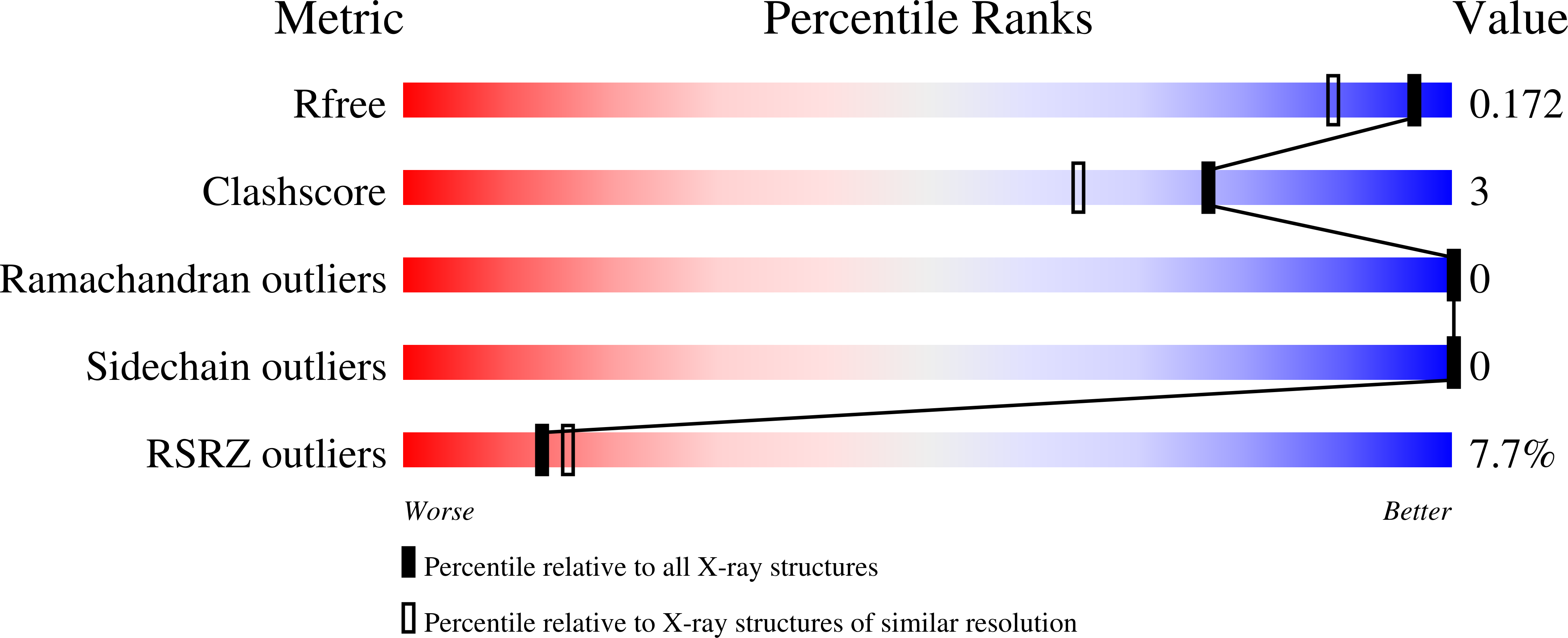
Resolution:
1.45 Å
R-Value Free:
0.17
R-Value Work:
0.14
R-Value Observed:
0.14
Space Group:
P 21 21 21
Macromolecular Entities
Structures with similar UniProt ID
Protein Blast
Polymer Type:polypeptide(L)
Molecule:Nuclear transcription factor Y subunit alpha
Gene (Uniprot):NFYA
Chain IDs:A
Chain Length:18
Number of Molecules:1
Biological Source:Homo sapiens
Structures with similar UniProt ID
Protein Blast
Polymer Type:polypeptide(L)
Molecule:Nuclear transcription factor Y subunit beta
Gene (Uniprot):NFYB
Chain IDs:B
Chain Length:95
Number of Molecules:1
Biological Source:Homo sapiens
Structures with similar UniProt ID
Protein Blast
Polymer Type:polypeptide(L)
Molecule:Nuclear transcription factor Y subunit gamma
Gene (Uniprot):NFYC
Chain IDs:C
Chain Length:96
Number of Molecules:1
Biological Source:Homo sapiens
Modified Residue
Compound ID Chain ID Parent Comp ID Details 2D Image
MK8 A LEU modified residue
Primary Citation

Abstact

Transcription factors (TFs) play a central role in gene regulation, and their malfunction can result in a plethora of severe diseases. TFs are therefore interesting therapeutic targets, but their involvement in protein-protein interaction networks and the frequent lack of well-defined binding pockets render them challenging targets for classical small molecules. As an alternative, peptide-based scaffolds have proven useful, in particular with an α-helical active conformation. Peptide-based strategies often require extensive structural optimization efforts, which could benefit from a more detailed understanding of the dynamics in inhibitor/protein interactions. In this study, we investigate how truncated stapled α-helical peptides interact with the transcription factor Nuclear Factor-Y (NF-Y). We identified a 13-mer minimal binding core region, for which two crystal structures with an altered C-terminal peptide conformation when bound to NF-Y were obtained. Subsequent molecular dynamics simulations confirmed that the C-terminal part of the stapled peptide is indeed relatively flexible while still showing defined interactions with NF-Y. Our findings highlight the importance of flexibility in the bound state of peptides, which can contribute to overall binding affinity.

Legend

Protein

Chemical

Disease

Primary Citation of related structures
Feedback Form
Name
Email
Institute
Feedback