8QGV image
Deposition Date 2023-09-05
Release Date 2024-09-11
Last Version Date 2025-03-26
Entry Detail
PDB ID:
8QGV
Keywords:
Title:
Human Carbonic Anhydrase I in complex with 4-(5-acetyl-6-methyl-2-oxo-1,2,3,4-tetrahydropyrimidin-4-yl)benzenesulfonamide
Biological Source:
Source Organism:
Homo sapiens (Taxon ID: 9606)
Host Organism:
Method Details:
Experimental Method:
Resolution:
1.84 Å
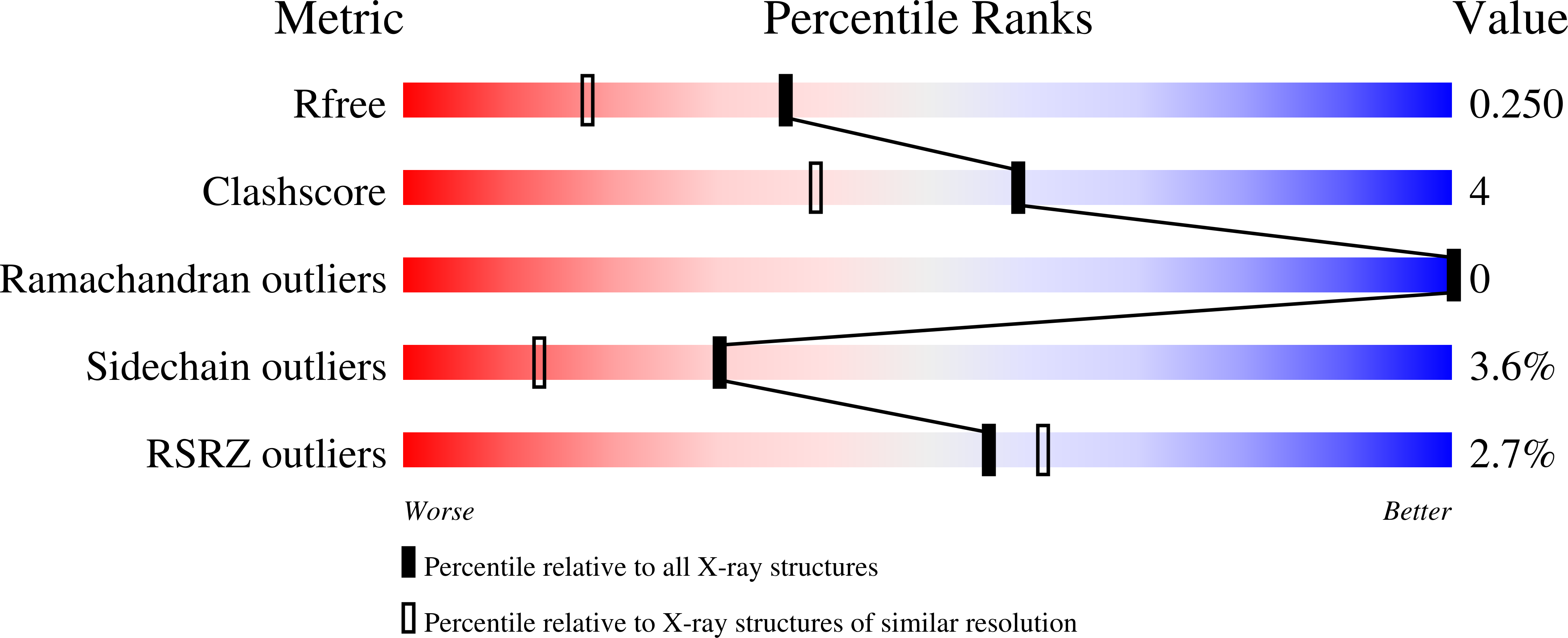
R-Value Free:
0.24
R-Value Work:
0.19
Space Group:
P 21 21 21
Macromolecular Entities
Structures with similar UniProt ID
Protein Blast
Polymer Type:polypeptide(L)
Molecule:Carbonic anhydrase 1
Gene (Uniprot):CA1
Chain IDs:A (auth: AAA), B (auth: BBB)
Chain Length:261
Number of Molecules:2
Biological Source:Homo sapiens
Primary Citation
Benzenesulfonamide decorated dihydropyrimidin(thi)ones: carbonic anhydrase profiling and antiproliferative activity.
Rsc Med Chem 15 1929 1941 (2024)
PMID: 38911163 DOI: 10.1039/d4md00101j

Abstact

In the last decades, carbonic anhydrases (CAs) have become the top investigated innovative pharmacological targets and, in particular, isoforms IX and XII have been widely studied due to the evidence of their overexpression in hypoxic tumors. The frantic race to find new anticancer agents places the quick preparation of large libraries of putative bioactive compounds as the basis of a successful drug discovery and development programme. In this context, multi-component and, in general, one-step reactions are becoming very popular and, among them, Biginelli's reaction gave clean and easy-to-isolate products. Thus, we synthesized a series of Biginelli's products (10-17a-b) and similar derivatives (20-21) bearing the benzenesulfonamide moiety, which is known to inhibit CA enzymes. Through the stopped-flow technique, we were able to assess their ability to inhibit the targeted CAs IX and XII in the nanomolar range with promising selectivity over the physiologically relevant isoforms I and II. Crystallography studies and docking simulations helped us to gain insight into the interaction patterns established in the enzyme-inhibitor complex. From a chemical similarity-based screening of in-house libraries of compounds, a diphenylpyrimidine (23) emerged. The surprisingly potent inhibitory activity of 23 for CAs IX and XII along with its strong antiproliferative effect on two (triple-negative breast cancer MDA-MB-231 and glioblastoma U87MG) cell lines laid the foundation for further investigation, again confirming the key role of CAs in cancer.

Legend

Protein

Chemical

Disease

Primary Citation of related structures
Feedback Form
Name
Email
Institute
Feedback