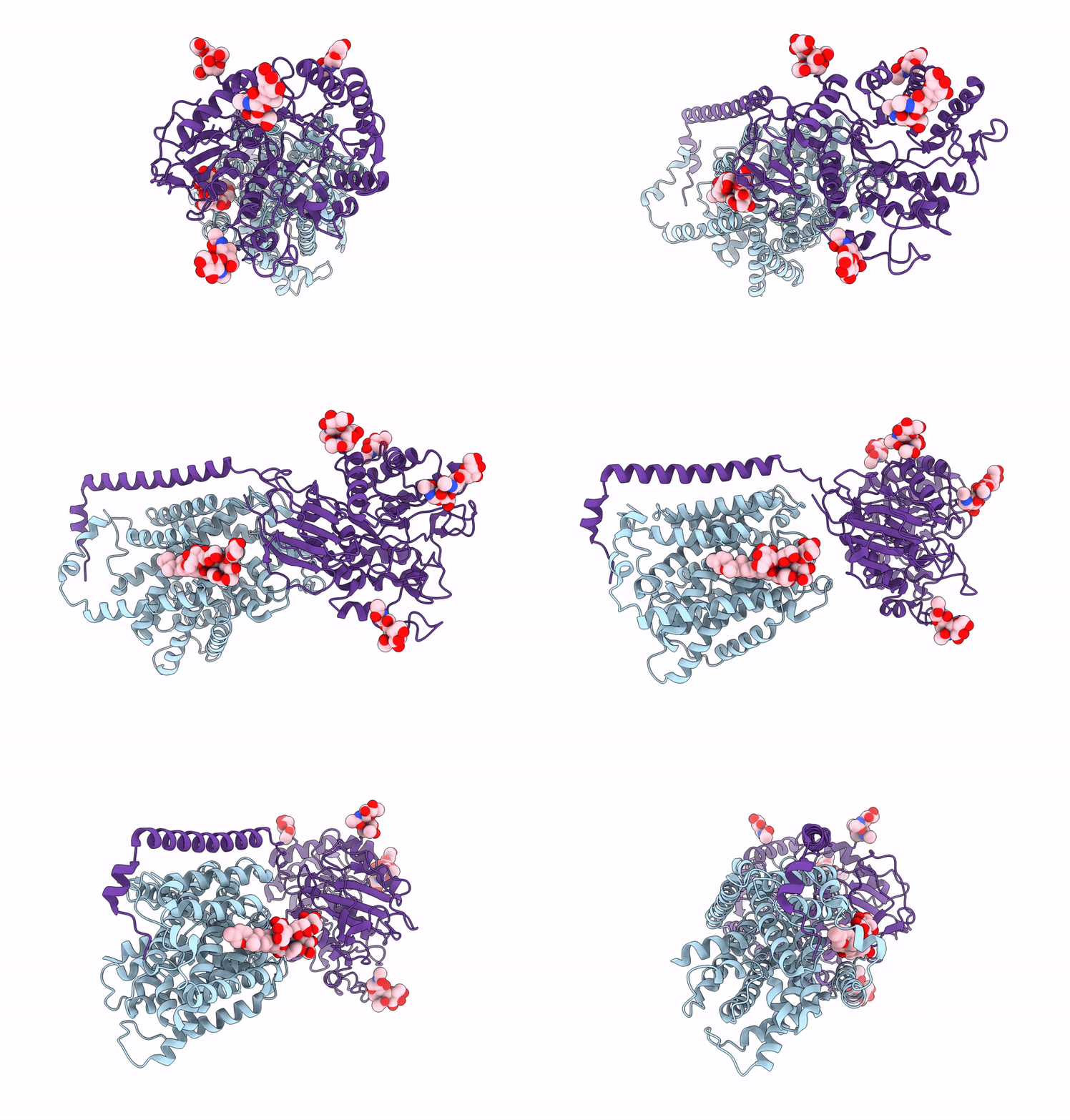
8QEY image
Deposition Date 2023-09-01
Release Date 2024-04-10
Last Version Date 2025-07-09
Entry Detail
PDB ID:
8QEY
Title:
Structure of human Asc1/CD98hc heteromeric amino acid transporter
Biological Source:
Source Organism:
Homo sapiens (Taxon ID: 9606)
Host Organism:
Method Details:
Experimental Method:
Resolution:
4.00 Å
Aggregation State:
PARTICLE
Reconstruction Method:
SINGLE PARTICLE
Macromolecular Entities
Structures with similar UniProt ID
Protein Blast
Polymer Type:polypeptide(L)
Molecule:Asc-type amino acid transporter 1
Gene (Uniprot):SLC7A10
Chain IDs:A
Chain Length:523
Number of Molecules:1
Biological Source:Homo sapiens
Structures with similar UniProt ID
Protein Blast
Polymer Type:polypeptide(L)
Molecule:4F2 cell-surface antigen heavy chain
Gene (Uniprot):SLC3A2
Chain IDs:B
Chain Length:630
Number of Molecules:1
Biological Source:Homo sapiens
Primary Citation
Structure and mechanisms of transport of human Asc1/CD98hc amino acid transporter.
Nat Commun 15 2986 2986 (2024)
PMID: 38582862 DOI: 10.1038/s41467-024-47385-3

Abstact

Recent cryoEM studies elucidated details of the structural basis for the substrate selectivity and translocation of heteromeric amino acid transporters. However, Asc1/CD98hc is the only neutral heteromeric amino acid transporter that can function through facilitated diffusion, and the only one that efficiently transports glycine and D-serine, and thus has a regulatory role in the central nervous system. Here we use cryoEM, ligand-binding simulations, mutagenesis, transport assays, and molecular dynamics to define human Asc1/CD98hc determinants for substrate specificity and gain insights into the mechanisms that govern substrate translocation by exchange and facilitated diffusion. The cryoEM structure of Asc1/CD98hc is determined at 3.4-3.8 Å resolution, revealing an inward-facing semi-occluded conformation. We find that Ser 246 and Tyr 333 are essential for Asc1/CD98hc substrate selectivity and for the exchange and facilitated diffusion modes of transport. Taken together, these results reveal the structural bases for ligand binding and transport features specific to human Asc1.

Legend

Protein

Chemical

Disease

Primary Citation of related structures
Feedback Form
Name
Email
Institute
Feedback