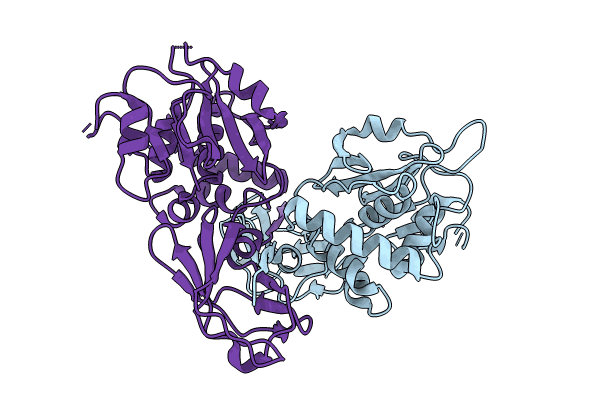
8PZ3 image
Deposition Date 2023-07-26
Release Date 2023-12-13
Last Version Date 2024-01-17
Entry Detail
PDB ID:
8PZ3
Keywords:
Title:
TssM - A USP-like DUB from B. pseudomallei (193-430)
Biological Source:
Source Organism:
Host Organism:
Method Details:
Experimental Method:
Resolution:
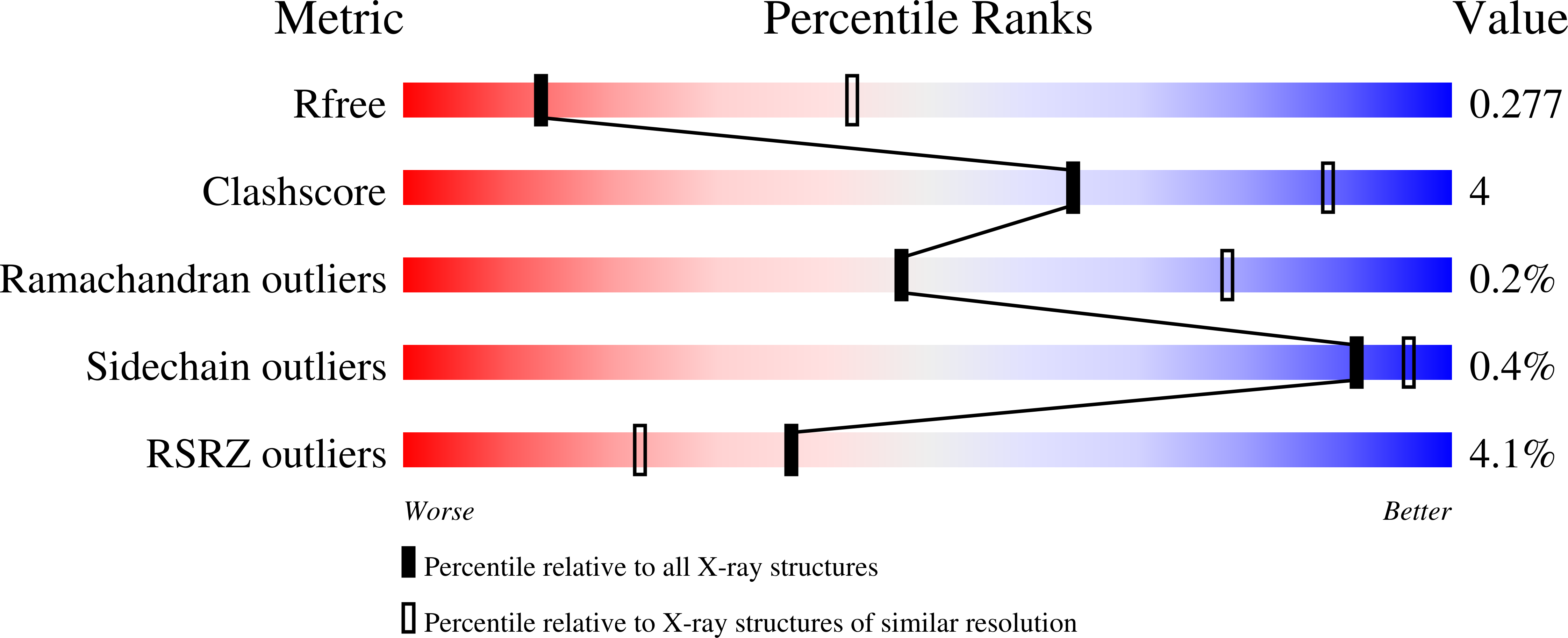
3.15 Å
R-Value Free:
0.27
R-Value Work:
0.22
R-Value Observed:
0.23
Space Group:
P 32 2 1
Macromolecular Entities
Structures with similar UniProt ID
Protein Blast
Polymer Type:polypeptide(L)
Molecule:TssM
Gene (Uniprot):tssM
Chain IDs:A, B
Chain Length:300
Number of Molecules:2
Biological Source:Burkholderia pseudomallei
Ligand Molecules
Primary Citation
The structural basis for deubiquitination by the fingerless USP-type effector TssM.
Life Sci Alliance 7 ? ? (2024)
PMID: 38170641 DOI: 10.26508/lsa.202302422

Abstact

Intracellular bacteria are threatened by ubiquitin-mediated autophagy, whenever the bacterial surface or enclosing membrane structures become targets of host ubiquitin ligases. As a countermeasure, many intracellular pathogens encode deubiquitinase (DUB) effectors to keep their surfaces free of ubiquitin. Most bacterial DUBs belong to the OTU or CE-clan families. The betaproteobacteria Burkholderia pseudomallei and Burkholderia mallei, causative agents of melioidosis and glanders, respectively, encode the TssM effector, the only known bacterial DUB belonging to the USP class. TssM is much shorter than typical eukaryotic USP enzymes and lacks the canonical ubiquitin-recognition region. By solving the crystal structures of isolated TssM and its complex with ubiquitin, we found that TssM lacks the entire "Fingers" subdomain of the USP fold. Instead, the TssM family has evolved the functionally analog "Littlefinger" loop, which is located towards the end of the USP domain and recognizes different ubiquitin interfaces than those used by USPs. The structures revealed the presence of an N-terminal immunoglobulin-fold domain, which is able to form a strand-exchange dimer and might mediate TssM localization to the bacterial surface.

Legend

Protein

Chemical

Disease

Primary Citation of related structures
Feedback Form
Name
Email
Institute
Feedback