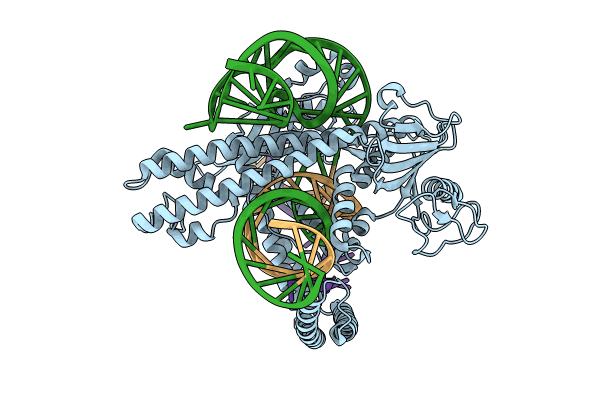
8PM4 image
Deposition Date 2023-06-28
Release Date 2024-02-07
Last Version Date 2024-11-13
Entry Detail
PDB ID:
8PM4
Title:
Cryo-EM structure of the Cas12m-crRNA-target DNA complex
Biological Source:
Method Details:
Experimental Method:
Resolution:
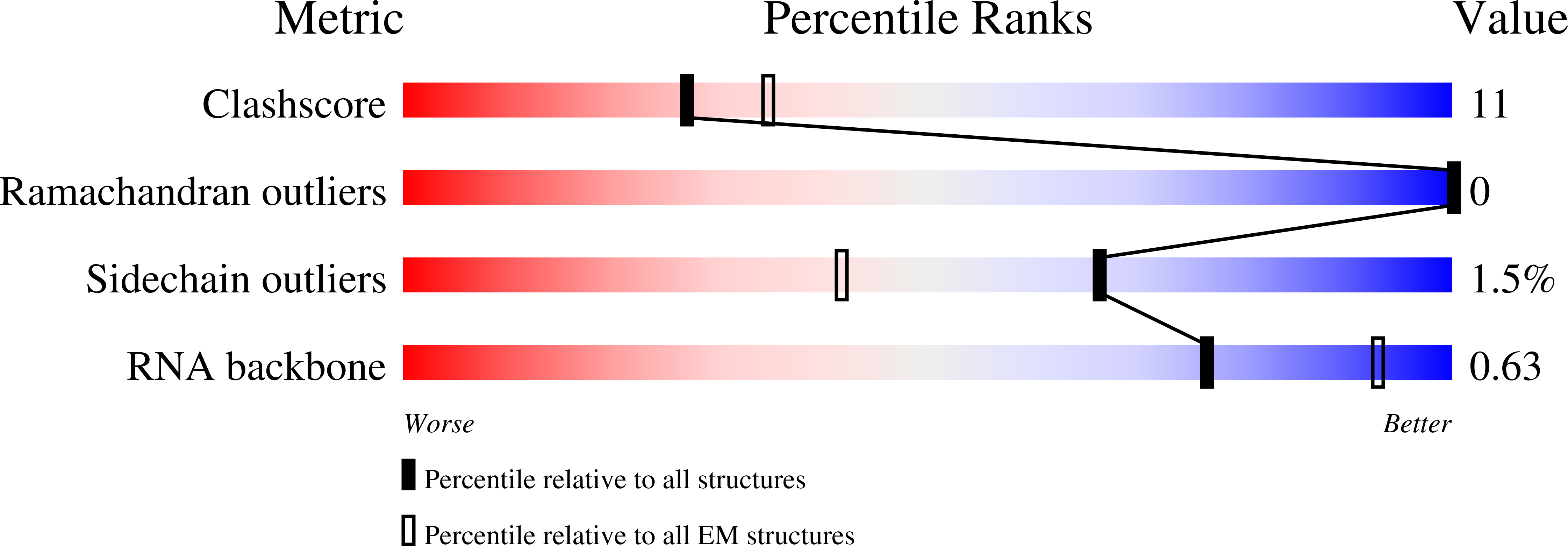
2.93 Å
Aggregation State:
PARTICLE
Reconstruction Method:
SINGLE PARTICLE
Macromolecular Entities
Structures with similar UniProt ID
Protein Blast
Polymer Type:polypeptide(L)
Molecule:Transposase
Gene (Uniprot):cas12m
Chain IDs:A
Chain Length:614
Number of Molecules:1
Biological Source:Gordonia otitidis NBRC 100426
Polymer Type:polyribonucleotide
Molecule:crRNA, chain B
Chain IDs:B
Chain Length:58
Number of Molecules:1
Biological Source:Gordonia otitidis NBRC 100426
Polymer Type:polydeoxyribonucleotide
Molecule:DNA oligoduplex, target strand, chain C
Chain IDs:C
Chain Length:44
Number of Molecules:1
Biological Source:synthetic construct
Polymer Type:polydeoxyribonucleotide
Molecule:DNA oligoduplex, non-target strand, chain D
Chain IDs:D
Chain Length:44
Number of Molecules:1
Biological Source:synthetic construct
Ligand Molecules
Primary Citation
Innate programmable DNA binding by CRISPR-Cas12m effectors enable efficient base editing.
Nucleic Acids Res. 52 3234 3248 (2024)
PMID: 38261981 DOI: 10.1093/nar/gkae016

Abstact

Cas9 and Cas12 nucleases of class 2 CRISPR-Cas systems provide immunity in prokaryotes through RNA-guided cleavage of foreign DNA. Here we characterize a set of compact CRISPR-Cas12m (subtype V-M) effector proteins and show that they provide protection against bacteriophages and plasmids through the targeted DNA binding rather than DNA cleavage. Biochemical assays suggest that Cas12m effectors can act as roadblocks inhibiting DNA transcription and/or replication, thereby triggering interference against invaders. Cryo-EM structure of Gordonia otitidis (Go) Cas12m ternary complex provided here reveals the structural mechanism of DNA binding ensuring interference. Harnessing GoCas12m innate ability to bind DNA target we fused it with adenine deaminase TadA-8e and showed an efficient A-to-G editing in Escherichia coli and human cells. Overall, this study expands our understanding of the functionally diverse Cas12 protein family, revealing DNA-binding dependent interference mechanism of Cas12m effectors that could be harnessed for engineering of compact base-editing tools.

Legend

Protein

Chemical

Disease

Primary Citation of related structures
Feedback Form
Name
Email
Institute
Feedback