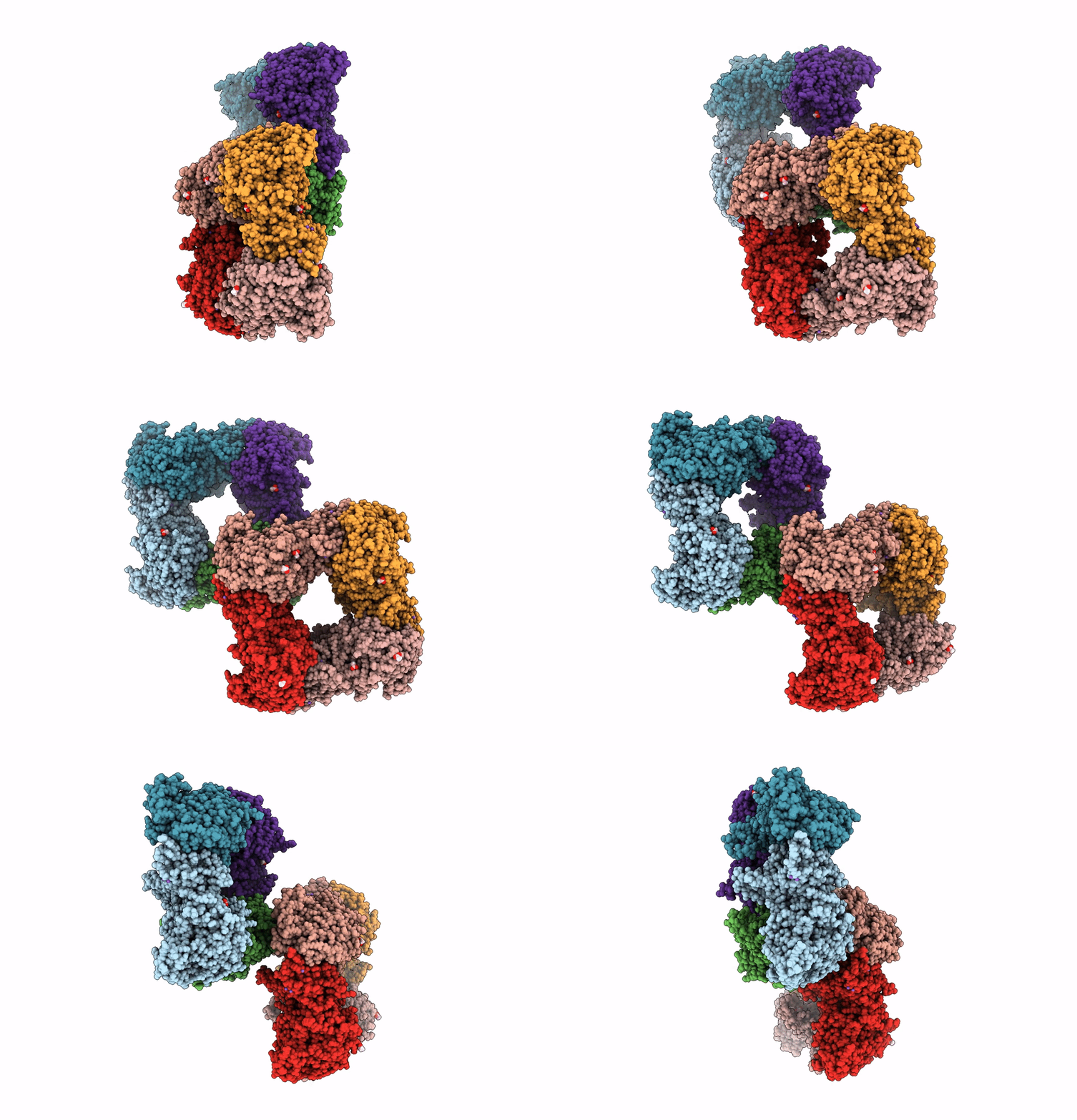
8PEJ image
Deposition Date 2023-06-14
Release Date 2023-10-04
Last Version Date 2024-10-23
Entry Detail
PDB ID:
8PEJ
Keywords:
Title:
CjGH35 with a Galactosidase Activity-Based Probe
Biological Source:
Source Organism:
Host Organism:
Method Details:
Experimental Method:
Resolution:
1.50 Å
R-Value Free:
0.18
R-Value Work:
0.15
Space Group:
P 1

Macromolecular Entities
Structures with similar UniProt ID
Protein Blast
Polymer Type:polypeptide(L)
Molecule:Beta-galactosidase, putative, bgl35A
Gene (Uniprot):bgl35A
Chain IDs:A, B, C, D, E, F, G, H
Chain Length:550
Number of Molecules:8
Biological Source:Cellvibrio japonicus Ueda107
Primary Citation
The development of a broad-spectrum retaining beta-exo-galactosidase activity-based probe.
Org.Biomol.Chem. 21 7813 7820 (2023)
PMID: 37724332 DOI: 10.1039/d3ob01261a

Abstact

Acid β-galactosidase (GLB1) and galactocerebrosidase (GALC) are retaining exo-β-galactosidases involved in lysosomal glycoconjugate metabolism. Deficiency of GLB1 may result in the lysosomal storage disorders GM1 gangliosidosis, Morquio B syndrome, and galactosialidosis, and deficiency of GALC may result in Krabbe disease. Activity-based protein profiling (ABPP) is a powerful technique to assess the activity of retaining glycosidases in relation to health and disease. This work describes the use of fluorescent and biotin-carrying activity-based probes (ABPs) to assess the activity of both GLB1 and GALC in cell lysates, culture media, and tissue extracts. The reported ABPs, which complement the growing list of retaining glycosidase ABPs based on configurational isomers of cyclophellitol, should assist in fundamental and clinical research on various β-galactosidases, whose inherited deficiencies cause debilitating lysosomal storage disorders.

Legend

Protein

Chemical

Disease

Primary Citation of related structures
Feedback Form
Name
Email
Institute
Feedback