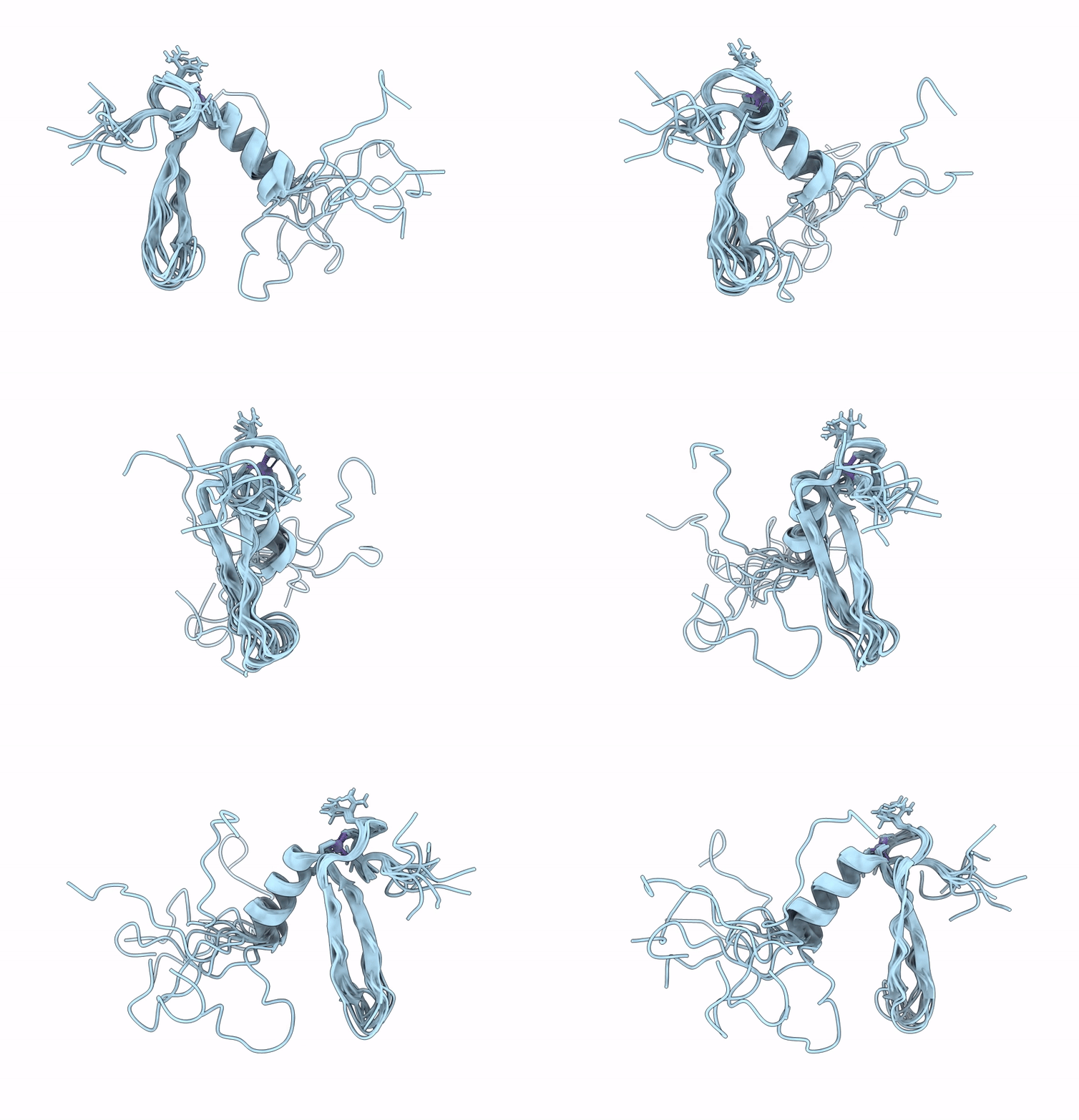
8P66 image
Deposition Date 2023-05-25
Release Date 2023-11-01
Last Version Date 2023-11-22
Entry Detail
PDB ID:
8P66
Keywords:
Title:
Structural basis of aggregate binding/recognition by the AAA+ disaggregase ClpG
Biological Source:
Source Organism:
Host Organism:
Method Details:
Experimental Method:
Conformers Calculated:
100
Conformers Submitted:
10
Selection Criteria:
structures with the lowest energy
Macromolecular Entities
Structures with similar UniProt ID
Protein Blast
Polymer Type:polypeptide(L)
Molecule:Clp protease ClpC,Heat shock survival AAA family ATPase ClpK
Chain IDs:A (auth: B)
Chain Length:54
Number of Molecules:1
Biological Source:Pseudomonas aeruginosa
Ligand Molecules
Primary Citation
Structural basis of aggregate binding by the AAA+ disaggregase ClpG.
J.Biol.Chem. 299 105336 105336 (2023)
PMID: 37827289 DOI: 10.1016/j.jbc.2023.105336

Abstact

Severe heat stress causes massive loss of essential proteins by aggregation, necessitating a cellular activity that rescues aggregated proteins. This activity is executed by ATP-dependent, ring-forming, hexameric AAA+ disaggregases. Little is known about the recognition principles of stress-induced protein aggregates. How can disaggregases specifically target aggregated proteins, while avoiding binding to soluble non-native proteins? Here, we determined by NMR spectroscopy the core structure of the aggregate-targeting N1 domain of the bacterial AAA+ disaggregase ClpG, which confers extreme heat resistance to bacteria. N1 harbors a Zn2+-coordination site that is crucial for structural integrity and disaggregase functionality. We found that conserved hydrophobic N1 residues located on a β-strand are crucial for aggregate targeting and disaggregation activity. Analysis of mixed hexamers consisting of full-length and N1-truncated subunits revealed that a minimal number of four N1 domains must be present in a AAA+ ring for high-disaggregation activity. We suggest that multiple N1 domains increase substrate affinity through avidity effects. These findings define the recognition principle of a protein aggregate by a disaggregase, involving simultaneous contacts with multiple hydrophobic substrate patches located in close vicinity on an aggregate surface. This binding mode ensures selectivity for aggregated proteins while sparing soluble, non-native protein structures from disaggregase activity.

Legend

Protein

Chemical

Disease

Primary Citation of related structures
Feedback Form
Name
Email
Institute
Feedback