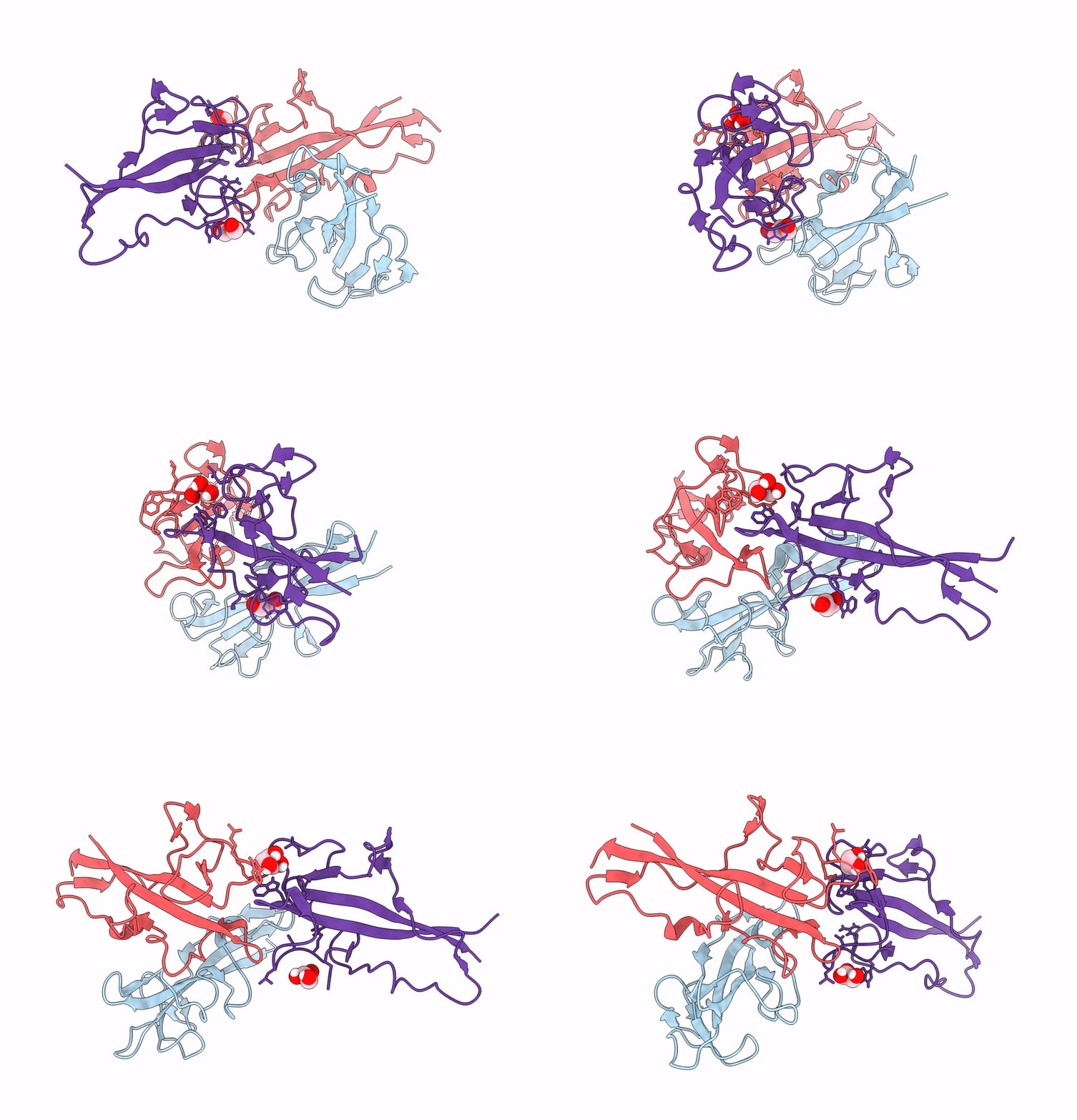
8P5P image
Deposition Date 2023-05-24
Release Date 2023-07-19
Last Version Date 2023-09-13
Entry Detail
PDB ID:
8P5P
Title:
Structure of TECPR1 N-terminal DysF domain
Biological Source:
Source Organism:
Homo sapiens (Taxon ID: 9606)
Host Organism:
Method Details:
Experimental Method:
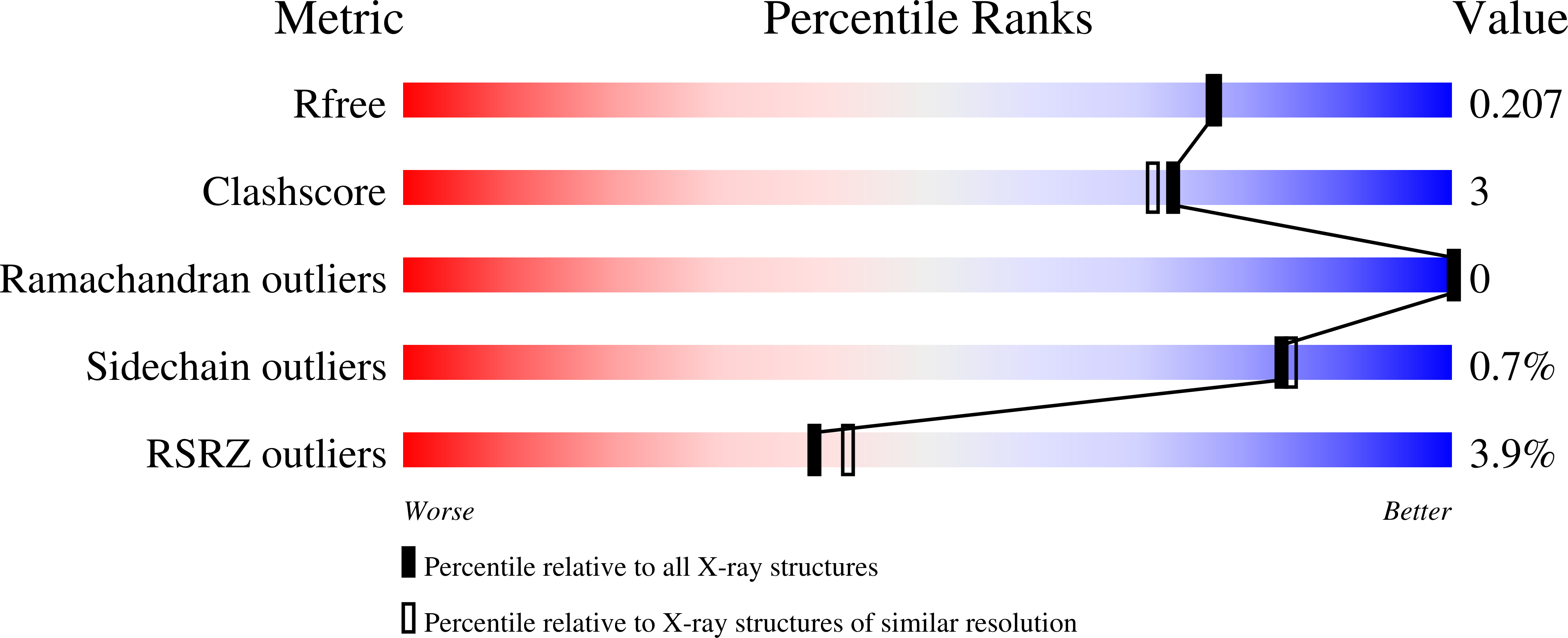
Resolution:
1.90 Å
R-Value Free:
0.20
R-Value Work:
0.16
R-Value Observed:
0.16
Space Group:
P 65
Macromolecular Entities
Structures with similar UniProt ID
Protein Blast
Polymer Type:polypeptide(L)
Molecule:Tectonin beta-propeller repeat-containing protein 1
Gene (Uniprot):TECPR1
Chain IDs:A, B, C
Chain Length:116
Number of Molecules:3
Biological Source:Homo sapiens
Modified Residue
Compound ID Chain ID Parent Comp ID Details 2D Image
MLY A LYS modified residue
Ligand Molecules
Primary Citation
TECPR1 conjugates LC3 to damaged endomembranes upon detection of sphingomyelin exposure.
Embo J. 42 e113012 e113012 (2023)
PMID: 37409490 DOI: 10.15252/embj.2022113012

Abstact

Invasive bacteria enter the cytosol of host cells through initial uptake into bacteria-containing vacuoles (BCVs) and subsequent rupture of the BCV membrane, thereby exposing to the cytosol intraluminal, otherwise shielded danger signals such as glycans and sphingomyelin. The detection of glycans by galectin-8 triggers anti-bacterial autophagy, but how cells sense and respond to cytosolically exposed sphingomyelin remains unknown. Here, we identify TECPR1 (tectonin beta-propeller repeat containing 1) as a receptor for cytosolically exposed sphingomyelin, which recruits ATG5 into an E3 ligase complex that mediates lipid conjugation of LC3 independently of ATG16L1. TECPR1 binds sphingomyelin through its N-terminal DysF domain (N'DysF), a feature not shared by other mammalian DysF domains. Solving the crystal structure of N'DysF, we identified key residues required for the interaction, including a solvent-exposed tryptophan (W154) essential for binding to sphingomyelin-positive membranes and the conjugation of LC3 to lipids. Specificity of the ATG5/ATG12-E3 ligase responsible for the conjugation of LC3 is therefore conferred by interchangeable receptor subunits, that is, the canonical ATG16L1 and the sphingomyelin-specific TECPR1, in an arrangement reminiscent of certain multi-subunit ubiquitin E3 ligases.

Legend

Protein

Chemical

Disease

Primary Citation of related structures
Feedback Form
Name
Email
Institute
Feedback