8OP1 image
Deposition Date 2023-04-06
Release Date 2023-09-27
Last Version Date 2025-07-02
Entry Detail
PDB ID:
8OP1
Keywords:
Title:
Subsection of a helical nucleocapsid of the Respiratory Syncytial Virus
Biological Source:
Source Organism:
Host Organism:
Method Details:
Experimental Method:
Resolution:
3.50 Å
Aggregation State:
FILAMENT
Reconstruction Method:
SINGLE PARTICLE
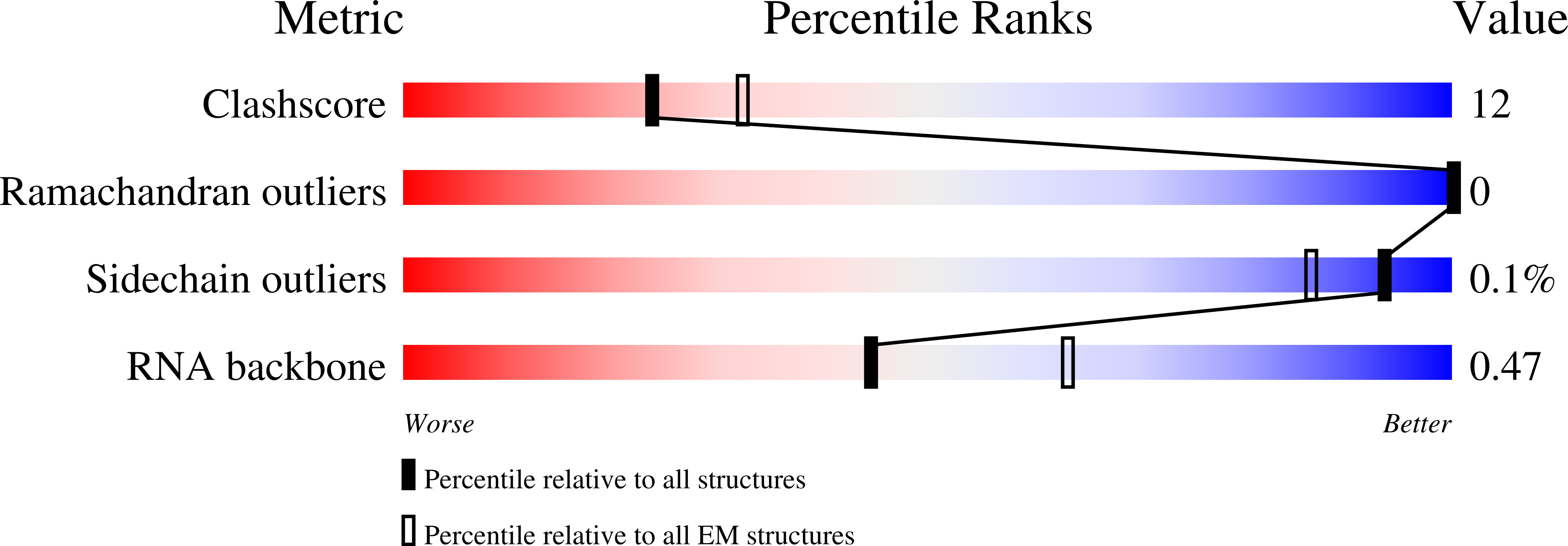
Macromolecular Entities
Structures with similar UniProt ID
Protein Blast
Polymer Type:polypeptide(L)
Molecule:Nucleoprotein
Chain IDs:A, C (auth: B), E (auth: C), G (auth: D), I (auth: E)
Chain Length:378
Number of Molecules:5
Biological Source:Respiratory syncytial virus
Polymer Type:polyribonucleotide
Molecule:RNA (5'-R(P*CP*CP*CP*CP*CP*CP*C)-3')
Chain IDs:B (auth: F), D (auth: G), F (auth: H), H (auth: I), J
Chain Length:7
Number of Molecules:5
Biological Source:Respiratory syncytial virus
Ligand Molecules
Primary Citation
Structural landscape of the respiratory syncytial virus nucleocapsids.
Nat Commun 14 5732 5732 (2023)
PMID: 37714861 DOI: 10.1038/s41467-023-41439-8

Abstact

Human Respiratory Syncytial Virus (HRSV) is a prevalent cause of severe respiratory infections in children and the elderly. The helical HRSV nucleocapsid is a template for the viral RNA synthesis and a scaffold for the virion assembly. This cryo-electron microscopy analysis reveals the non-canonical arrangement of the HRSV nucleocapsid helix, composed of 16 nucleoproteins per asymmetric unit, and the resulting systematic variations in the RNA accessibility. We demonstrate that this unique helical symmetry originates from longitudinal interactions by the C-terminal arm of the HRSV nucleoprotein. We explore the polymorphism of the nucleocapsid-like assemblies, report five structures of the full-length particles and two alternative arrangements formed by a C-terminally truncated nucleoprotein mutant, and demonstrate the functional importance of the identified longitudinal interfaces. We put all these findings in the context of the HRSV RNA synthesis machinery and delineate the structural basis for its further investigation.

Legend

Protein

Chemical

Disease

Primary Citation of related structures
Feedback Form
Name
Email
Institute
Feedback