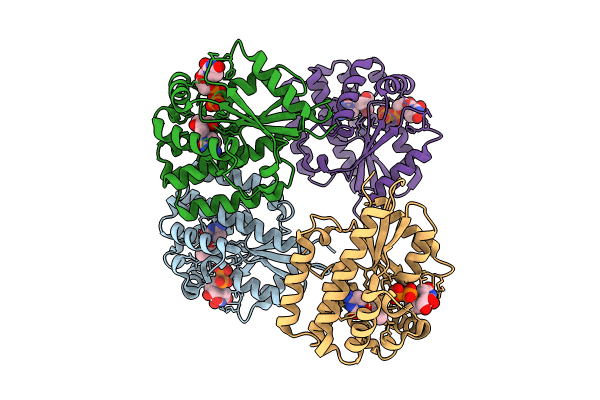
8OOJ image
Deposition Date 2023-04-05
Release Date 2023-12-20
Last Version Date 2024-05-15
Entry Detail
PDB ID:
8OOJ
Keywords:
Title:
Crystal structure of dCK C4S-S74E mutant in complex with EdC and UDP
Biological Source:
Source Organism:
Homo sapiens (Taxon ID: 9606)
Host Organism:
Method Details:
Experimental Method:
Resolution:
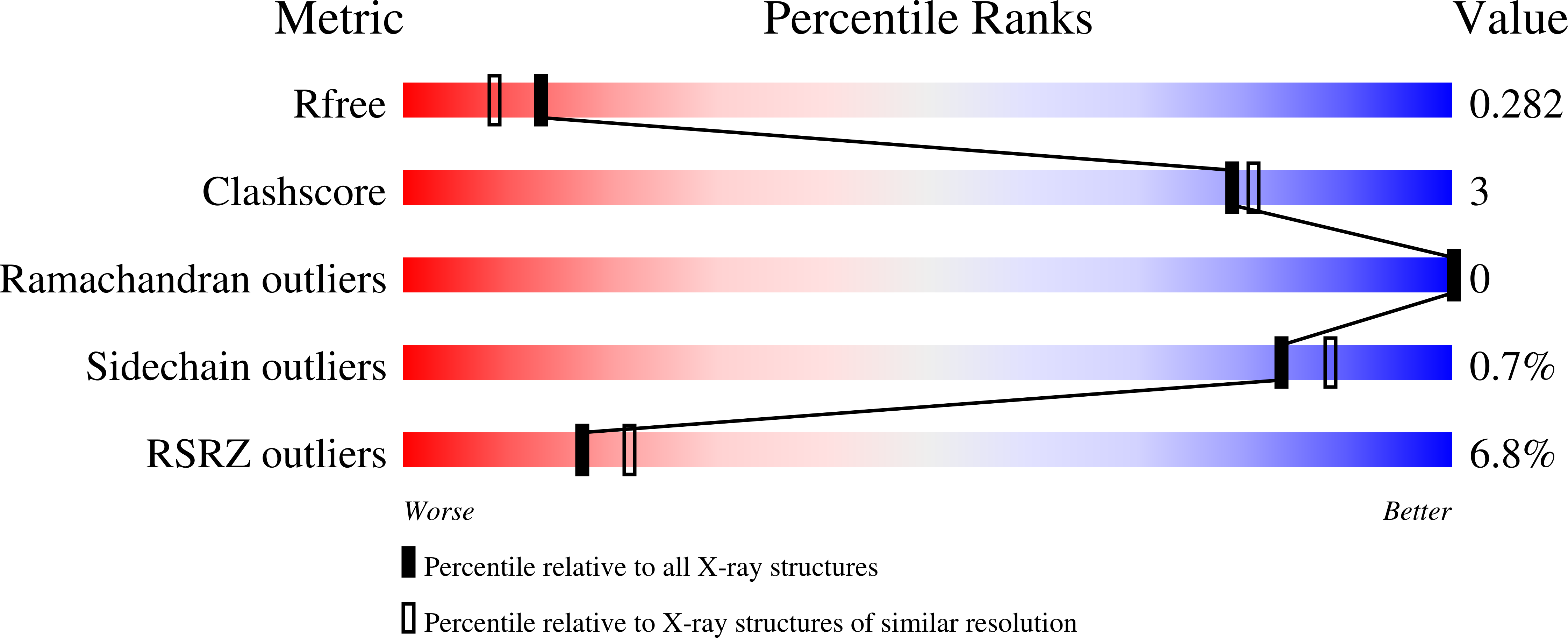
2.10 Å
R-Value Free:
0.27
R-Value Work:
0.23
R-Value Observed:
0.23
Space Group:
C 2 2 21
Macromolecular Entities
Structures with similar UniProt ID
Protein Blast
Polymer Type:polypeptide(L)
Molecule:Deoxycytidine kinase
Gene (Uniprot):DCK
Chain IDs:A, B, C, D
Chain Length:280
Number of Molecules:4
Biological Source:Homo sapiens
Primary Citation
4'-Ethynyl-2'-Deoxycytidine (EdC) Preferentially Targets Lymphoma and Leukemia Subtypes by Inducing Replicative Stress.
Mol.Cancer Ther. 23 683 699 (2024)
PMID: 38064712 DOI: 10.1158/1535-7163.MCT-23-0487

Abstact

Anticancer nucleosides are effective against solid tumors and hematologic malignancies, but typically are prone to nucleoside metabolism resistance mechanisms. Using a nucleoside-specific multiplexed high-throughput screening approach, we discovered 4'-ethynyl-2'-deoxycytidine (EdC) as a third-generation anticancer nucleoside prodrug with preferential activity against diffuse large B-cell lymphoma (DLBCL) and acute lymphoblastic leukemia (ALL). EdC requires deoxycytidine kinase (DCK) phosphorylation for its activity and induces replication fork arrest and accumulation of cells in S-phase, indicating it acts as a chain terminator. A 2.1Å cocrystal structure of DCK bound to EdC and UDP reveals how the rigid 4'-alkyne of EdC fits within the active site of DCK. Remarkably, EdC was resistant to cytidine deamination and SAMHD1 metabolism mechanisms and exhibited higher potency against ALL compared with FDA-approved nelarabine. Finally, EdC was highly effective against DLBCL tumors and B-ALL in vivo. These data characterize EdC as a preclinical nucleoside prodrug candidate for DLBCL and ALL.

Legend

Protein

Chemical

Disease

Primary Citation of related structures
Feedback Form
Name
Email
Institute
Feedback