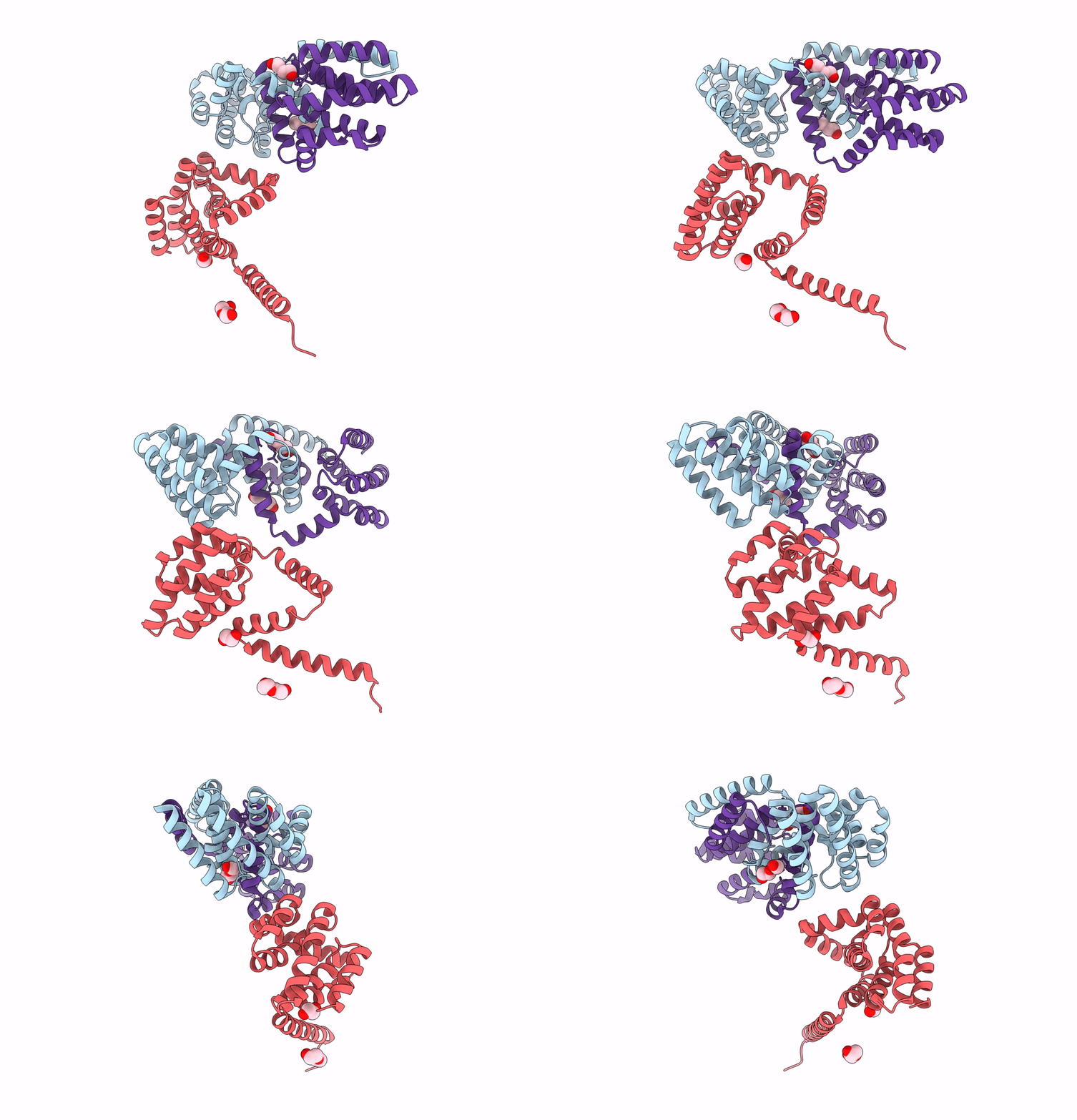
8OIK image
Deposition Date 2023-03-23
Release Date 2023-04-05
Last Version Date 2023-10-18
Entry Detail
PDB ID:
8OIK
Title:
D-PHAT domain (NTD) of human SAMD4A
Biological Source:
Source Organism:
Homo sapiens (Taxon ID: 9606)
Host Organism:
Method Details:
Experimental Method:
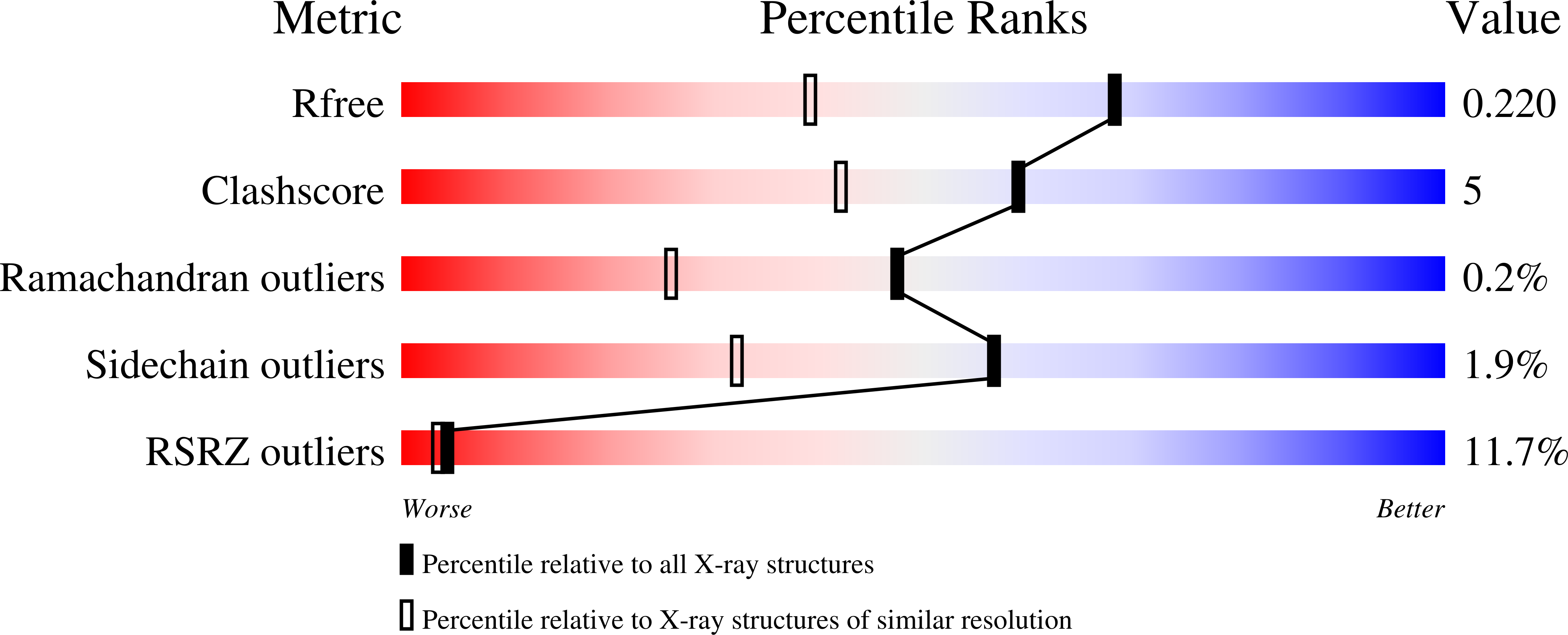
Resolution:
1.62 Å
R-Value Free:
0.22
R-Value Work:
0.20
R-Value Observed:
0.20
Space Group:
C 2 2 21
Macromolecular Entities
Structures with similar UniProt ID
Protein Blast
Polymer Type:polypeptide(L)
Molecule:Protein Smaug homolog 1
Gene (Uniprot):SAMD4A
Chain IDs:A, B, C
Chain Length:180
Number of Molecules:3
Biological Source:Homo sapiens
Primary Citation
Structural basis for binding of Drosophila Smaug to the GPCR Smoothened and to the germline inducer Oskar.
Proc.Natl.Acad.Sci.USA 120 e2304385120 e2304385120 (2023)
PMID: 37523566 DOI: 10.1073/pnas.2304385120

Abstact

Drosophila Smaug and its orthologs comprise a family of mRNA repressor proteins that exhibit various functions during animal development. Smaug proteins contain a characteristic RNA-binding sterile-α motif (SAM) domain and a conserved but uncharacterized N-terminal domain (NTD). Here, we resolved the crystal structure of the NTD of the human SAM domain-containing protein 4A (SAMD4A, a.k.a. Smaug1) to 1.6 Å resolution, which revealed its composition of a homodimerization D subdomain and a subdomain with similarity to a pseudo-HEAT-repeat analogous topology (PHAT) domain. Furthermore, we show that Drosophila Smaug directly interacts with the Drosophila germline inducer Oskar and with the Hedgehog signaling transducer Smoothened through its NTD. We determined the crystal structure of the NTD of Smaug in complex with a Smoothened α-helical peptide to 2.0 Å resolution. The peptide binds within a groove that is formed by both the D and PHAT subdomains. Structural modeling supported by experimental data suggested that an α-helix within the disordered region of Oskar binds to the NTD of Smaug in a mode similar to Smoothened. Together, our data uncover the NTD of Smaug as a peptide-binding domain.

Legend

Protein

Chemical

Disease

Primary Citation of related structures
Feedback Form
Name
Email
Institute
Feedback