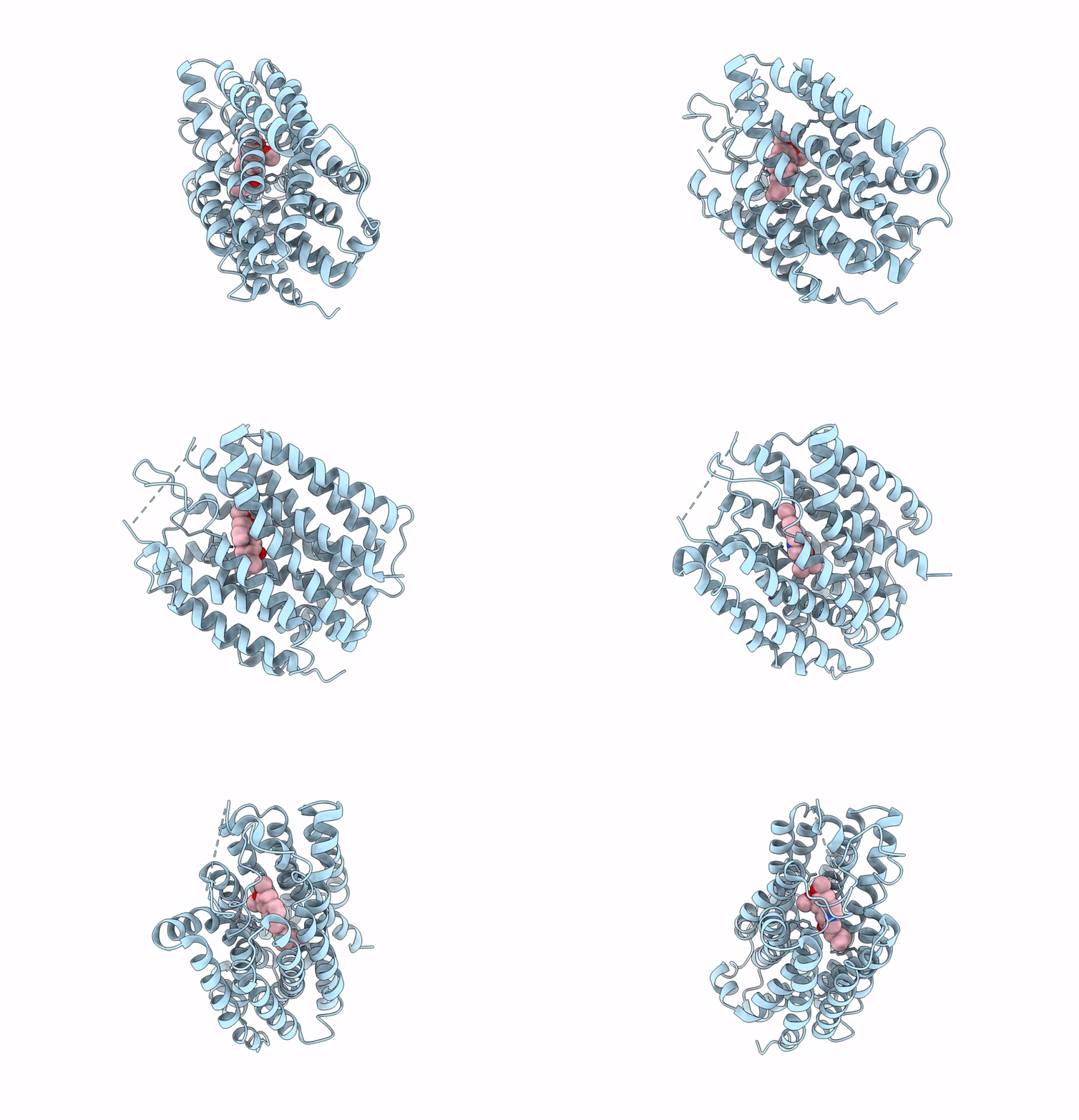
8JTA image
Deposition Date 2023-06-21
Release Date 2023-11-29
Last Version Date 2025-07-02
Entry Detail
PDB ID:
8JTA
Title:
Human VMAT2 complex with tetrabenazine
Biological Source:
Source Organism:
Homo sapiens (Taxon ID: 9606)
Host Organism:
Method Details:
Experimental Method:
Resolution:
3.36 Å
Aggregation State:
PARTICLE
Reconstruction Method:
SINGLE PARTICLE
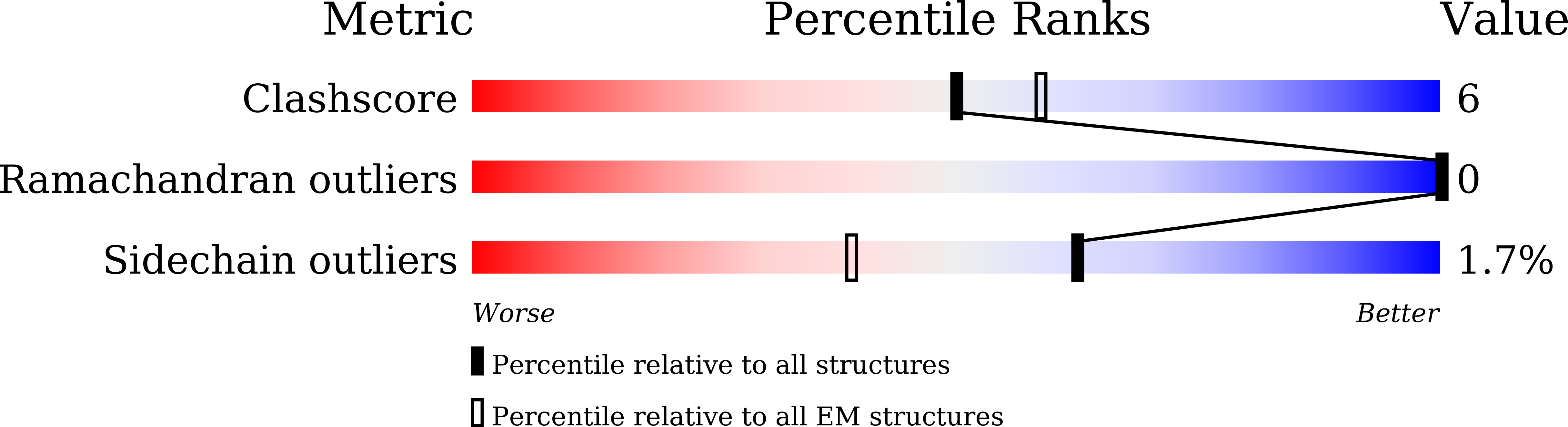
Macromolecular Entities
Structures with similar UniProt ID
Protein Blast
Polymer Type:polypeptide(L)
Molecule:Synaptic vesicular amine transporter
Gene (Uniprot):SLC18A2
Chain IDs:A
Chain Length:457
Number of Molecules:1
Biological Source:Homo sapiens
Ligand Molecules
Primary Citation
Transport and inhibition mechanisms of human VMAT2.
Nature 626 427 434 (2024)
PMID: 38081299 DOI: 10.1038/s41586-023-06926-4

Abstact

Vesicular monoamine transporter 2 (VMAT2) accumulates monoamines in presynaptic vesicles for storage and exocytotic release, and has a vital role in monoaminergic neurotransmission1-3. Dysfunction of monoaminergic systems causes many neurological and psychiatric disorders, including Parkinson's disease, hyperkinetic movement disorders and depression4-6. Suppressing VMAT2 with reserpine and tetrabenazine alleviates symptoms of hypertension and Huntington's disease7,8, respectively. Here we describe cryo-electron microscopy structures of human VMAT2 complexed with serotonin and three clinical drugs at 3.5-2.8 Å, demonstrating the structural basis for transport and inhibition. Reserpine and ketanserin occupy the substrate-binding pocket and lock VMAT2 in cytoplasm-facing and lumen-facing states, respectively, whereas tetrabenazine binds in a VMAT2-specific pocket and traps VMAT2 in an occluded state. The structures in three distinct states also reveal the structural basis of the VMAT2 transport cycle. Our study establishes a structural foundation for the mechanistic understanding of substrate recognition, transport, drug inhibition and pharmacology of VMAT2 while shedding light on the rational design of potential therapeutic agents.

Legend

Protein

Chemical

Disease

Primary Citation of related structures
Feedback Form
Name
Email
Institute
Feedback