8JST image
Deposition Date 2023-06-20
Release Date 2024-06-26
Last Version Date 2025-06-04
Entry Detail
PDB ID:
8JST
Keywords:
Title:
GH11 family xylanase rMxylcd from the compost-soil metagenome
Biological Source:
Source Organism:
Method Details:
Experimental Method:
Resolution:
1.50 Å
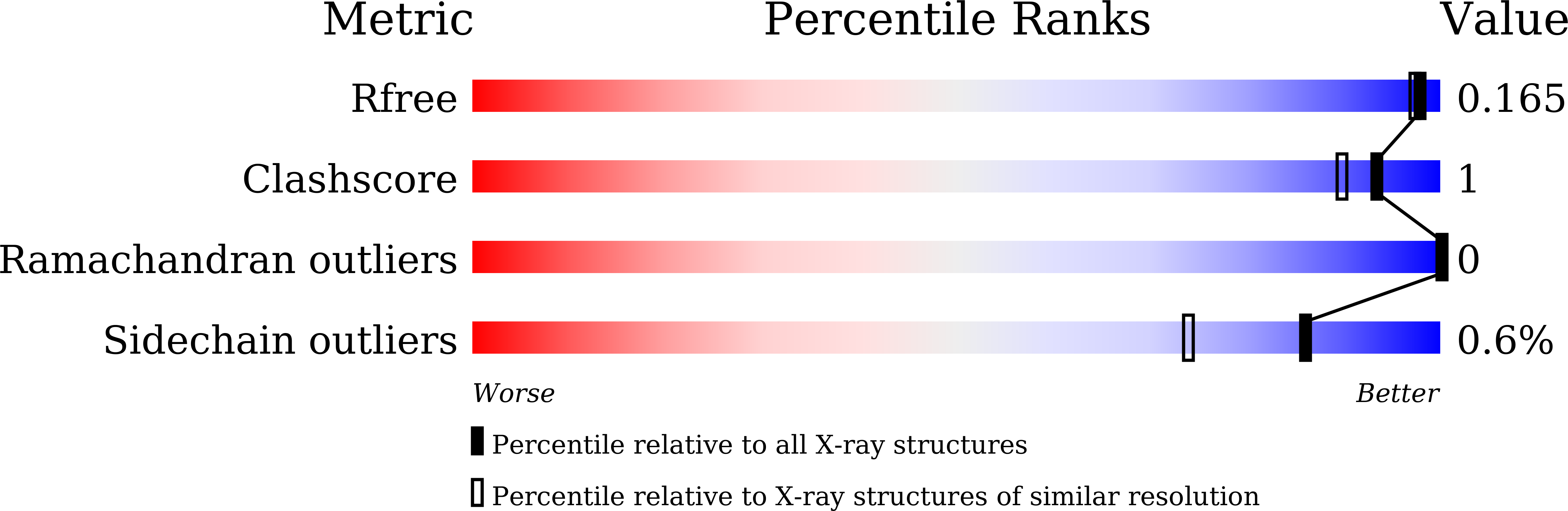
R-Value Free:
0.16
R-Value Work:
0.16
R-Value Observed:
0.16
Space Group:
P 43 21 2
Macromolecular Entities
Structures with similar UniProt ID
Protein Blast
Polymer Type:polypeptide(L)
Molecule:Endo-beta-1,4-xylanase rMxylcd
Chain IDs:A
Chain Length:192
Number of Molecules:1
Biological Source:compost metagenome
Ligand Molecules
Primary Citation
Disulfide bonds enhance thermal stability and thumb region drives activity of the glycoside hydrolase 11 xylanase rMxyl cd .
J.Struct.Biol. 217 108209 108209 (2025)
PMID: 40368259 DOI: 10.1016/j.jsb.2025.108209

Abstact

Thermostable enzymes have significant advantages in industries, yet uncovering novel candidates with superior properties remains a scientific pursuit. This study identified rMxylcd, a glycoside hydrolase 11 family thermophilic xylanase from compost-soil metagenome, which exhibited a high specific activity of 5954 U·mg-1 at pH 5.5 and 80°C. rMxylcd was crystallized and diffracted to 1.5 Å resolution. Compared to the mesophilic xylanase Xyn II, rMxylcd exhibits a more compact architecture. Notably, B-factor analysis reveals a uniquely flexible thumb region, hinting at its critical role in the enzyme's catalytic mechanism. rMxylcd contains two disulfide bonds in the thumb and the N-terminal regions. Breaking these disulfide bonds by mutagenesis has dramatically decreased activities and thermostability. Conversely, introducing an extra disulfide bond at the N-terminal region of its α-helix extended its half-life for more than five folds at 80°C. Our studies firmly establish that the disulfide bonds are essential for its high thermal stability and the flexibility of the thumb region is crucial for its activity. Comparing the rMxylcd crystal structure with the AlphaFold2-predicted model shows overall similarity, but the crystal structure offers higher local accuracy, especially in key functional regions. These findings not only deepen our understanding of the structure-function relationship of thermophilic xylanases but also inform a rational design of industrial enzymes.

Legend

Protein

Chemical

Disease

Primary Citation of related structures
Feedback Form
Name
Email
Institute
Feedback