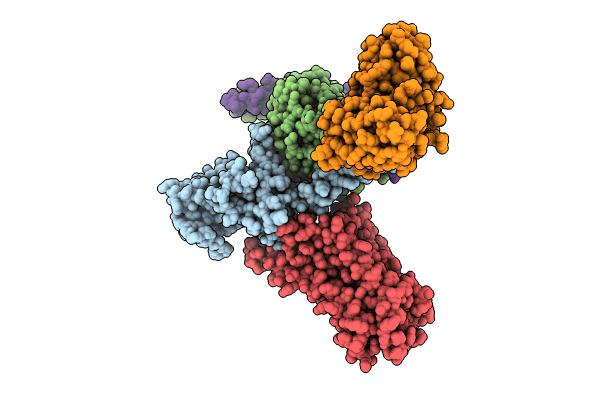
8JSO image
Deposition Date 2023-06-20
Release Date 2023-11-15
Last Version Date 2025-07-02
Entry Detail
PDB ID:
8JSO
Title:
AMPH-bound hTAAR1-Gs protein complex
Biological Source:
Source Organism:
Homo sapiens (Taxon ID: 9606)
Escherichia coli (Taxon ID: 562)
Mus musculus (Taxon ID: 10090)
Host Organism:
Method Details:
Experimental Method:
Resolution:
3.40 Å
Aggregation State:
PARTICLE
Reconstruction Method:
SINGLE PARTICLE

Macromolecular Entities
Protein Blast
Polymer Type:polypeptide(L)
Molecule:mGs
Chain IDs:A
Chain Length:361
Number of Molecules:1
Biological Source:Homo sapiens
Structures with similar UniProt ID
Protein Blast
Polymer Type:polypeptide(L)
Molecule:Guanine nucleotide-binding protein G(I)/G(S)/G(T) subunit beta-1
Gene (Uniprot):GNB1
Chain IDs:B
Chain Length:356
Number of Molecules:1
Biological Source:Homo sapiens
Protein Blast
Polymer Type:polypeptide(L)
Molecule:Soluble cytochrome b562,Trace amine-associated receptor 1
Gene (Uniprot):cybC, TAAR1
Mutagens:M29W,H124I,R128L
Chain IDs:C (auth: R)
Chain Length:470
Number of Molecules:1
Biological Source:Escherichia coli, Homo sapiens
Polymer Type:polypeptide(L)
Molecule:ScFv16
Chain IDs:D (auth: S)
Chain Length:251
Number of Molecules:1
Biological Source:Mus musculus
Structures with similar UniProt ID
Protein Blast
Polymer Type:polypeptide(L)
Molecule:Guanine nucleotide-binding protein G(I)/G(S)/G(O) subunit gamma-2
Gene (Uniprot):Gng2
Chain IDs:E (auth: Y)
Chain Length:71
Number of Molecules:1
Biological Source:Mus musculus
Ligand Molecules
Primary Citation
Ligand recognition and G-protein coupling of trace amine receptor TAAR1.
Nature 624 672 681 (2023)
PMID: 37935376 DOI: 10.1038/s41586-023-06804-z

Abstact

Trace-amine-associated receptors (TAARs), a group of biogenic amine receptors, have essential roles in neurological and metabolic homeostasis1. They recognize diverse endogenous trace amines and subsequently activate a range of G-protein-subtype signalling pathways2,3. Notably, TAAR1 has emerged as a promising therapeutic target for treating psychiatric disorders4,5. However, the molecular mechanisms underlying its ability to recognize different ligands remain largely unclear. Here we present nine cryo-electron microscopy structures, with eight showing human and mouse TAAR1 in a complex with an array of ligands, including the endogenous 3-iodothyronamine, two antipsychotic agents, the psychoactive drug amphetamine and two identified catecholamine agonists, and one showing 5-HT1AR in a complex with an antipsychotic agent. These structures reveal a rigid consensus binding motif in TAAR1 that binds to endogenous trace amine stimuli and two extended binding pockets that accommodate diverse chemotypes. Combined with mutational analysis, functional assays and molecular dynamic simulations, we elucidate the structural basis of drug polypharmacology and identify the species-specific differences between human and mouse TAAR1. Our study provides insights into the mechanism of ligand recognition and G-protein selectivity by TAAR1, which may help in the discovery of ligands or therapeutic strategies for neurological and metabolic disorders.

Legend

Protein

Chemical

Disease

Primary Citation of related structures
Feedback Form
Name
Email
Institute
Feedback