8JMQ image
Deposition Date 2023-06-05
Release Date 2023-12-20
Last Version Date 2024-10-16
Entry Detail
PDB ID:
8JMQ
Title:
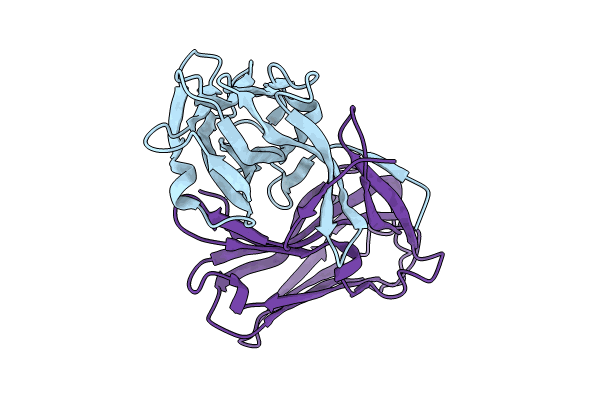
Crystal structure of hinokiresinol synthase
Biological Source:
Source Organism:
Host Organism:
Method Details:
Experimental Method:
Resolution:
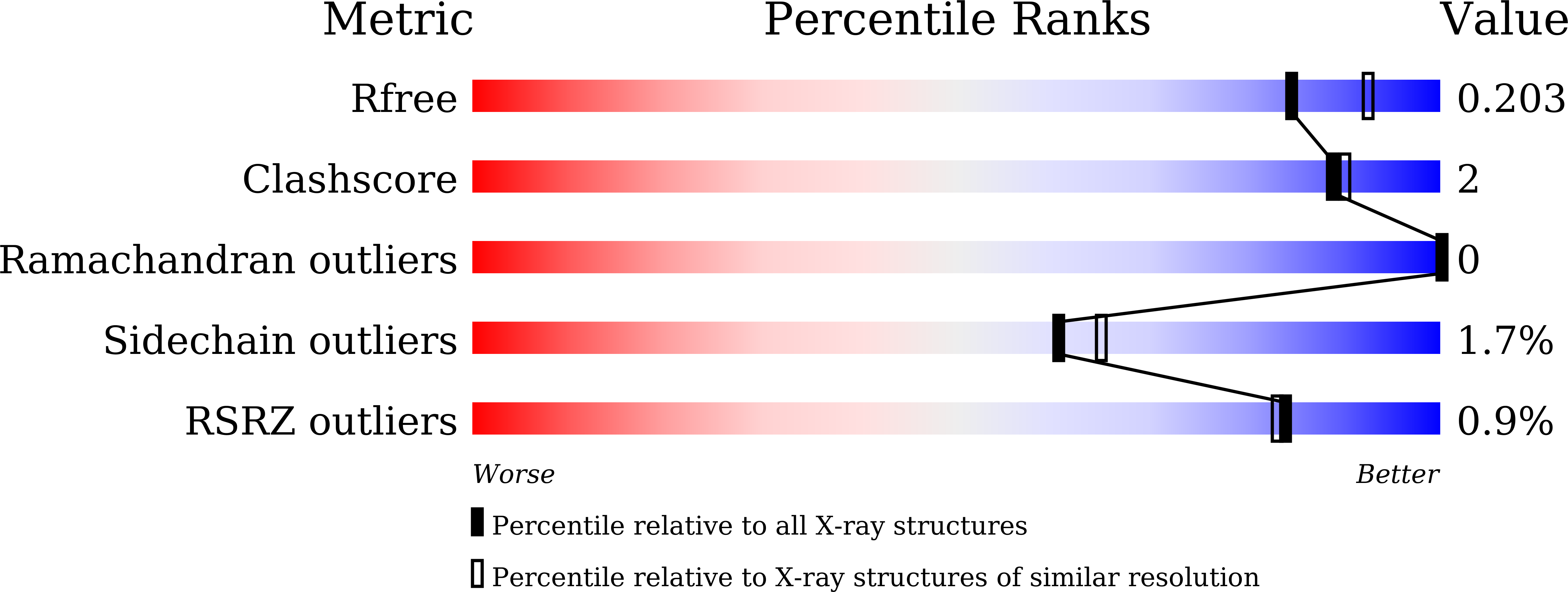
2.00 Å
R-Value Free:
0.20
R-Value Work:
0.16
R-Value Observed:
0.16
Space Group:
P 21 3
Macromolecular Entities
Structures with similar UniProt ID
Protein Blast
Polymer Type:polypeptide(L)
Molecule:Hinokiresinol synthase alpha subunit
Gene (Uniprot):AoHRSa
Chain IDs:B (auth: A)
Chain Length:180
Number of Molecules:1
Biological Source:Asparagus officinalis
Structures with similar UniProt ID
Protein Blast
Polymer Type:polypeptide(L)
Molecule:Hinokiresinol synthase beta subunit
Gene (Uniprot):AoHRSb
Chain IDs:A (auth: B)
Chain Length:198
Number of Molecules:1
Biological Source:Asparagus officinalis
Primary Citation
Structural and Mechanistic Insights into the C-C Bond-Forming Rearrangement Reaction Catalyzed by Heterodimeric Hinokiresinol Synthase.
J.Am.Chem.Soc. 145 21966 21973 (2023)
PMID: 37729620 DOI: 10.1021/jacs.3c06762

Abstact

Hinokiresinol synthase (HRS) from Asparagus officinalis consists of two subunits, α and β, and catalyzes an unusual decarboxylative rearrangement reaction of 4-coumaryl 4-coumarate to generate (Z)-hinokiresinol with complete stereoselectivity. Herein, we describe the mechanism of rearrangement catalysis and the role played by the heterodimeric HRS, through structural and computational analyses. Our results suggest that the HRS reaction is unlikely to proceed via the previously hypothesized Claisen rearrangement mechanism. Instead, we propose that the 4-coumaryl 4-coumarate substrate is first cleaved into coumarate and an extended p-quinone methide, which then recombine to generate a new C-C bond. These processes are facilitated by proton transfers mediated by the basic residues (α-Lys164, α-Arg169, β-Lys168, and β-Arg173) in the cavity at the heterodimer interface. The active site residues, α-Asp165, β-Asp169, β-Trp17, β-Met136, and β-Ala171, play crucial roles in controlling the regioselectivity of the coupling between the fragmented intermediates as well as the stereoselectivity of the decarboxylation step, leading to the formation of the (Z)-hinokiresinol product.

Legend

Protein

Chemical

Disease

Primary Citation of related structures
Feedback Form
Name
Email
Institute
Feedback