8J3X image
Deposition Date 2023-04-18
Release Date 2024-04-24
Last Version Date 2024-11-06
Entry Detail
PDB ID:
8J3X
Keywords:
Title:
Crystal structure of CBM6E from Saccharophagus degradans
Biological Source:
Expression System(s):
Method Details:
Experimental Method:
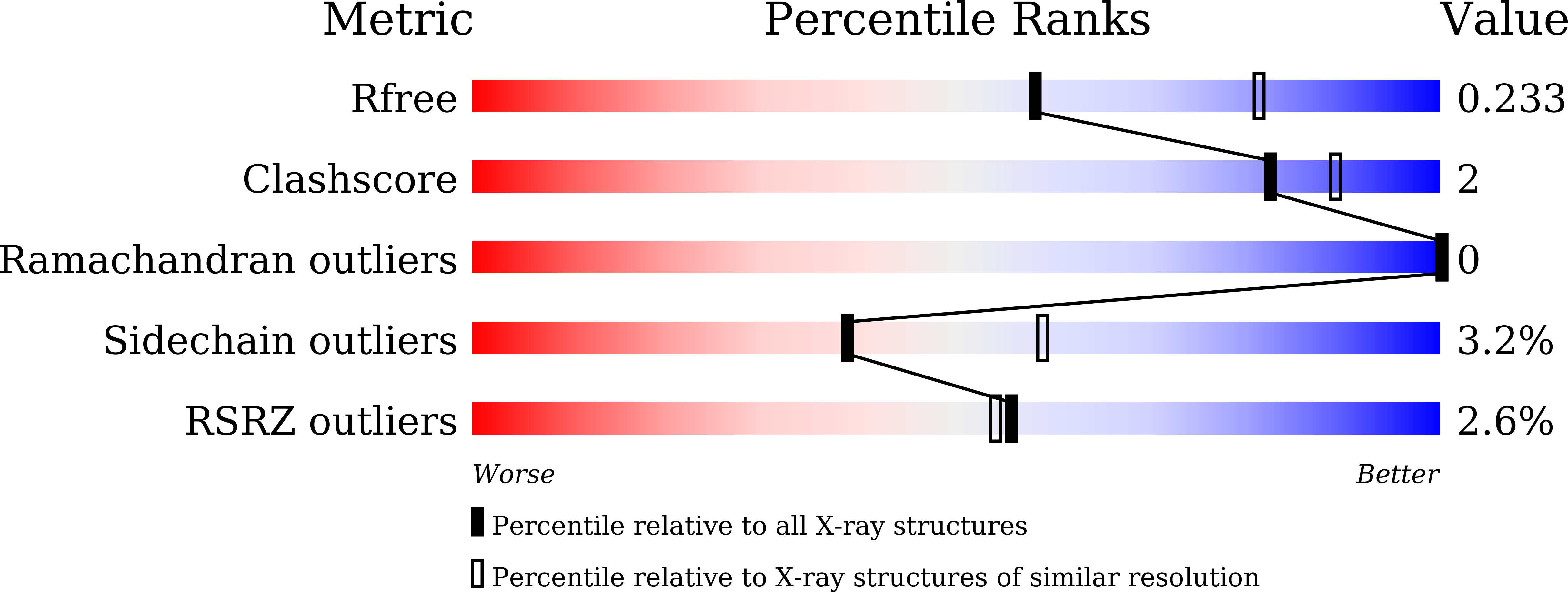
Resolution:
2.40 Å
R-Value Free:
0.23
R-Value Work:
0.18
R-Value Observed:
0.18
Space Group:
P 21 21 2
Macromolecular Entities
Structures with similar UniProt ID
Protein Blast
Polymer Type:polypeptide(L)
Molecule:Putative polysaccharide-binding protein
Gene (Uniprot):cbm6E
Chain IDs:A, B
Chain Length:392
Number of Molecules:2
Biological Source:Saccharophagus degradans (strain 2-40 / ATCC 43961 / DSM 17024)
Modified Residue
Compound ID Chain ID Parent Comp ID Details 2D Image
MSE A MET modified residue
Primary Citation
Structural insights into curdlan degradation via a glycoside hydrolase containing a disruptive carbohydrate-binding module.
Biotechnol Biofuels Bioprod 17 45 45 (2024)
PMID: 38515133 DOI: 10.1186/s13068-024-02494-5

Abstact

BACKGROUND Degradation via enzymatic processes for the production of valuable β-1,3-glucooligosaccharides (GOS) from curdlan has attracted considerable interest. CBM6E functions as a curdlan-specific β-1,3-endoglucanase, composed of a glycoside hydrolase family 128 (GH128) module and a carbohydrate-binding module (CBM) derived from family CBM6. RESULTS Crystallographic analyses were conducted to comprehend the substrate specificity mechanism of CBM6E. This unveiled structures of both apo CBM6E and its GOS-complexed form. The GH128 and CBM6 modules constitute a cohesive unit, binding nine glucoside moieties within the catalytic groove in a singular helical conformation. By extending the substrate-binding groove, we engineered CBM6E variants with heightened hydrolytic activities, generating diverse GOS profiles from curdlan. Molecular docking, followed by mutation validation, unveiled the cooperative recognition of triple-helical β-1,3-glucan by the GH128 and CBM6 modules, along with the identification of a novel sugar-binding residue situated within the CBM6 module. Interestingly, supplementing the CBM6 module into curdlan gel disrupted the gel's network structure, enhancing the hydrolysis of curdlan by specific β-1,3-glucanases. CONCLUSIONS This study offers new insights into the recognition mechanism of glycoside hydrolases toward triple-helical β-1,3-glucans, presenting an effective method to enhance endoglucanase activity and manipulate its product profile. Furthermore, it discovered a CBM module capable of disrupting the quaternary structures of curdlan, thereby boosting the hydrolytic activity of curdlan gel when co-incubated with β-1,3-glucanases. These findings hold relevance for developing future enzyme and CBM cocktails useful in GOS production from curdlan degradation.

Legend

Protein

Chemical

Disease

Primary Citation of related structures
Feedback Form
Name
Email
Institute
Feedback