8IYZ image
Deposition Date 2023-04-06
Release Date 2024-10-09
Last Version Date 2025-10-22
Entry Detail
PDB ID:
8IYZ
Title:
mTurquoise2 S65T
Biological Source:
Source Organism:
Host Organism:
Method Details:
Experimental Method:
Resolution:
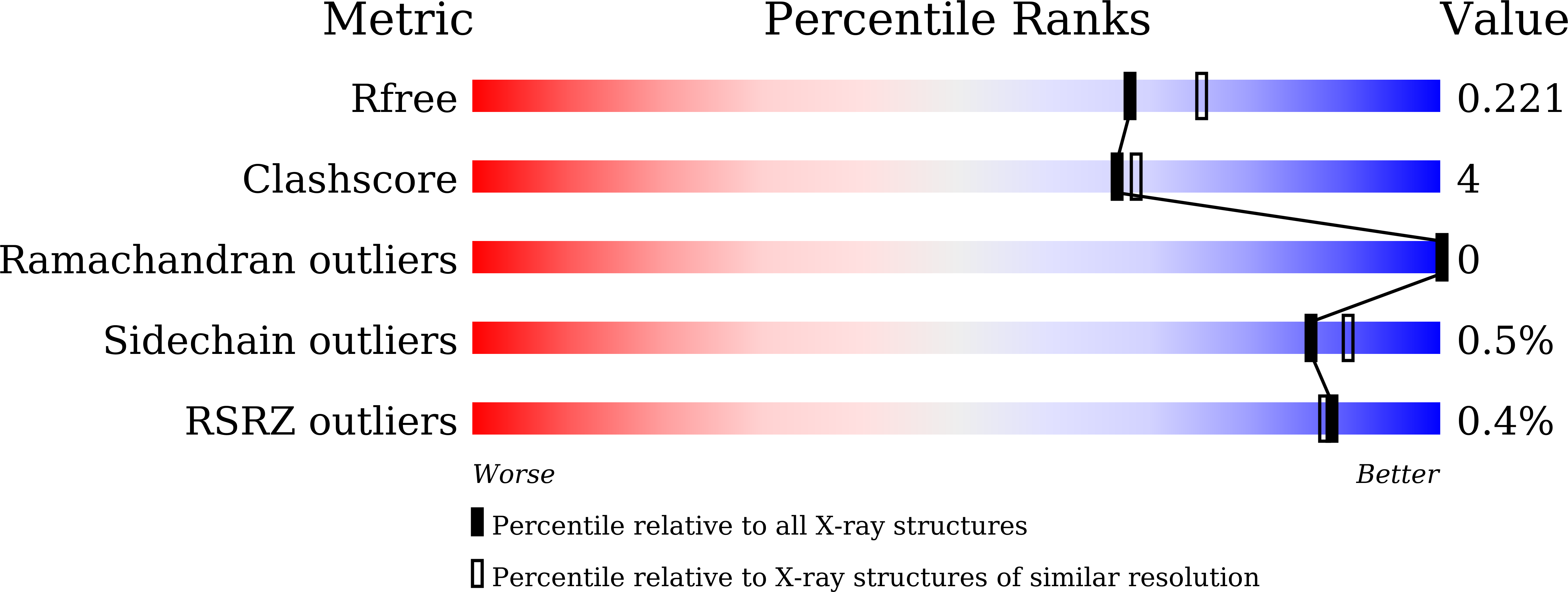
1.99 Å
R-Value Free:
0.22
R-Value Work:
0.16
R-Value Observed:
0.16
Space Group:
P 21 21 21
Macromolecular Entities
Structures with similar UniProt ID
Protein Blast
Polymer Type:polypeptide(L)
Molecule:Green fluorescent protein
Gene (Uniprot):GFP
Mutagens:F64L, S65T, Y66W, S72A, N146F, H148D, M153T, V163A, S175G, A206K, H231L
Chain IDs:A
Chain Length:245
Number of Molecules:1
Biological Source:Aequorea victoria
Modified Residue
Compound ID Chain ID Parent Comp ID Details 2D Image
CRF A SER chromophore
Primary Citation
A unified intracellular pH landscape with SITE-pHorin: a quantum-entanglement-enhanced pH probe.
Sci China Life Sci ? ? ? (2025)
PMID: 40956361 DOI: 10.1007/s11427-025-2971-5

Abstact

An accurate map of intracellular organelle pH is crucial for comprehending cellular metabolism and organellar functions. However, a unified intracellular pH spectrum using a single probe is still lacking. Here, we developed a novel quantum entanglement-enhanced pH- sensitive probe called SITE-pHorin (single excitation and two emissions pH sensor protein), which features a wide pH-sensitive range and ratiometric quantitative measurement capabilities. We subsequently measured the pH of various organelles and their subcompartments, including mitochondrial subspaces, Golgi stacks, endoplasmic reticulum (ER), lysosomes, peroxisomes, and endosomes in COS-7 cells. For the long-standing debate on the pH of the mitochondrial compartments, we measured the pH of the mitochondrial cristae (mito-cristae) as 6.60±0.40, the pH of the mitochondrial intermembrane space (mito-IMS) as 6.95±0.30, and the pH of the two populations of the mitochondrial matrix (mito-matrix) at approximately 7.20±0.27 and 7.50±0.16, respectively. Notably, the pH of the lysosome exhibited a single, narrow Gaussian distribution centered at 4.79±0.17, which is consistent with an optimal lysosomal acidic pH between 4.5 and 5.0. Furthermore, quantum chemistry computations revealed that both the deprotonation of the residue Y182 and the discrete curvature of the deformed benzene ring in the chromophore are necessary for the quantum entanglement mechanism of SITE-pHorin. Intriguingly, our findings reveal an accurate pH gradient (0.6-0.9 pH units) between the mitochondrial cristae and the mitochondrial matrix, suggesting that prior knowledge about ΔpH (0.4-0.6) and the mitochondrial proton motive force (pmf) is underestimated.

Legend

Protein

Chemical

Disease

Primary Citation of related structures
Feedback Form
Name
Email
Institute
Feedback