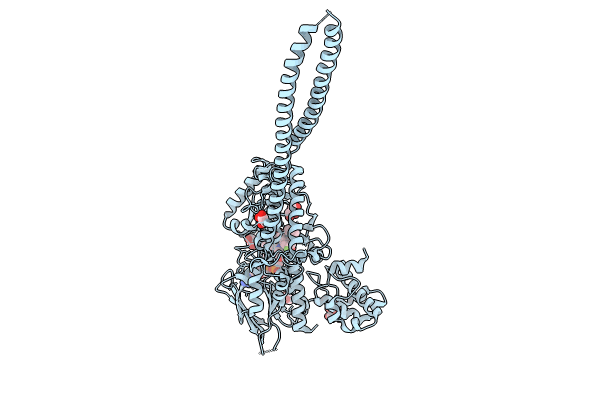
8INL image
Deposition Date 2023-03-10
Release Date 2024-03-13
Last Version Date 2024-12-25
Entry Detail
PDB ID:
8INL
Title:
LSD1 in complex with S2172
Biological Source:
Source Organism:
Homo sapiens (Taxon ID: 9606)
Host Organism:
Method Details:
Experimental Method:
Resolution:
2.62 Å
R-Value Free:
0.21
R-Value Work:
0.17
R-Value Observed:
0.18
Space Group:
P 61 2 2

Macromolecular Entities
Structures with similar UniProt ID
Protein Blast
Polymer Type:polypeptide(L)
Molecule:Lysine-specific histone demethylase 1A
Gene (Uniprot):KDM1A
Chain IDs:A
Chain Length:669
Number of Molecules:1
Biological Source:Homo sapiens
Primary Citation
Novel pharmacologic inhibition of lysine-specific demethylase 1 as a potential therapeutic for glioblastoma.
Cancer Gene Ther 31 1884 1894 (2024)
PMID: 39501082 DOI: 10.1038/s41417-024-00847-8

Abstact

Lysine-specific demethylase 1 (LSD1/KDM1A) is a pivotal epigenetic enzyme that contributes to several malignancies including malignant glioma. LSD1 is a flavin adenine dinucleotide dependent histone demethylase that specifically targets histone H3 lysine (K) 4 mono- (me1) and di-methylation (me2) and H3K9me1/2 for demethylation. Herein we report the development of an LSD inhibitor, S2172, which efficiently penetrates the blood-brain barrier. S2172 effectively suppresses LSD1 enzymatic activity, resulting in the depletion of cell growth both in vitro in glioma stem cells (GSCs) (mean half-maximal inhibitory concentration (IC50) of 13.8 μM) and in vivo in a GSC orthotopic xenograft mouse model. Treatment with S2172 robustly reduced the expression of the stemness-related genes MYC and Nestin in GSC cells. Consistent with this, chromatin immunoprecipitation-sequencing revealed a significant S2172-dependent alteration in H3K4me2/H3K4me3 status. Furthermore, we identified 284 newly acquired H3K4me2 peak regions after S2172 treatment, which were encompassed within super-enhancer regions. The altered H3K4me2/H3K4me3 status induced by S2172 treatment affected the expression of genes related to tumorigenesis. Our data suggest that targeting LSD1 with S2172 could provide a promising treatment option for glioblastomas, particularly due to targeting of GSC populations.

Legend

Protein

Chemical

Disease

Primary Citation of related structures
Feedback Form
Name
Email
Institute
Feedback