8HN9 image
Deposition Date 2022-12-07
Release Date 2023-05-10
Last Version Date 2023-11-15
Entry Detail
PDB ID:
8HN9
Keywords:
Title:
Human SIRT3 Recognizing CCNE2K348la peptide
Biological Source:
Source Organism(s):
Homo sapiens (Taxon ID: 9606)
Expression System(s):
Method Details:
Experimental Method:
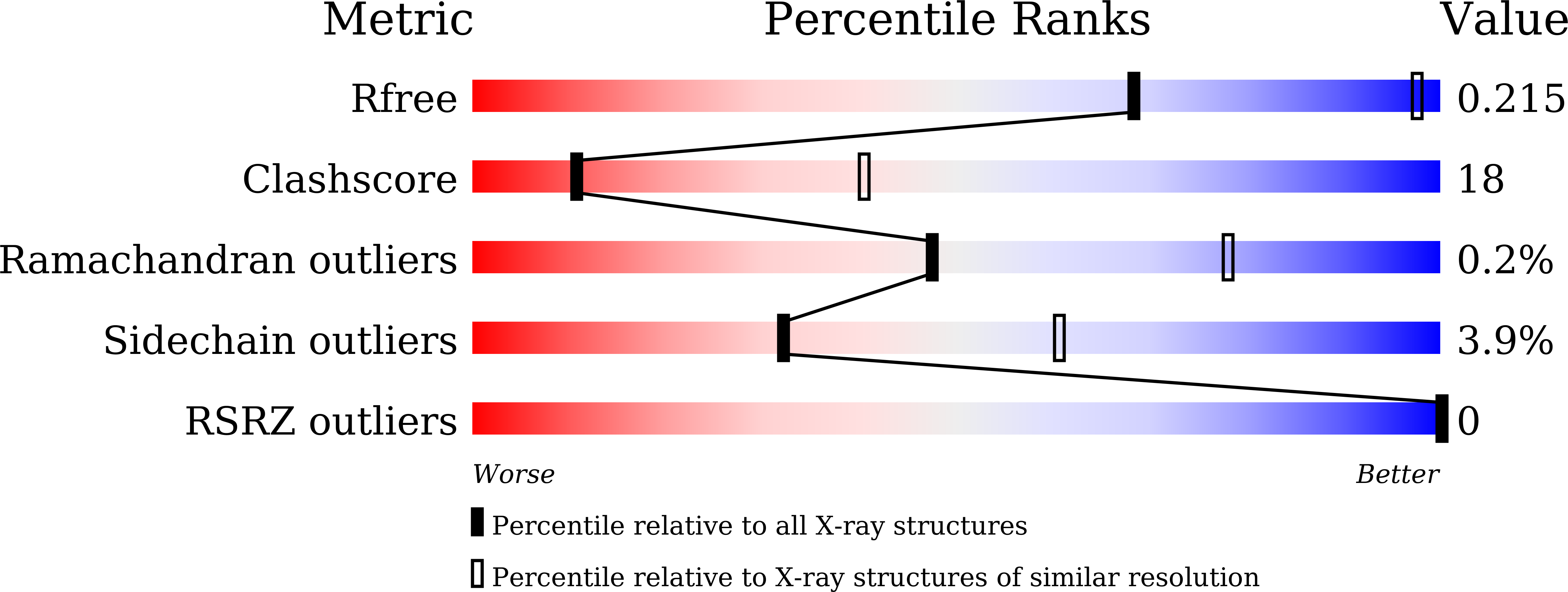
Resolution:
3.70 Å
R-Value Free:
0.21
R-Value Work:
0.19
R-Value Observed:
0.23
Space Group:
I 21 3
Macromolecular Entities
Structures with similar UniProt ID
Protein Blast
Polymer Type:polypeptide(L)
Molecule:NAD-dependent protein deacetylase sirtuin-3, mitochondrial
Gene (Uniprot):SIRT3
Chain IDs:A, B
Chain Length:274
Number of Molecules:2
Biological Source:Homo sapiens
Structures with similar UniProt ID
Protein Blast
Polymer Type:polypeptide(L)
Molecule:CCNE2 peptide
Chain IDs:C
Chain Length:13
Number of Molecules:1
Biological Source:Homo sapiens
Primary Citation
SIRT3-dependent delactylation of cyclin E2 prevents hepatocellular carcinoma growth.
Embo Rep. 24 e56052 e56052 (2023)
PMID: 36896611 DOI: 10.15252/embr.202256052

Abstact

Lysine lactylation (Kla) is a recently discovered histone mark derived from metabolic lactate. The NAD+ -dependent deacetylase SIRT3, which can also catalyze removal of the lactyl moiety from lysine, is expressed at low levels in hepatocellular carcinoma (HCC) and has been suggested to be an HCC tumor suppressor. Here we report that SIRT3 can delactylate non-histone proteins and suppress HCC development. Using SILAC-based quantitative proteomics, we identify cyclin E2 (CCNE2) as one of the lactylated substrates of SIRT3 in HCC cells. Furthermore, our crystallographic study elucidates the mechanism of CCNE2 K348la delactylation by SIRT3. Our results further suggest that lactylated CCNE2 promotes HCC cell growth, while SIRT3 activation by Honokiol induces HCC cell apoptosis and prevents HCC outgrowth in vivo by regulating Kla levels of CCNE2. Together, our results establish a physiological function of SIRT3 as a delactylase that is important for suppressing HCC, and our structural data could be useful for the future design of activators.

Legend

Protein

Chemical

Disease

Primary Citation of related structures
Feedback Form
Name
Email
Institute
Feedback