8HJB image
Deposition Date 2022-11-23
Release Date 2023-02-08
Last Version Date 2024-05-29
Entry Detail
PDB ID:
8HJB
Keywords:
Title:
Crystal structure of Pseudomonas aeruginosa PvrA with coenzyme A
Biological Source:
Source Organism:
Method Details:
Experimental Method:
Resolution:
2.65 Å
R-Value Free:
0.27
R-Value Work:
0.23
R-Value Observed:
0.25
Space Group:
P 41
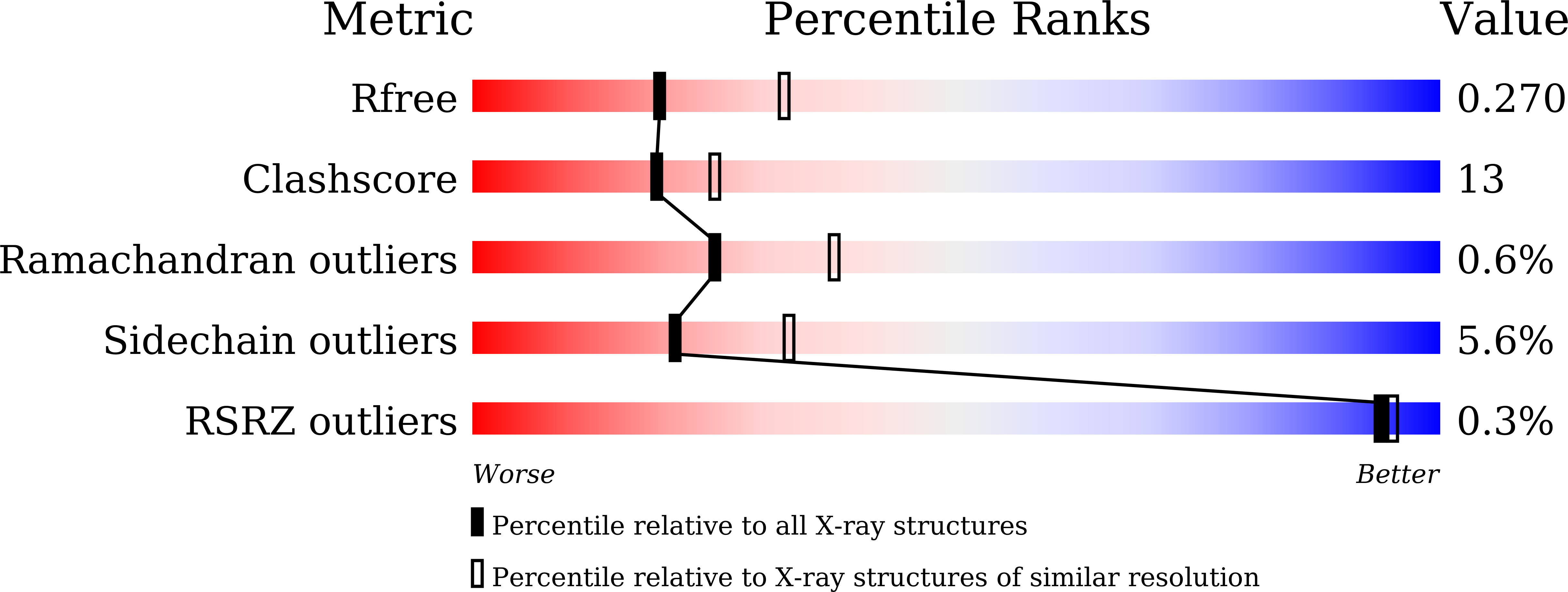
Macromolecular Entities
Structures with similar UniProt ID
Protein Blast
Polymer Type:polypeptide(L)
Molecule:TetR family transcriptional regulator
Chain IDs:A, B
Chain Length:212
Number of Molecules:2
Biological Source:Pseudomonas aeruginosa PA14
Ligand Molecules
Primary Citation
Regulatory and structural mechanisms of PvrA-mediated regulation of the PQS quorum-sensing system and PHA biosynthesis in Pseudomonas aeruginosa.
Nucleic Acids Res. 51 2691 2708 (2023)
PMID: 36744476 DOI: 10.1093/nar/gkad059

Abstact

Pseudomonas aeruginosa is capable of causing acute and chronic infections in various host tissues, which depends on its abilities to effectively utilize host-derived nutrients and produce protein virulence factors and toxic compounds. However, the regulatory mechanisms that direct metabolic intermediates towards production of toxic compounds are poorly understood. We previously identified a regulatory protein PvrA that controls genes involved in fatty acid catabolism by binding to palmitoyl-coenzyme A (CoA). In this study, transcriptomic analyses revealed that PvrA activates the Pseudomonas quinolone signal (PQS) synthesis genes, while suppressing genes for production of polyhydroxyalkanoates (PHAs). When palmitic acid was the sole carbon source, mutation of pvrA reduced production of pyocyanin and rhamnolipids due to defective PQS synthesis, but increased PHA production. We further solved the co-crystal structure of PvrA with palmitoyl-CoA and identified palmitoyl-CoA-binding residues. By using pvrA mutants, we verified the roles of the key palmitoyl-CoA-binding residues in gene regulation in response to palmitic acid. Since the PQS signal molecules, rhamnolipids and PHA synthesis pathways are interconnected by common metabolic intermediates, our results revealed a regulatory mechanism that directs carbon flux from carbon/energy storage to virulence factor production, which might be crucial for the pathogenesis.

Legend

Protein

Chemical

Disease

Primary Citation of related structures
Feedback Form
Name
Email
Institute
Feedback