8GZB image
Deposition Date 2022-09-26
Release Date 2023-09-27
Last Version Date 2024-10-09
Entry Detail
PDB ID:
8GZB
Keywords:
Title:
SARS-CoV-2 3CLpro
Biological Source:
Host Organism:
Method Details:
Experimental Method:
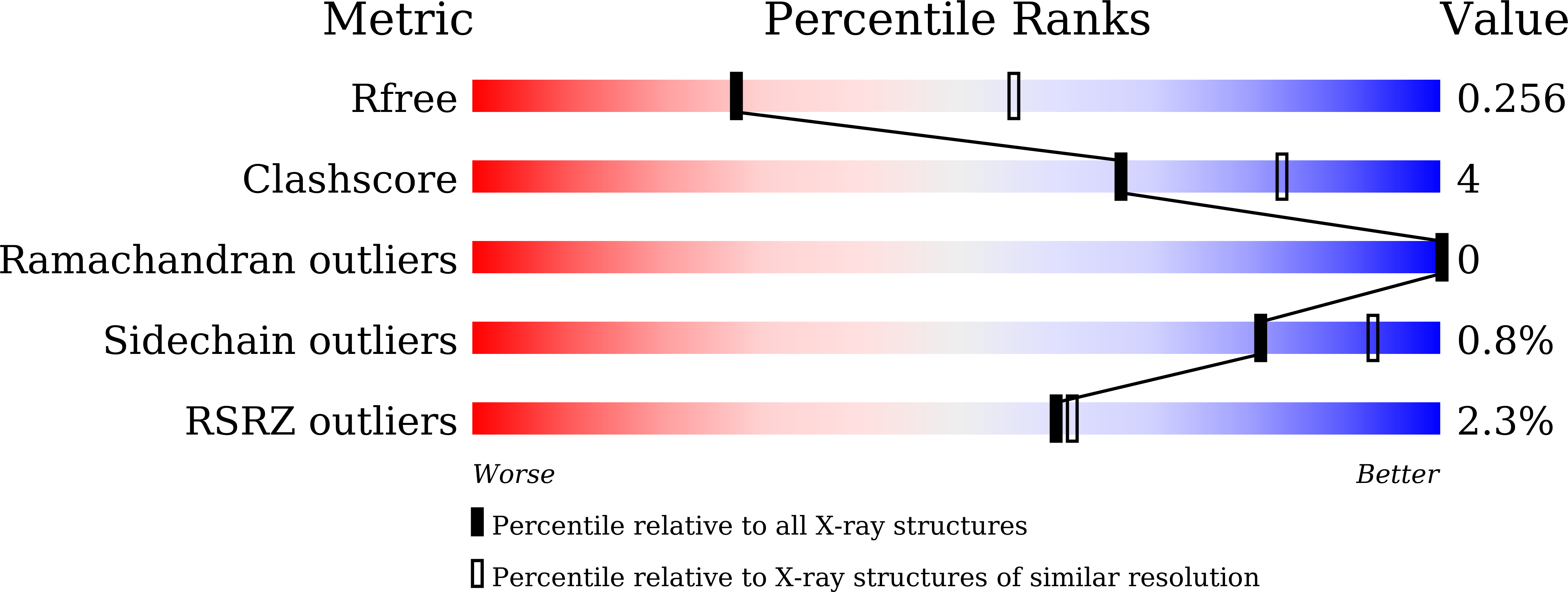
Resolution:
2.70 Å
R-Value Free:
0.25
R-Value Work:
0.20
R-Value Observed:
0.21
Space Group:
C 1 2 1
Macromolecular Entities
Structures with similar UniProt ID
Protein Blast
Polymer Type:polypeptide(L)
Molecule:3C-like proteinase nsp5
Chain IDs:A
Chain Length:306
Number of Molecules:1
Biological Source:Severe acute respiratory syndrome coronavirus 2
Primary Citation
Nature-inspired catalytic asymmetric rearrangement of cyclopropylcarbinyl cation.
Sci Adv 9 eadg1237 eadg1237 (2023)
PMID: 37163601 DOI: 10.1126/sciadv.adg1237

Abstact

In nature, cyclopropylcarbinyl cation is often involved in cationic cascade reactions catalyzed by natural enzymes to produce a great number of structurally diverse natural substances. However, mimicking this natural process with artificial organic catalysts remains a daunting challenge in synthetic chemistry. We report a small molecule-catalyzed asymmetric rearrangement of cyclopropylcarbinyl cations, leading to a series of chiral homoallylic sulfide products with good to excellent yields and enantioselectivities (up to 99% enantiomeric excess). In the presence of a chiral SPINOL-derived N-triflyl phosphoramide catalyst, the dehydration of prochiral cyclopropylcarbinols occurs rapidly to generate symmetrical cyclopropylcarbinyl cations, which are subsequently trapped by thione-containing nucleophiles. A subgram-scale experiment and multiple downstream transformations of the sulfide products are further pursued to demonstrate the synthetic utility. Notably, a few heteroaromatic sulfone derivatives could serve as "covalent warhead" in the enzymatic inhibition of severe acute respiratory syndrome coronavirus 2 main protease.

Legend

Protein

Chemical

Disease

Primary Citation of related structures
Feedback Form
Name
Email
Institute
Feedback