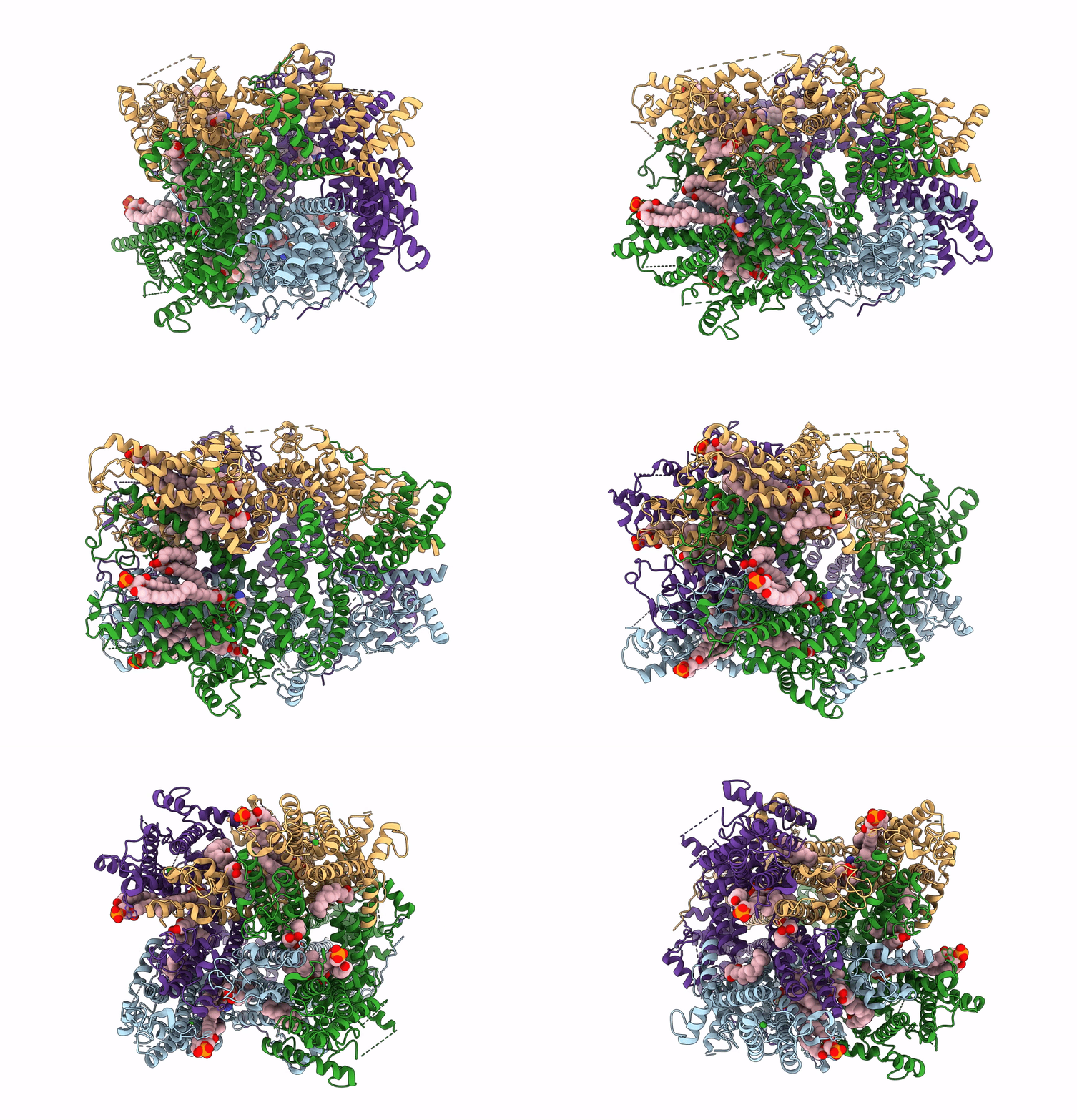
8GVW image
Deposition Date 2022-09-16
Release Date 2023-05-24
Last Version Date 2024-10-16
Entry Detail
PDB ID:
8GVW
Keywords:
Title:
Cryo-EM structure of the human TRPC5 ion channel in lipid nanodiscs, class2
Biological Source:
Source Organism:
Homo sapiens (Taxon ID: 9606)
Host Organism:
Method Details:
Experimental Method:
Resolution:
3.59 Å
Aggregation State:
PARTICLE
Reconstruction Method:
SINGLE PARTICLE
Macromolecular Entities
Structures with similar UniProt ID
Protein Blast
Polymer Type:polypeptide(L)
Molecule:Short transient receptor potential channel 5
Gene (Uniprot):TRPC5
Chain IDs:A, B, C, D
Chain Length:773
Number of Molecules:4
Biological Source:Homo sapiens
Primary Citation
Molecular architecture of the G alpha i -bound TRPC5 ion channel.
Nat Commun 14 2550 2550 (2023)
PMID: 37137991 DOI: 10.1038/s41467-023-38281-3

Abstact

G-protein coupled receptors (GPCRs) and ion channels serve as key molecular switches through which extracellular stimuli are transformed into intracellular effects, and it has long been postulated that ion channels are direct effector molecules of the alpha subunit of G-proteins (Gα). However, no complete structural evidence supporting the direct interaction between Gα and ion channels is available. Here, we present the cryo-electron microscopy structures of the human transient receptor potential canonical 5 (TRPC5)-Gαi3 complexes with a 4:4 stoichiometry in lipid nanodiscs. Remarkably, Gαi3 binds to the ankyrin repeat edge of TRPC5 ~ 50 Å away from the cell membrane. Electrophysiological analysis shows that Gαi3 increases the sensitivity of TRPC5 to phosphatidylinositol 4,5-bisphosphate (PIP2), thereby rendering TRPC5 more easily opened in the cell membrane, where the concentration of PIP2 is physiologically regulated. Our results demonstrate that ion channels are one of the direct effector molecules of Gα proteins triggered by GPCR activation-providing a structural framework for unraveling the crosstalk between two major classes of transmembrane proteins: GPCRs and ion channels.

Legend

Protein

Chemical

Disease

Primary Citation of related structures
Feedback Form
Name
Email
Institute
Feedback