8GQ1 image
Deposition Date 2022-08-28
Release Date 2023-08-30
Last Version Date 2024-10-16
Entry Detail
PDB ID:
8GQ1
Keywords:
Title:
HyHEL10 Fab complexed with hen egg lysozyme carrying arginine cluster in framework region of light chain.
Biological Source:
Source Organism:
Mus musculus (Taxon ID: 10090)
Gallus gallus (Taxon ID: 9031)
Host Organism:
Method Details:
Experimental Method:
Resolution:
3.13 Å
R-Value Free:
0.26
R-Value Work:
0.22
R-Value Observed:
0.23
Space Group:
P 63 2 2
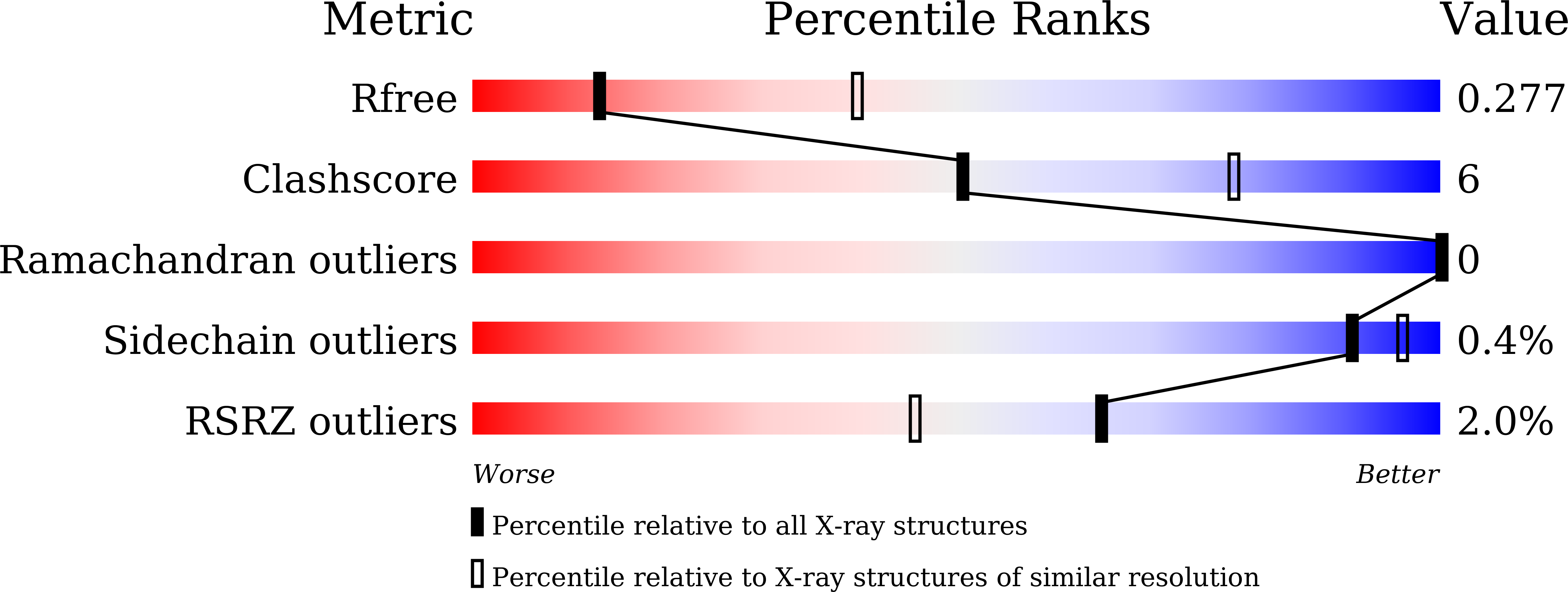
Macromolecular Entities
Structures with similar UniProt ID
Protein Blast
Polymer Type:polypeptide(L)
Molecule:Lysozyme C
Gene (Uniprot):LYZ
Chain IDs:A (auth: C)
Chain Length:129
Number of Molecules:1
Biological Source:Gallus gallus
Polymer Type:polypeptide(L)
Molecule:Heavy Chain of HyHel10 Antibody Fragment (Fab)
Chain IDs:C (auth: H)
Chain Length:231
Number of Molecules:1
Biological Source:Mus musculus
Polymer Type:polypeptide(L)
Molecule:Light Chain of HyHel10 Antibody Fragment (Fab)
Chain IDs:B (auth: L)
Chain Length:214
Number of Molecules:1
Biological Source:Mus musculus
Ligand Molecules
Primary Citation
Arginine cluster introduction on framework region in anti-lysozyme antibody improved association rate constant by changing conformational diversity of CDR loops.
Protein Sci. 32 e4745 e4745 (2023)
PMID: 37550885 DOI: 10.1002/pro.4745

Abstact

Antibodies are used for many therapeutic and biotechnological purposes. Because the affinity of an antibody to the antigen is critical for clinical efficacy of pharmaceuticals, many affinity maturation strategies have been developed. Although we previously reported an affinity maturation strategy in which the association rate of the antibody toward its antigen is improved by introducing a cluster of arginine residues into the framework region of the antibody, the detailed molecular mechanism responsible for this improvement has been unknown. In this study, we introduced five arginine residues into an anti-hen egg white lysozyme antibody (HyHEL10) Fab fragment to create the R5-mutant and comprehensively characterized the interaction between antibody and antigen using thermodynamic analysis, X-ray crystallography, and molecular dynamics (MD) simulations. Our results indicate that introduction of charged residues strongly enhanced the association rate, as previously reported, and the antibody-antigen complex structure was almost the same for the R5-mutant and wild-type Fabs. The MD simulations indicate that the mutation increased conformational diversity in complementarity-determining region loops and thereby enhanced the association rate. These observations provide the molecular basis of affinity maturation by R5 mutation.

Legend

Protein

Chemical

Disease

Primary Citation of related structures
Feedback Form
Name
Email
Institute
Feedback