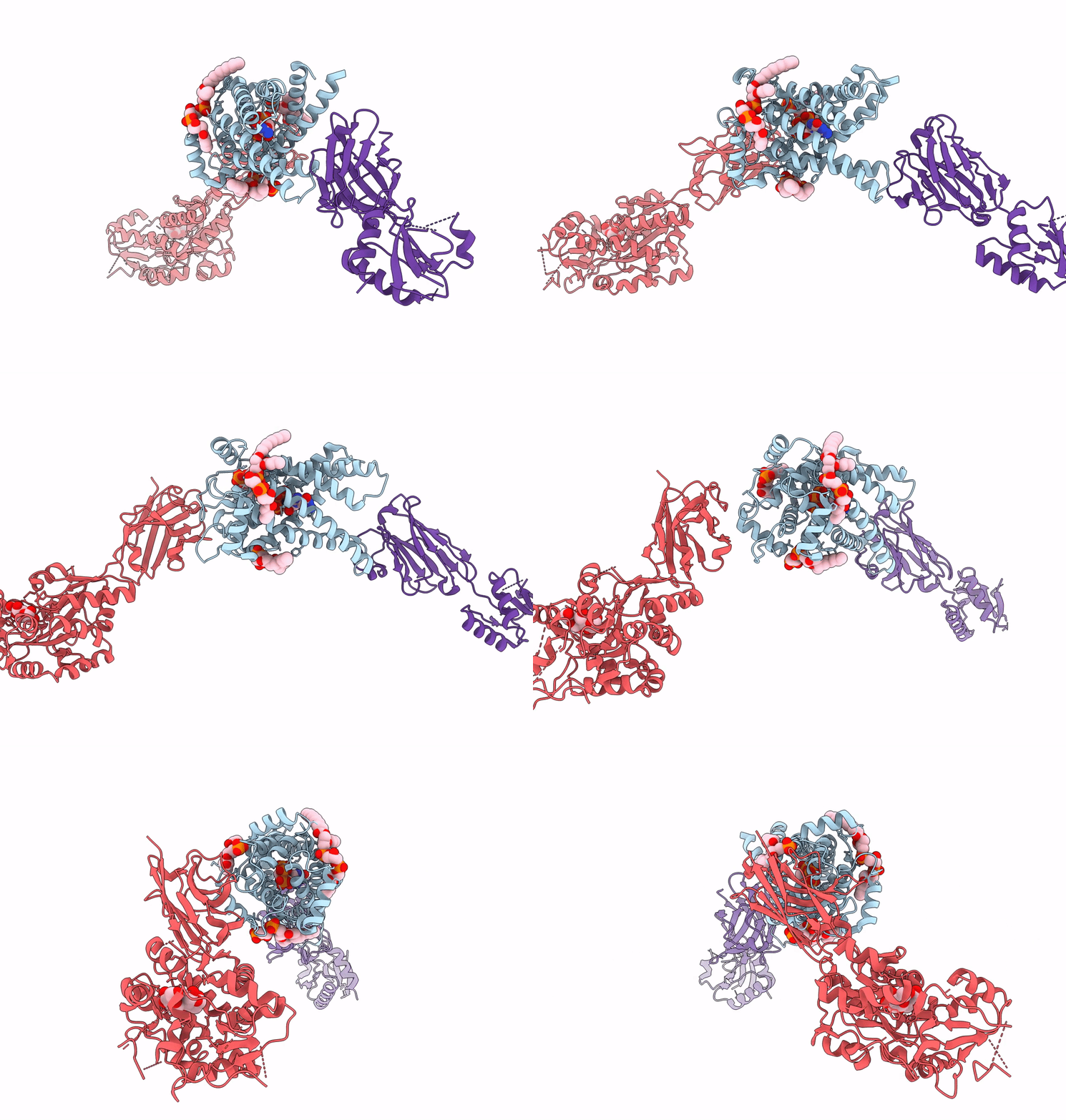
8G8W image
Deposition Date 2023-02-20
Release Date 2023-06-07
Last Version Date 2024-11-06
Entry Detail
PDB ID:
8G8W
Title:
Molecular mechanism of nucleotide inhibition of human uncoupling protein 1
Biological Source:
Source Organism:
Method Details:
Experimental Method:
Resolution:
3.80 Å
Aggregation State:
PARTICLE
Reconstruction Method:
SINGLE PARTICLE
Macromolecular Entities
Structures with similar UniProt ID
Protein Blast
Polymer Type:polypeptide(L)
Molecule:Mitochondrial brown fat uncoupling protein 1
Gene (Uniprot):UCP1
Chain IDs:A
Chain Length:310
Number of Molecules:1
Biological Source:Homo sapiens
Structures with similar UniProt ID
Protein Blast
Polymer Type:polypeptide(L)
Molecule:Pro-macrobody 71, Maltose/maltodextrin-binding periplasmic protein chimera
Gene (Uniprot):malE
Chain IDs:B
Chain Length:490
Number of Molecules:1
Biological Source:synthetic construct, Escherichia coli (strain K12)
Structures with similar UniProt ID
Protein Blast
Polymer Type:polypeptide(L)
Molecule:Pro-Macrobody 65, Maltose/maltodextrin-binding periplasmic protein chimera
Gene (Uniprot):malE
Chain IDs:C
Chain Length:494
Number of Molecules:1
Biological Source:synthetic construct, Escherichia coli (strain K12)
Primary Citation
Structural basis of purine nucleotide inhibition of human uncoupling protein 1.
Sci Adv 9 eadh4251 eadh4251 (2023)
PMID: 37256948 DOI: 10.1126/sciadv.adh4251

Abstact

Mitochondrial uncoupling protein 1 (UCP1) gives brown adipose tissue of mammals its specialized ability to burn calories as heat for thermoregulation. When activated by fatty acids, UCP1 catalyzes the leak of protons across the mitochondrial inner membrane, short-circuiting the mitochondrion to generate heat, bypassing ATP synthesis. In contrast, purine nucleotides bind and inhibit UCP1, regulating proton leak by a molecular mechanism that is unclear. We present the cryo-electron microscopy structure of the GTP-inhibited state of UCP1, which is consistent with its nonconducting state. The purine nucleotide cross-links the transmembrane helices of UCP1 with an extensive interaction network. Our results provide a structural basis for understanding the specificity and pH dependency of the regulatory mechanism. UCP1 has retained all of the key functional and structural features required for a mitochondrial carrier-like transport mechanism. The analysis shows that inhibitor binding prevents the conformational changes that UCP1 uses to facilitate proton leak.

Legend

Protein

Chemical

Disease

Primary Citation of related structures
Feedback Form
Name
Email
Institute
Feedback