8G63 image
Deposition Date 2023-02-14
Release Date 2023-10-11
Last Version Date 2024-04-24
Entry Detail
PDB ID:
8G63
Title:
Ralimetinib (LY2228820) in complex with wild type EGFR
Biological Source:
Source Organism:
Homo sapiens (Taxon ID: 9606)
Host Organism:
Method Details:
Experimental Method:
Resolution:
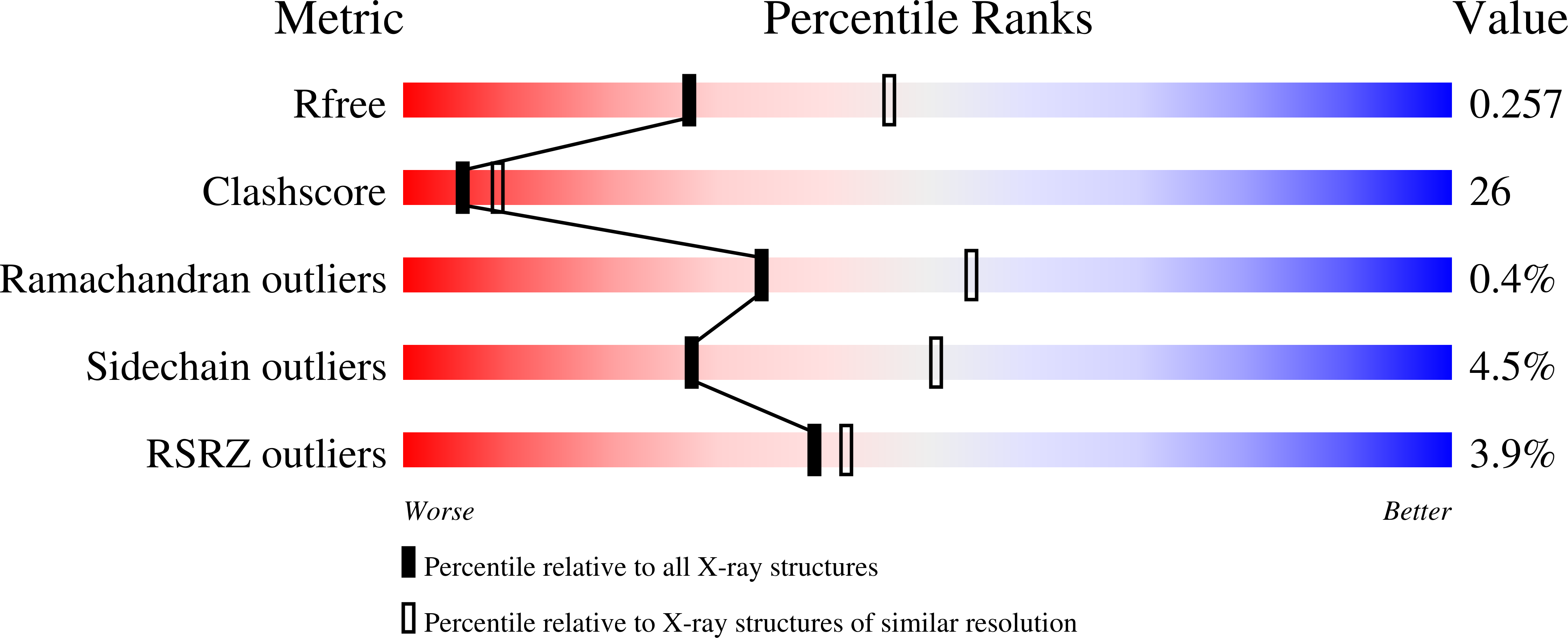
2.50 Å
R-Value Free:
0.25
R-Value Work:
0.20
R-Value Observed:
0.21
Space Group:
I 2 3
Macromolecular Entities
Structures with similar UniProt ID
Protein Blast
Polymer Type:polypeptide(L)
Molecule:Epidermal growth factor receptor
Gene (Uniprot):EGFR
Chain IDs:A
Chain Length:327
Number of Molecules:1
Biological Source:Homo sapiens
Ligand Molecules
Primary Citation
Inhibition of a lower potency target drives the anticancer activity of a clinical p38 inhibitor.
Cell Chem Biol 30 1211 1222.e5 (2023)
PMID: 37827156 DOI: 10.1016/j.chembiol.2023.09.013

Abstact

The small-molecule drug ralimetinib was developed as an inhibitor of the p38α mitogen-activated protein kinase, and it has advanced to phase 2 clinical trials in oncology. Here, we demonstrate that ralimetinib resembles EGFR-targeting drugs in pharmacogenomic profiling experiments and that ralimetinib inhibits EGFR kinase activity in vitro and in cellulo. While ralimetinib sensitivity is unaffected by deletion of the genes encoding p38α and p38β, its effects are blocked by expression of the EGFR-T790M gatekeeper mutation. Finally, we solved the cocrystal structure of ralimetinib bound to EGFR, providing further evidence that this drug functions as an ATP-competitive EGFR inhibitor. We conclude that, though ralimetinib is >30-fold less potent against EGFR compared to p38α, its ability to inhibit EGFR drives its primary anticancer effects. Our results call into question the value of p38α as an anticancer target, and we describe a multi-modal approach that can be used to uncover a drug's mechanism-of-action.

Legend

Protein

Chemical

Disease

Primary Citation of related structures
Feedback Form
Name
Email
Institute
Feedback