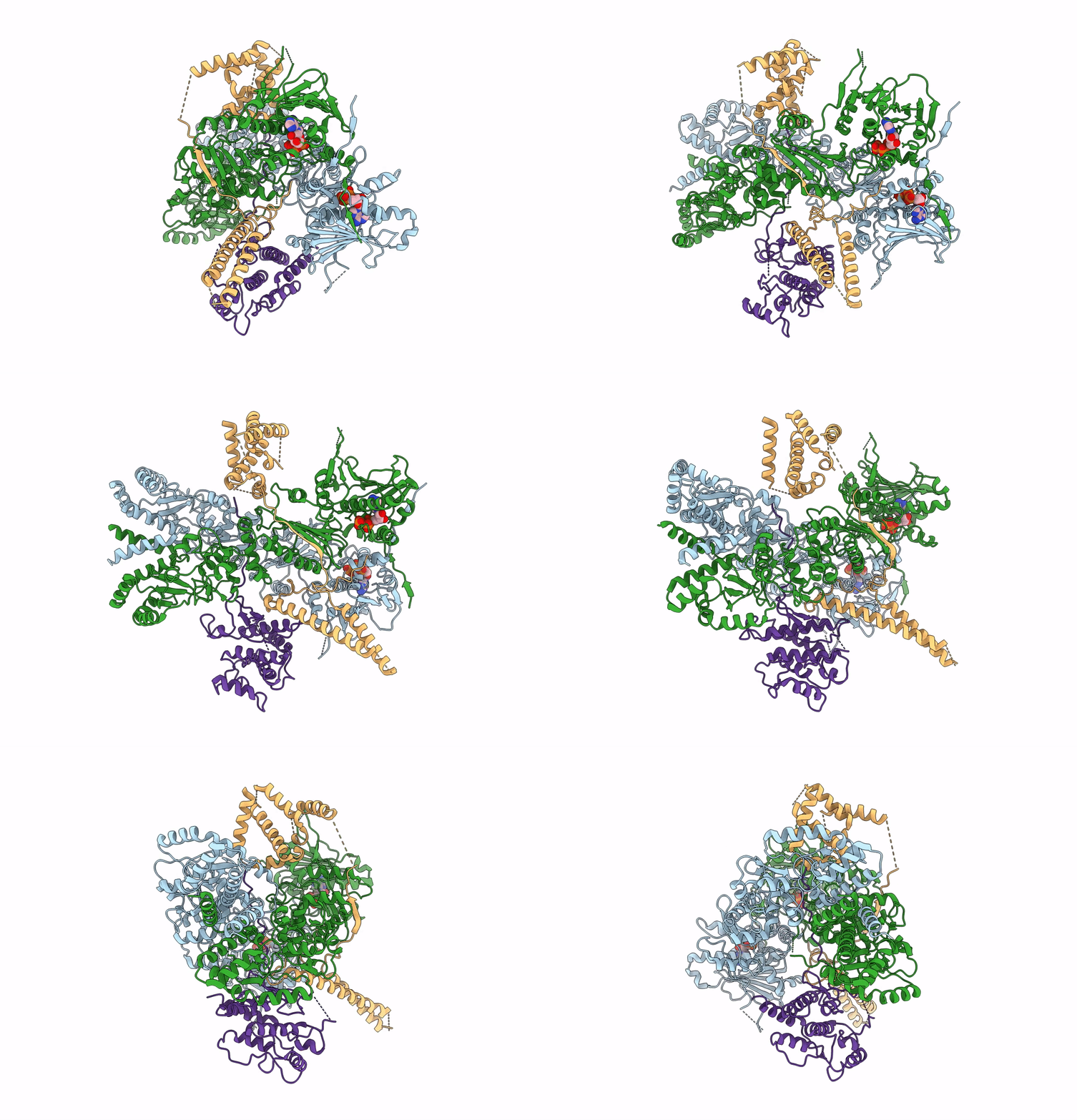
8FX4 image
Deposition Date 2023-01-23
Release Date 2023-07-12
Last Version Date 2025-06-04
Entry Detail
PDB ID:
8FX4
Title:
GC-C-Hsp90-Cdc37 regulatory complex
Biological Source:
Source Organism:
Homo sapiens (Taxon ID: 9606)
Cricetulus griseus (Taxon ID: 10029)
Host Organism:
Method Details:
Experimental Method:
Resolution:
3.00 Å
Aggregation State:
PARTICLE
Reconstruction Method:
SINGLE PARTICLE

Macromolecular Entities
Structures with similar UniProt ID
Protein Blast
Polymer Type:polypeptide(L)
Molecule:Heat shock protein HSP 90-beta
Gene (Uniprot):LOC100754792
Chain IDs:A, B
Chain Length:724
Number of Molecules:2
Biological Source:Cricetulus griseus
Structures with similar UniProt ID
Protein Blast
Polymer Type:polypeptide(L)
Molecule:Hsp90 co-chaperone Cdc37
Gene (Uniprot):Cdc37
Chain IDs:C
Chain Length:379
Number of Molecules:1
Biological Source:Cricetulus griseus
Structures with similar UniProt ID
Protein Blast
Polymer Type:polypeptide(L)
Molecule:Guanylyl cyclase C
Gene (Uniprot):GUCY2C
Chain IDs:D
Chain Length:741
Number of Molecules:1
Biological Source:Homo sapiens
Ligand Molecules
Primary Citation
Structural insight into guanylyl cyclase receptor hijacking of the kinase-Hsp90 regulatory mechanism.
Elife 12 ? ? (2023)
PMID: 37535399 DOI: 10.7554/eLife.86784

Abstact

Membrane receptor guanylyl cyclases play a role in many important facets of human physiology, from regulating blood pressure to intestinal fluid secretion. The structural mechanisms which influence these important physiological processes have yet to be explored. We present the 3.9 Å resolution cryo-EM structure of the human membrane receptor guanylyl cyclase GC-C in complex with Hsp90 and its co-chaperone Cdc37, providing insight into the mechanism of Cdc37 mediated binding of GC-C to the Hsp90 regulatory complex. As a membrane protein and non-kinase client of Hsp90-Cdc37, this work shows the remarkable plasticity of Cdc37 to interact with a broad array of clients with significant sequence variation. Furthermore, this work shows how membrane receptor guanylyl cyclases hijack the regulatory mechanisms used for active kinases to facilitate their regulation. Given the known druggability of Hsp90, these insights can guide the further development of membrane receptor guanylyl cyclase-targeted therapeutics and lead to new avenues to treat hypertension, inflammatory bowel disease, and other membrane receptor guanylyl cyclase-related conditions.

Legend

Protein

Chemical

Disease

Primary Citation of related structures
Feedback Form
Name
Email
Institute
Feedback