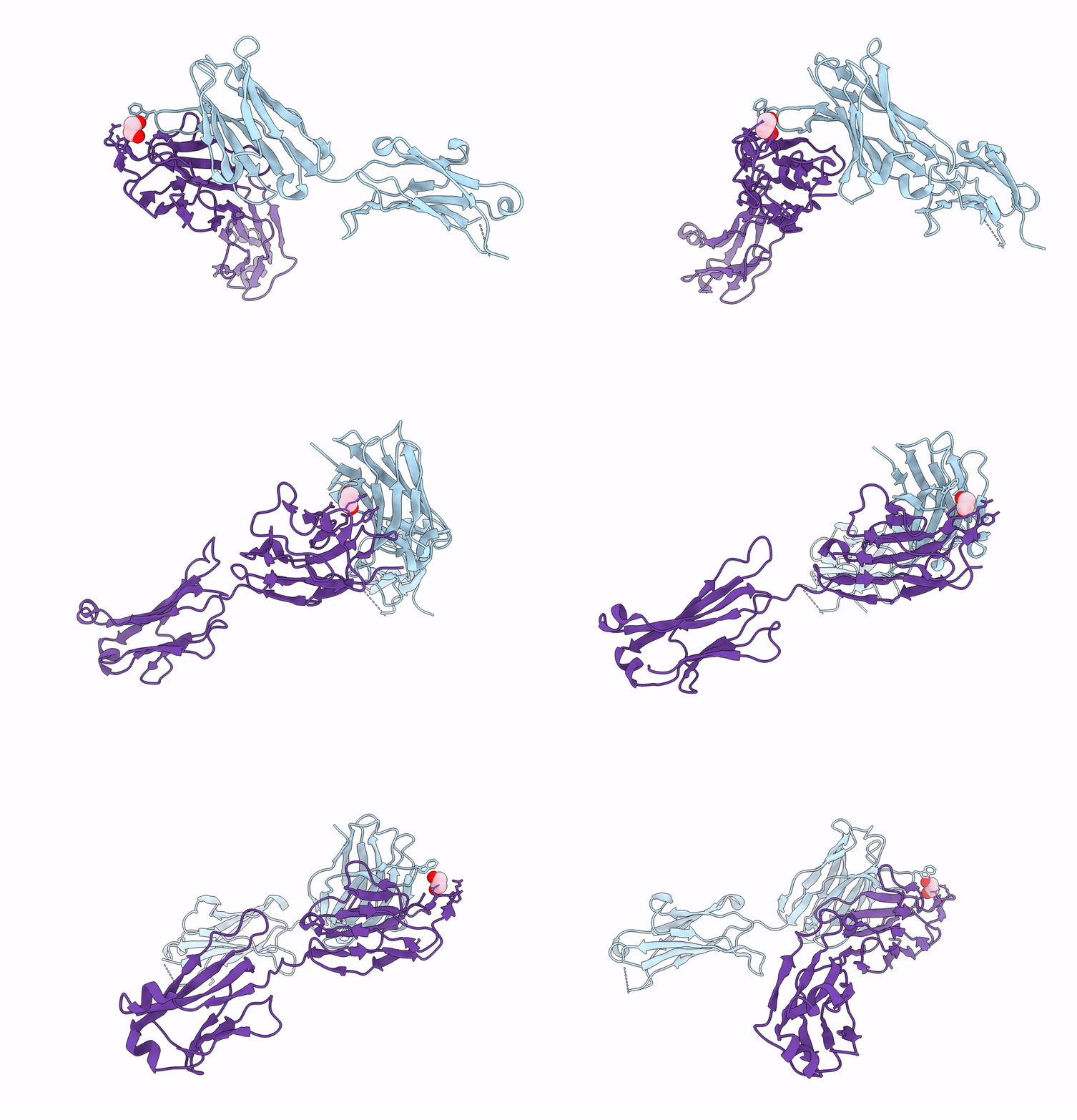
8FWH image
Deposition Date 2023-01-22
Release Date 2023-09-06
Last Version Date 2024-11-20
Entry Detail
PDB ID:
8FWH
Keywords:
Title:
Crystal structure of bivalent antibody Fab fragment of Anti-human LAG3 (22D2)
Biological Source:
Source Organism:
Mus musculus (Taxon ID: 10090)
Host Organism:
Method Details:
Experimental Method:
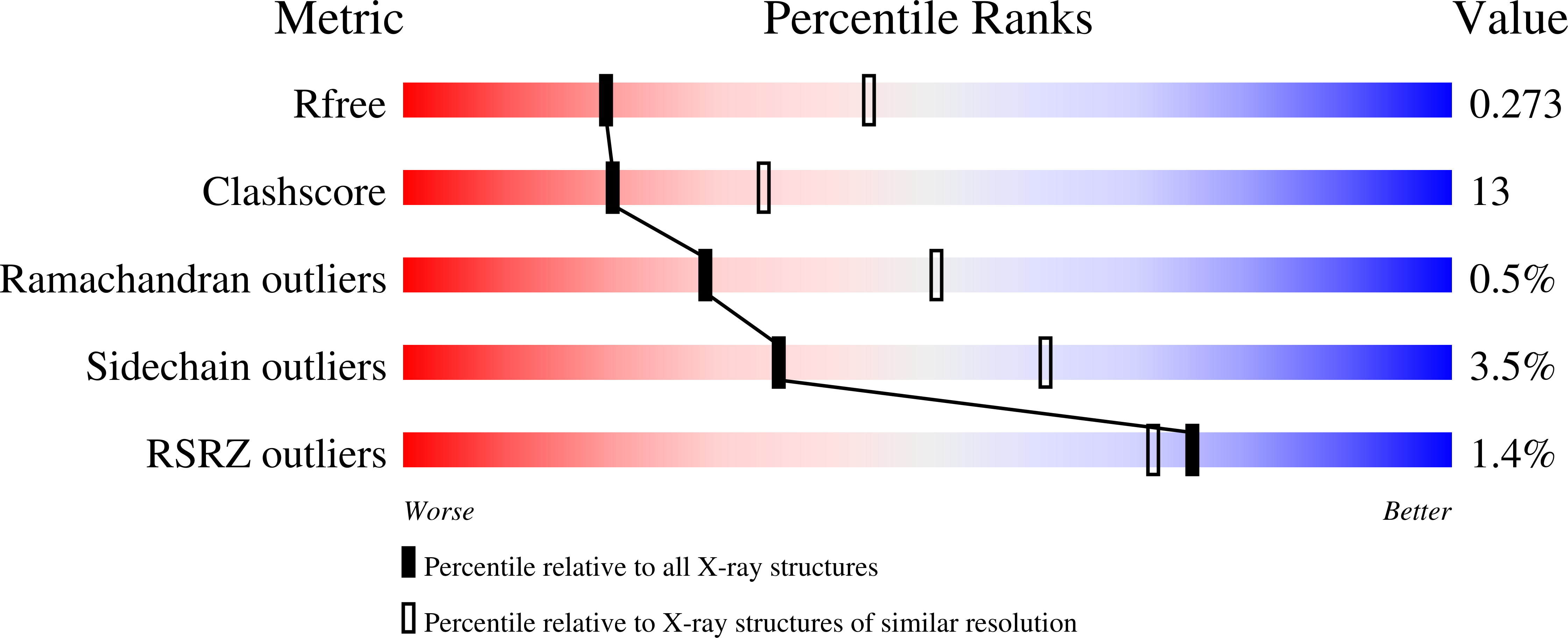
Resolution:
2.83 Å
R-Value Free:
0.27
R-Value Work:
0.21
Space Group:
C 1 2 1
Macromolecular Entities
Polymer Type:polypeptide(L)
Molecule:Anti-human LAG3 (22D2) heavy chain
Chain IDs:A (auth: HHH)
Chain Length:223
Number of Molecules:1
Biological Source:Mus musculus
Polymer Type:polypeptide(L)
Molecule:Anti-human LAG3 (22D2) light chain
Chain IDs:B (auth: LLL)
Chain Length:218
Number of Molecules:1
Biological Source:Mus musculus
Ligand Molecules
Primary Citation
CryoEM structure of a therapeutic antibody (favezelimab) bound to human LAG3 determined using a bivalent Fab as fiducial marker.
Structure 31 1149 ? (2023)
PMID: 37619561 DOI: 10.1016/j.str.2023.07.013

Abstact

Lymphocyte activation gene 3 protein (LAG3) is an inhibitory receptor that is upregulated on exhausted T cells in tumors. LAG3 is a major target for cancer immunotherapy with many anti-LAG3 antibodies in clinical trials. However, there is no structural information on the epitopes recognized by these antibodies. We determined the single-particle cryoEM structure of a therapeutic antibody (favezelimab) bound to LAG3 to 3.5 Å resolution, revealing that favezelimab targets the LAG3-binding site for MHC class II, its canonical ligand. The small size of the complex between the conventional (monovalent) Fab of favezelimab and LAG3 (∼100 kDa) presented a challenge for cryoEM. Accordingly, we engineered a bivalent version of Fab favezelimab that doubled the size of the Fab-LAG3 complex and conferred a highly identifiable shape to the complex that facilitated particle selection and orientation for image processing. This study establishes bivalent Fabs as new fiducial markers for cryoEM analysis of small proteins.

Legend

Protein

Chemical

Disease

Primary Citation of related structures
Feedback Form
Name
Email
Institute
Feedback