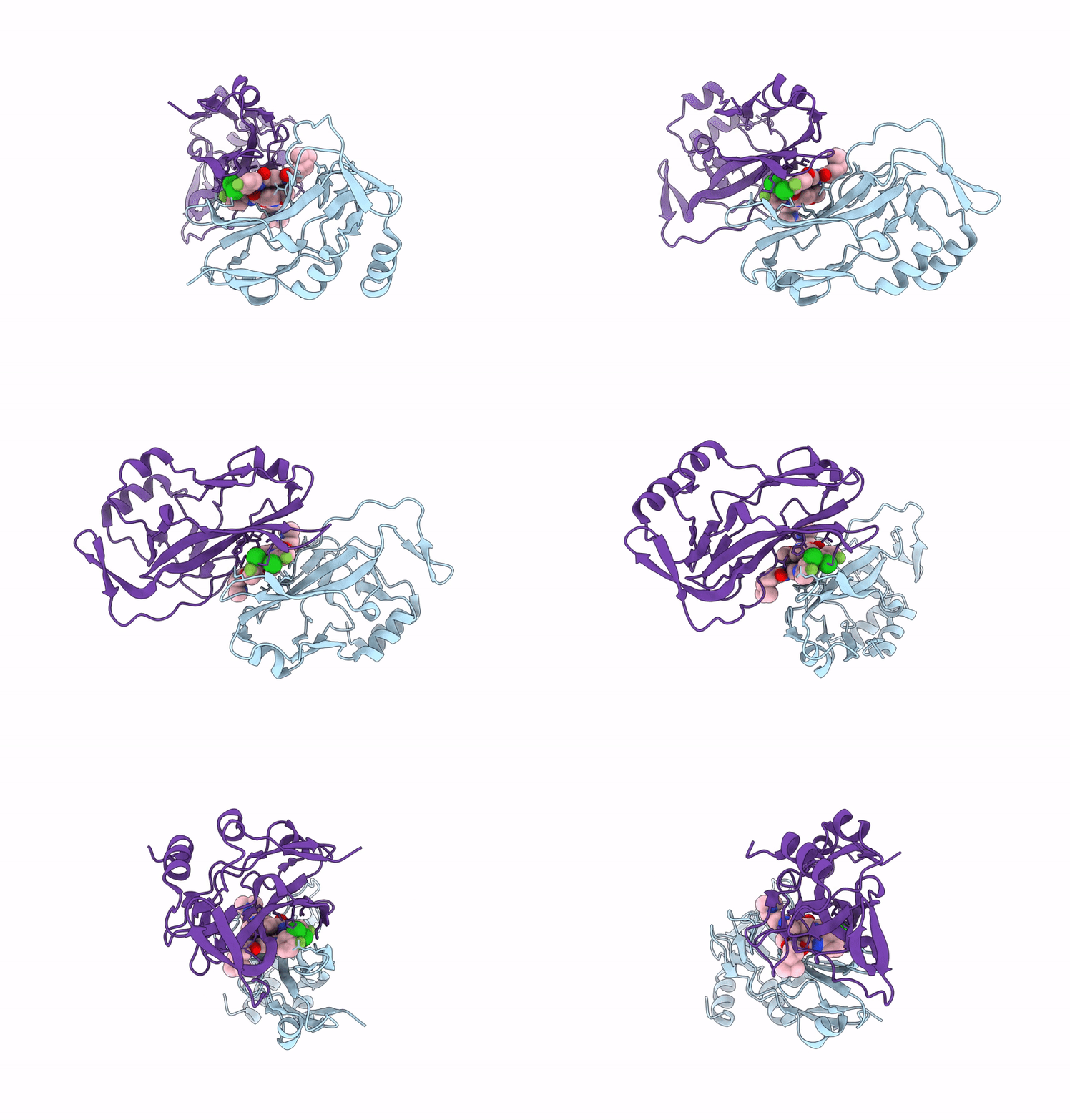
8FMU image
Deposition Date 2022-12-24
Release Date 2024-02-28
Last Version Date 2024-11-06
Entry Detail
PDB ID:
8FMU
Keywords:
Title:
Crystal structure of human Brachyury G177D variant in complex with SJF-4601
Biological Source:
Source Organism(s):
Homo sapiens (Taxon ID: 9606)
Expression System(s):
Method Details:
Experimental Method:
Resolution:
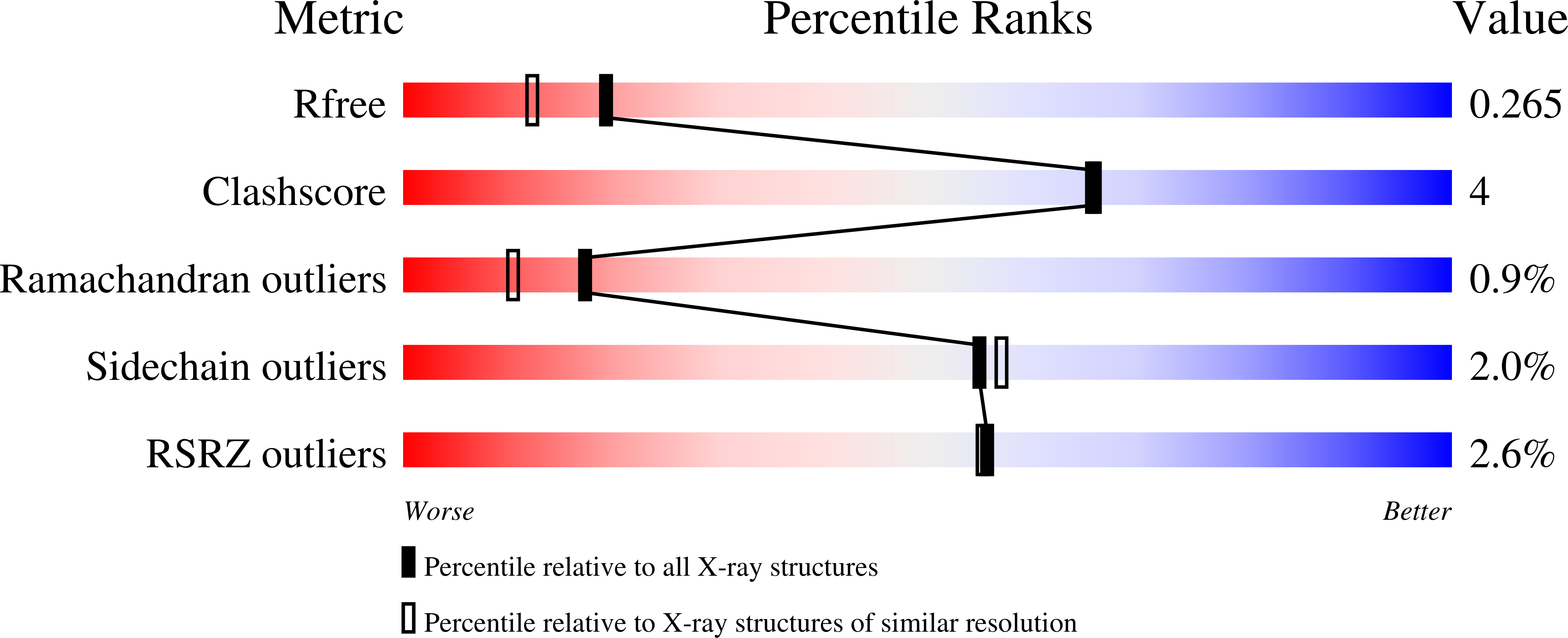
2.03 Å
R-Value Free:
0.26
R-Value Work:
0.19
R-Value Observed:
0.20
Space Group:
P 21 21 21
Macromolecular Entities
Structures with similar UniProt ID
Protein Blast
Polymer Type:polypeptide(L)
Molecule:T-box transcription factor T
Gene (Uniprot):TBXT
Mutagens:G177D
Chain IDs:A, B
Chain Length:192
Number of Molecules:2
Biological Source:Homo sapiens
Ligand Molecules
Primary Citation
Development of a Small Molecule Downmodulator for the Transcription Factor Brachyury.
Angew.Chem.Int.Ed.Engl. 63 e202316496 e202316496 (2024)
PMID: 38348945 DOI: 10.1002/anie.202316496

Abstact

Brachyury is an oncogenic transcription factor whose overexpression drives chordoma growth. The downmodulation of brachyury in chordoma cells has demonstrated therapeutic potential, however, as a transcription factor it is classically deemed "undruggable". Given that direct pharmacological intervention against brachyury has proven difficult, attempts at intervention have instead targeted upstream kinases. Recently, afatinib, an FDA-approved kinase inhibitor, has been shown to modulate brachyury levels in multiple chordoma cell lines. Herein, we use afatinib as a lead to undertake a structure-based drug design approach, aided by mass-spectrometry and X-ray crystallography, to develop DHC-156, a small molecule that more selectively binds brachyury and downmodulates it as potently as afatinib. We eliminated kinase-inhibition from this novel scaffold while demonstrating that DHC-156 induces the post-translational downmodulation of brachyury that results in an irreversible impairment of chordoma tumor cell growth. In doing so, we demonstrate the feasibility of direct brachyury modulation, which may further be developed into more potent tool compounds and therapies.

Legend

Protein

Chemical

Disease

Primary Citation of related structures
Feedback Form
Name
Email
Institute
Feedback