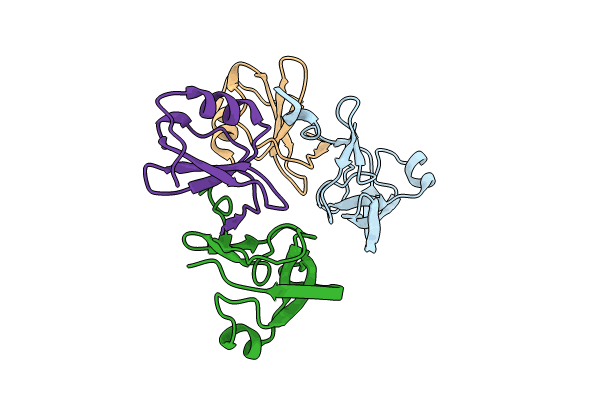
8FK9 image
Deposition Date 2022-12-21
Release Date 2024-01-17
Last Version Date 2024-11-13
Entry Detail
PDB ID:
8FK9
Keywords:
Title:
Crystal Structure of the Tick Evasin EVA-ACA1001 Complexed to Human Chemokine CCL16
Biological Source:
Source Organism:
Host Organism:
Method Details:
Experimental Method:
Resolution:
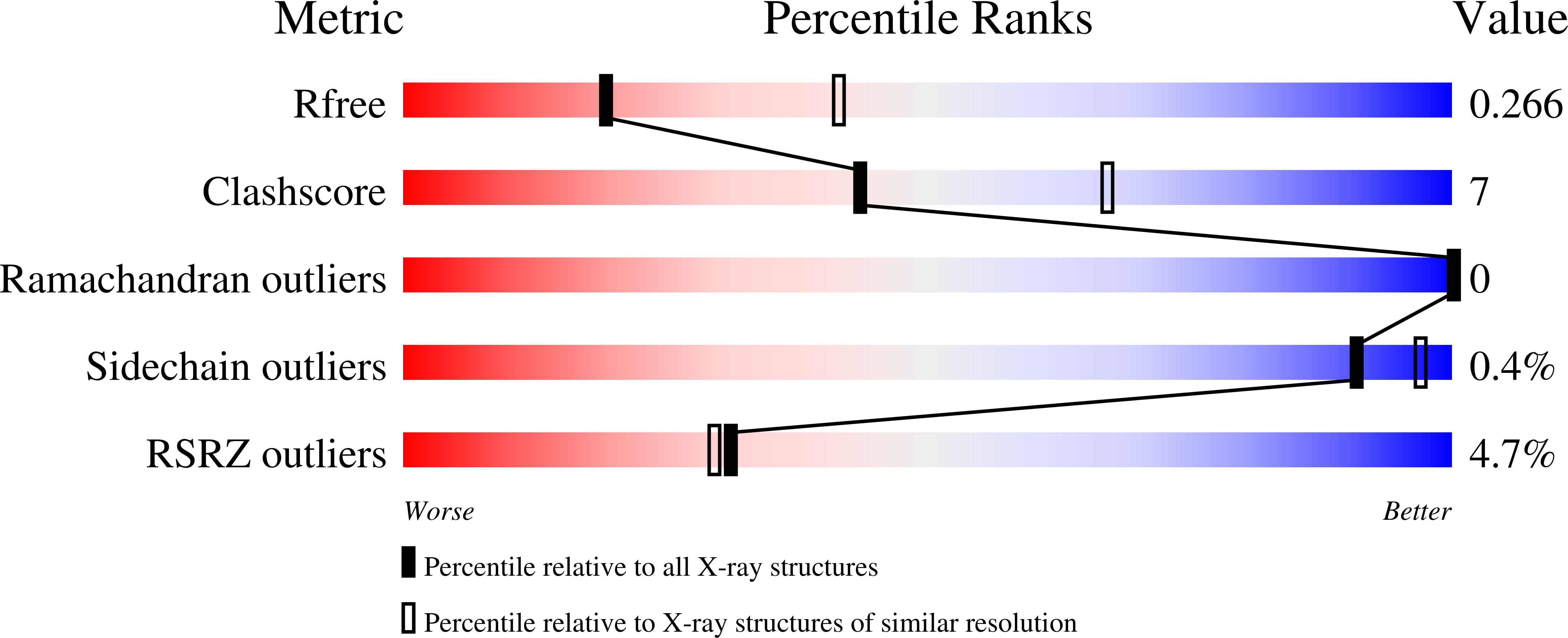
2.70 Å
R-Value Free:
0.26
R-Value Work:
0.25
R-Value Observed:
0.25
Space Group:
C 2 2 2
Macromolecular Entities
Structures with similar UniProt ID
Protein Blast
Polymer Type:polypeptide(L)
Molecule:Evasin P991
Chain IDs:A, B
Chain Length:108
Number of Molecules:2
Biological Source:Amblyomma cajennense
Structures with similar UniProt ID
Protein Blast
Polymer Type:polypeptide(L)
Molecule:C-C motif chemokine 16
Gene (Uniprot):CCL16
Chain IDs:C, D
Chain Length:100
Number of Molecules:2
Biological Source:Homo sapiens
Primary Citation
Structural basis of chemokine recognition by the class A3 tick evasin EVA-ACA1001.
Protein Sci. 33 e4999 e4999 (2024)
PMID: 38723106 DOI: 10.1002/pro.4999

Abstact

Ticks produce chemokine-binding proteins, known as evasins, in their saliva to subvert the host's immune response. Evasins bind to chemokines and thereby inhibit the activation of their cognate chemokine receptors, thus suppressing leukocyte recruitment and inflammation. We recently described subclass A3 evasins, which, like other class A evasins, exclusively target CC chemokines but appear to use a different binding site architecture to control target selectivity among CC chemokines. We now describe the structural basis of chemokine recognition by the class A3 evasin EVA-ACA1001. EVA-ACA1001 binds to almost all human CC chemokines and inhibits receptor activation. Truncation mutants of EVA-ACA1001 showed that, unlike class A1 evasins, both the N- and C-termini of EVA-ACA1001 play minimal roles in chemokine binding. To understand the structural basis of its broad chemokine recognition, we determined the crystal structure of EVA-ACA1001 in complex with the human chemokine CCL16. EVA-ACA1001 forms backbone-backbone interactions with the CC motif of CCL16, a conserved feature of all class A evasin-chemokine complexes. A hydrophobic pocket in EVA-ACA1001, formed by several aromatic side chains and the unique disulfide bond of class A3 evasins, accommodates the residue immediately following the CC motif (the "CC + 1 residue") of CCL16. This interaction is shared with EVA-AAM1001, the only other class A3 evasins characterized to date, suggesting it may represent a common mechanism that accounts for the broad recognition of CC chemokines by class A3 evasins.

Legend

Protein

Chemical

Disease

Primary Citation of related structures
Feedback Form
Name
Email
Institute
Feedback