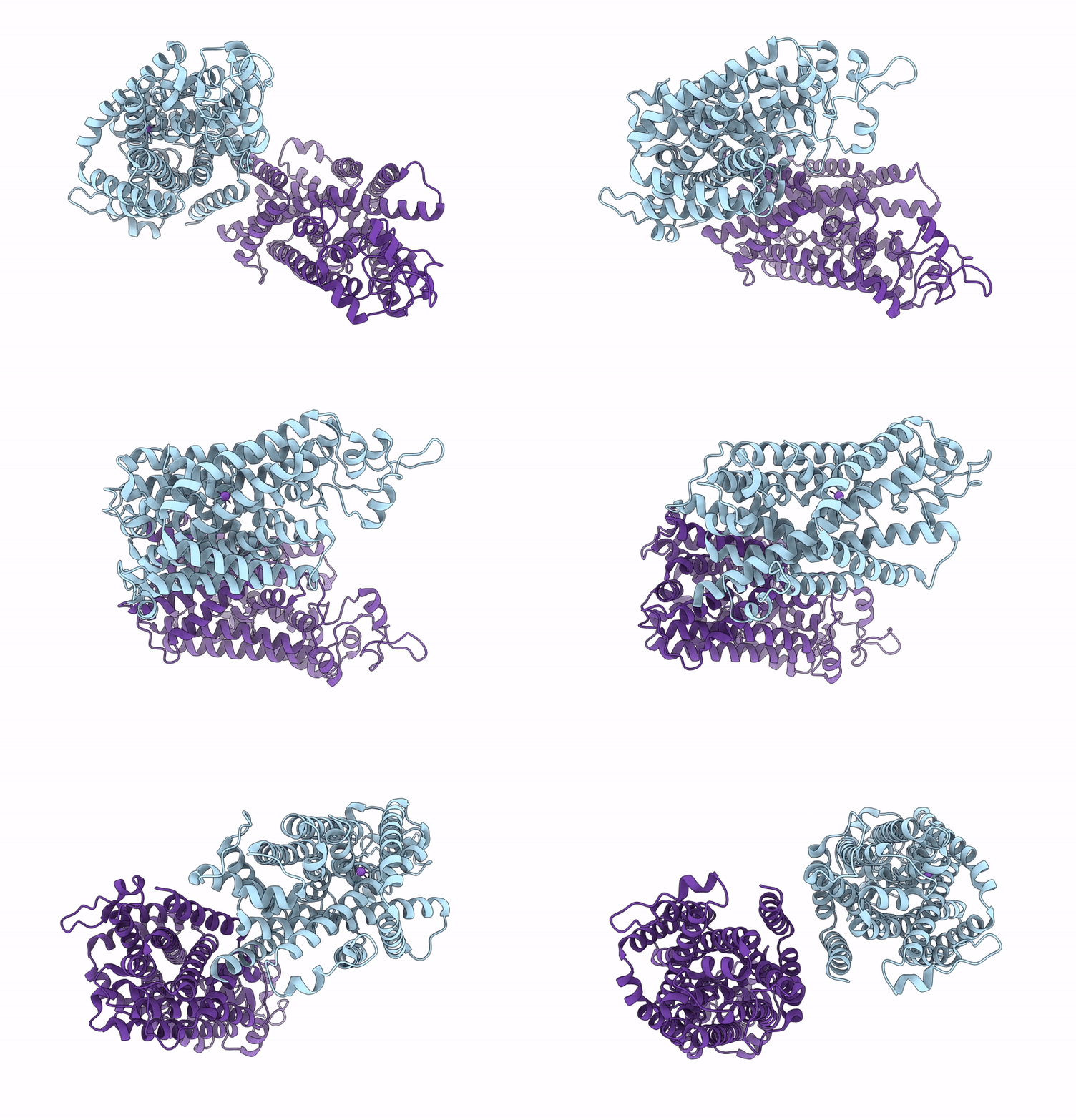
8FHT image
Deposition Date 2022-12-15
Release Date 2023-02-15
Last Version Date 2025-05-21
Entry Detail
PDB ID:
8FHT
Title:
Cryo-EM structure of human NCC
Biological Source:
Source Organism:
Homo sapiens (Taxon ID: 9606)
Host Organism:
Method Details:
Experimental Method:
Resolution:
3.02 Å
Aggregation State:
PARTICLE
Reconstruction Method:
SINGLE PARTICLE
Macromolecular Entities
Structures with similar UniProt ID
Protein Blast
Polymer Type:polypeptide(L)
Molecule:Solute carrier family 12 member 3
Gene (Uniprot):SLC12A3
Mutagens:T55D, T60D, S73D, K140N
Chain IDs:A, B
Chain Length:1021
Number of Molecules:2
Biological Source:Homo sapiens
Primary Citation
Structure and thiazide inhibition mechanism of the human Na-Cl cotransporter.
Nature 614 788 793 (2023)
PMID: 36792826 DOI: 10.1038/s41586-023-05718-0

Abstact

The sodium-chloride cotransporter (NCC) is critical for kidney physiology1. The NCC has a major role in salt reabsorption in the distal convoluted tubule of the nephron2,3, and mutations in the NCC cause the salt-wasting disease Gitelman syndrome4. As a key player in salt handling, the NCC regulates blood pressure and is the target of thiazide diuretics, which have been widely prescribed as first-line medications to treat hypertension for more than 60 years5-7. Here we determined the structures of human NCC alone and in complex with a commonly used thiazide diuretic using cryo-electron microscopy. These structures, together with functional studies, reveal major conformational states of the NCC and an intriguing regulatory mechanism. They also illuminate how thiazide diuretics specifically interact with the NCC and inhibit its transport function. Our results provide critical insights for understanding the Na-Cl cotransport mechanism of the NCC, and they establish a framework for future drug design and for interpreting disease-related mutations.

Legend

Protein

Chemical

Disease

Primary Citation of related structures
Feedback Form
Name
Email
Institute
Feedback