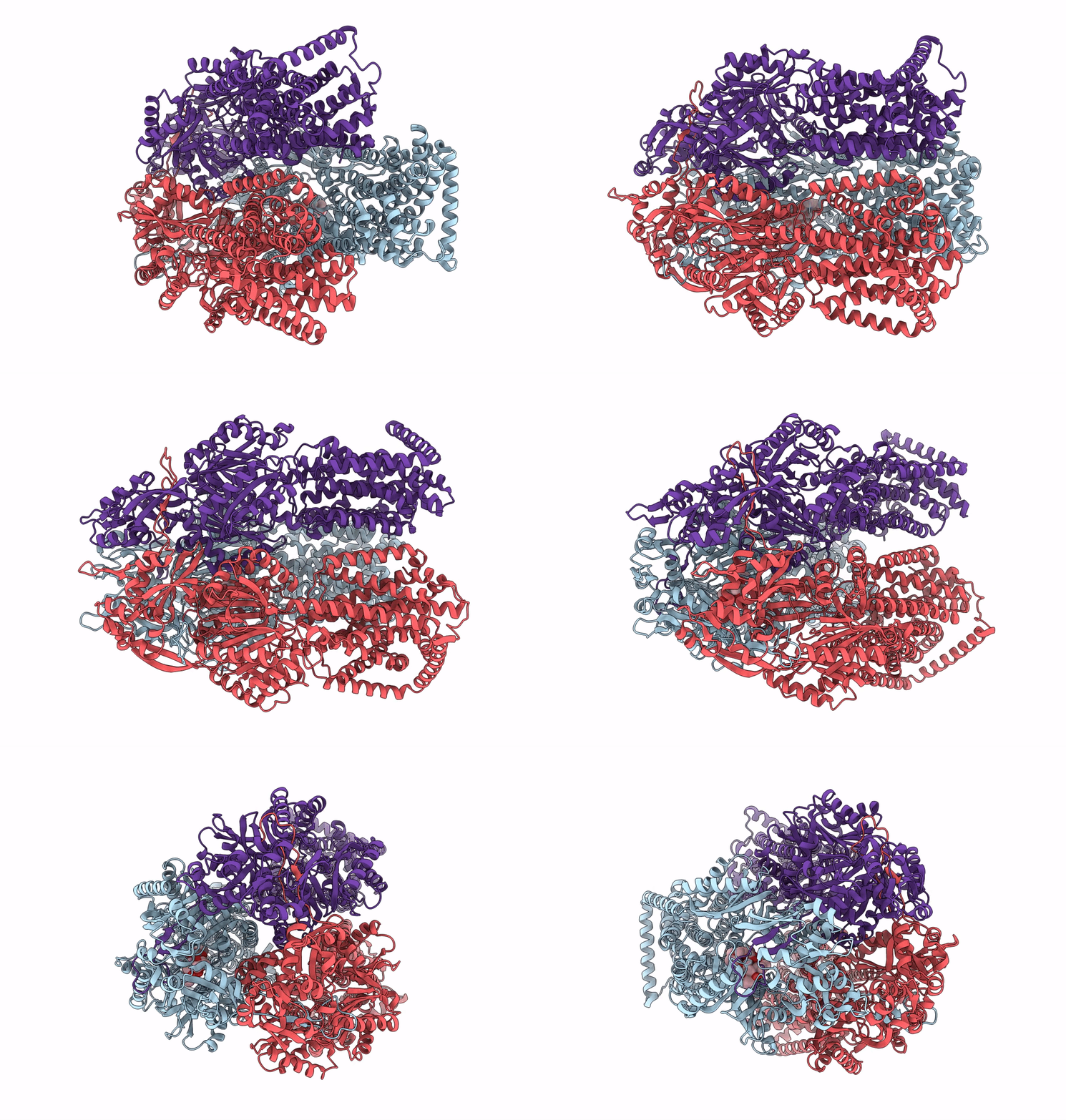
8FFS image
Deposition Date 2022-12-09
Release Date 2023-04-05
Last Version Date 2025-05-28
Entry Detail
PDB ID:
8FFS
Title:
Erythromycin bound Klebsiella pneumoniae AcrB multidrug efflux pump
Biological Source:
Source Organism(s):
Expression System(s):
Method Details:
Experimental Method:
Resolution:
2.96 Å
Aggregation State:
PARTICLE
Reconstruction Method:
SINGLE PARTICLE
Macromolecular Entities
Structures with similar UniProt ID
Protein Blast
Polymer Type:polypeptide(L)
Molecule:Efflux pump membrane transporter
Gene (Uniprot):acrB_1
Chain IDs:A, B, C
Chain Length:1048
Number of Molecules:3
Biological Source:Klebsiella pneumoniae
Ligand Molecules
Primary Citation
Cryo-EM Structures of the Klebsiella pneumoniae AcrB Multidrug Efflux Pump.
Mbio 14 e0065923 e0065923 (2023)
PMID: 37067435 DOI: 10.1128/mbio.00659-23

Abstact

The continued challenges of the COVID-19 pandemic combined with the growing problem of antimicrobial-resistant bacterial infections has severely impacted global health. Specifically, the Gram-negative pathogen Klebsiella pneumoniae is one of the most prevalent causes of secondary bacterial infection in COVID-19 patients, with approximately an 83% mortality rate observed among COVID-19 patients with these bacterial coinfections. K. pneumoniae belongs to the ESKAPE group of pathogens, a group that commonly gives rise to severe infections that are often life-threatening. Recently, K. pneumoniae carbapenemase (KPC)-producing K. pneumoniae has drawn wide public attention, as the mortality rate for this infection can be as high as 71%. The most predominant and clinically important multidrug efflux system in K. pneumoniae is the acriflavine resistance B (AcrB) multidrug efflux pump. This pump mediates resistance to different classes of structurally diverse antimicrobial agents, including quinolones, β-lactams, tetracyclines, macrolides, aminoglycosides, and chloramphenicol. We here report single-particle cryo-electron microscopy (cryo-EM) structures of K. pneumoniae AcrB, in both the absence and the presence of the antibiotic erythromycin. These structures allow us to elucidate specific pump-drug interactions and pinpoint exactly how this pump recognizes antibiotics. IMPORTANCE Klebsiella pneumoniae has emerged as one of the most problematic and highly antibiotic-resistant pathogens worldwide. It is the second most common causative agent involved in secondary bacterial infection in COVID-19 patients. K. pneumoniae carbapenemase (KPC)-producing K. pneumoniae is a major concern in global public health because of the high mortality rate of this infection. Its drug resistance is due, in a significant part, to active efflux of these bactericides, a major mechanism that K. pneumoniae uses to resist to the action of multiple classes of antibiotics. Here, we report cryo-electron microscopy (cryo-EM) structures of the prevalent and clinically important K. pneumoniae AcrB multidrug efflux pump, in both the absence and the presence of the erythromycin antibiotic. These structures allow us to understand the action mechanism for drug recognition in this pump. Our studies will ultimately inform an era in structure-guided drug design to combat multidrug resistance in these Gram-negative pathogens.

Legend

Protein

Chemical

Disease

Primary Citation of related structures
Feedback Form
Name
Email
Institute
Feedback