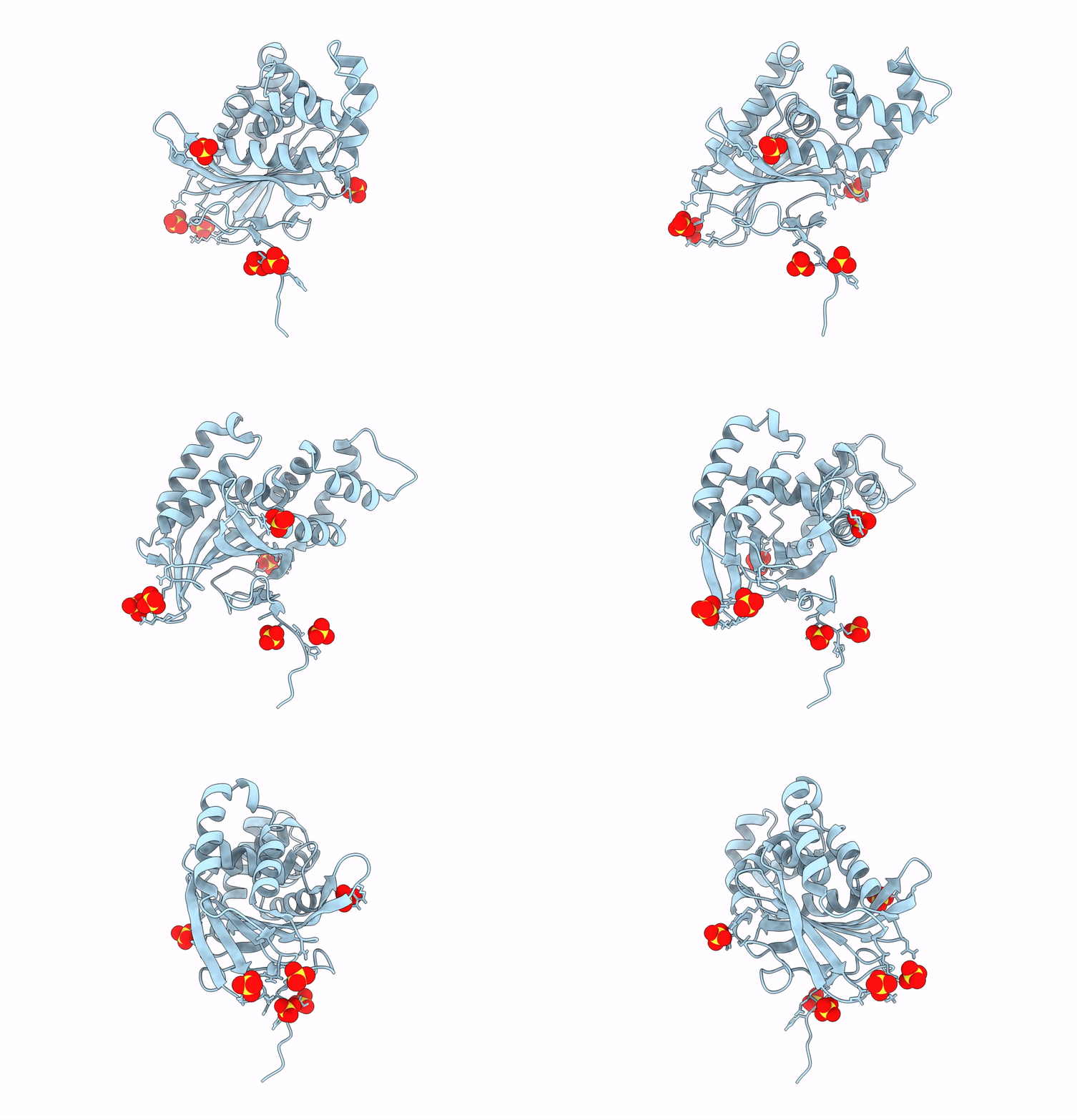
8EW8 image
Deposition Date 2022-10-21
Release Date 2023-03-22
Last Version Date 2024-10-23
Entry Detail
PDB ID:
8EW8
Title:
Crystal structure of Saccharomyces cerevisiae Altered Inheritance rate of Mitochondria protein 18 (AIM18p) R123A mutant
Biological Source:
Source Organism:
Host Organism:
Method Details:
Experimental Method:
Resolution:
2.15 Å
R-Value Free:
0.21
R-Value Work:
0.17
R-Value Observed:
0.18
Space Group:
P 32 2 1
Macromolecular Entities
Structures with similar UniProt ID
Protein Blast
Polymer Type:polypeptide(L)
Molecule:Altered inheritance of mitochondria protein 18, mitochondrial
Gene (Uniprot):AIM18
Mutagens:R123A
Chain IDs:A
Chain Length:249
Number of Molecules:1
Biological Source:Saccharomyces cerevisiae S288C
Modified Residue
Compound ID Chain ID Parent Comp ID Details 2D Image
MSE A MET modified residue
Ligand Molecules
Primary Citation
Aim18p and Aim46p are chalcone isomerase domain-containing mitochondrial hemoproteins in Saccharomyces cerevisiae.
J.Biol.Chem. 299 102981 102981 (2023)
PMID: 36739946 DOI: 10.1016/j.jbc.2023.102981

Abstact

Chalcone isomerases (CHIs) have well-established roles in the biosynthesis of plant flavonoid metabolites. Saccharomyces cerevisiae possesses two predicted CHI-like proteins, Aim18p (encoded by YHR198C) and Aim46p (YHR199C), but it lacks other enzymes of the flavonoid pathway, suggesting that Aim18p and Aim46p employ the CHI fold for distinct purposes. Here, we demonstrate using proteinase K protection assays, sodium carbonate extractions, and crystallography that Aim18p and Aim46p reside on the mitochondrial inner membrane and adopt CHI folds, but they lack select active site residues and possess an extra fungal-specific loop. Consistent with these differences, Aim18p and Aim46p lack CHI activity and also the fatty acid-binding capabilities of other CHI-like proteins, but instead bind heme. We further show that diverse fungal homologs also bind heme and that Aim18p and Aim46p possess structural homology to a bacterial hemoprotein. Collectively, our work reveals a distinct function and cellular localization for two CHI-like proteins, introduces a new variation of a hemoprotein fold, and suggests that ancestral CHI-like proteins were hemoproteins.

Legend

Protein

Chemical

Disease

Primary Citation of related structures
Feedback Form
Name
Email
Institute
Feedback