8E5H image
Deposition Date 2022-08-22
Release Date 2023-08-30
Last Version Date 2025-12-03
Entry Detail
PDB ID:
8E5H
Keywords:
Title:
Old Yellow Enzyme 5 (PcOYE5) from Pseudomonas chloritidismutans
Biological Source:
Source Organism:
Host Organism:
Method Details:
Experimental Method:
Resolution:
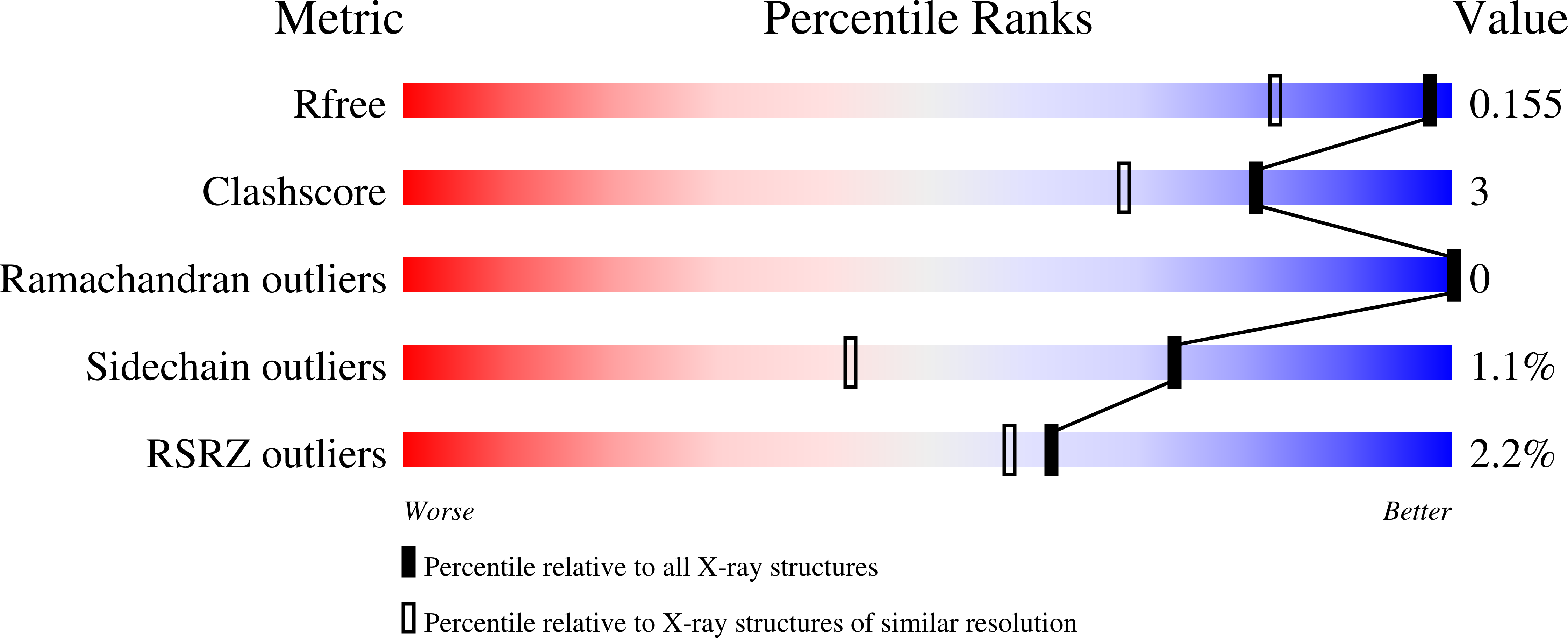
1.27 Å
R-Value Free:
0.15
R-Value Work:
0.13
R-Value Observed:
0.13
Space Group:
P 21 21 21
Macromolecular Entities
Structures with similar UniProt ID
Protein Blast
Polymer Type:polypeptide(L)
Molecule:NADH:flavin oxidoreductase
Gene (Uniprot):F753_20065
Chain IDs:A
Chain Length:372
Number of Molecules:1
Biological Source:Stutzerimonas chloritidismutans AW-1
Primary Citation
Expanding the biocatalytic and oxidative landscape of the old yellow enzyme family.
Protein Sci. 34 e70363 e70363 (2025)
PMID: 41158077 DOI: 10.1002/pro.70363

Abstact

The rapid advancement of sequencing technology has created an immense reservoir of protein sequence-function information that has yet to be fully utilized for fundamental or biocatalytic applications. For example, ene reductases from the "old yellow enzyme" (OYE) family catalyze the asymmetric hydrogenation of activated alkenes with enhanced stereoselectivity-key transformations for sustainable production of pharmaceutical and industrial synthons. Despite proven biocatalytic applications, the OYE family remains relatively underexplored: ~0.1% of identified members have been experimentally characterized. Here, integrated bioinformatics and synthetic biology techniques were employed to systematically organize and screen the natural diversity of the OYE family. Using protein similarity networks, the known and unknown regions of >115,000 members of the OYE family were broadly explored to identify phylogenetic and sequence-based trends. From this analysis, 118 diverse and novel enzymes were characterized across the family to greatly expand the biocatalytic diversity of known OYEs. In particular, widespread reverse, oxidative chemistry was discovered among OYE family members at ambient conditions. Individually, 14 potential biocatalysts were identified exhibiting enhanced catalytic activity or altered stereospecificity when compared to previously characterized OYEs. Two of these enzymes were crystallized to better understand their unique activity, revealing an unusual loop conformation within a novel OYE subclass. Overall, our study significantly expands the known functional and chemical diversity of OYEs while identifying superior biocatalysts for asymmetric hydrogenation and oxidation. This multidisciplinary strategy could be adapted to comprehensively characterize the biocatalytic potential of other enzyme families that have yet to be explored.

Legend

Protein

Chemical

Disease

Primary Citation of related structures
Feedback Form
Name
Email
Institute
Feedback