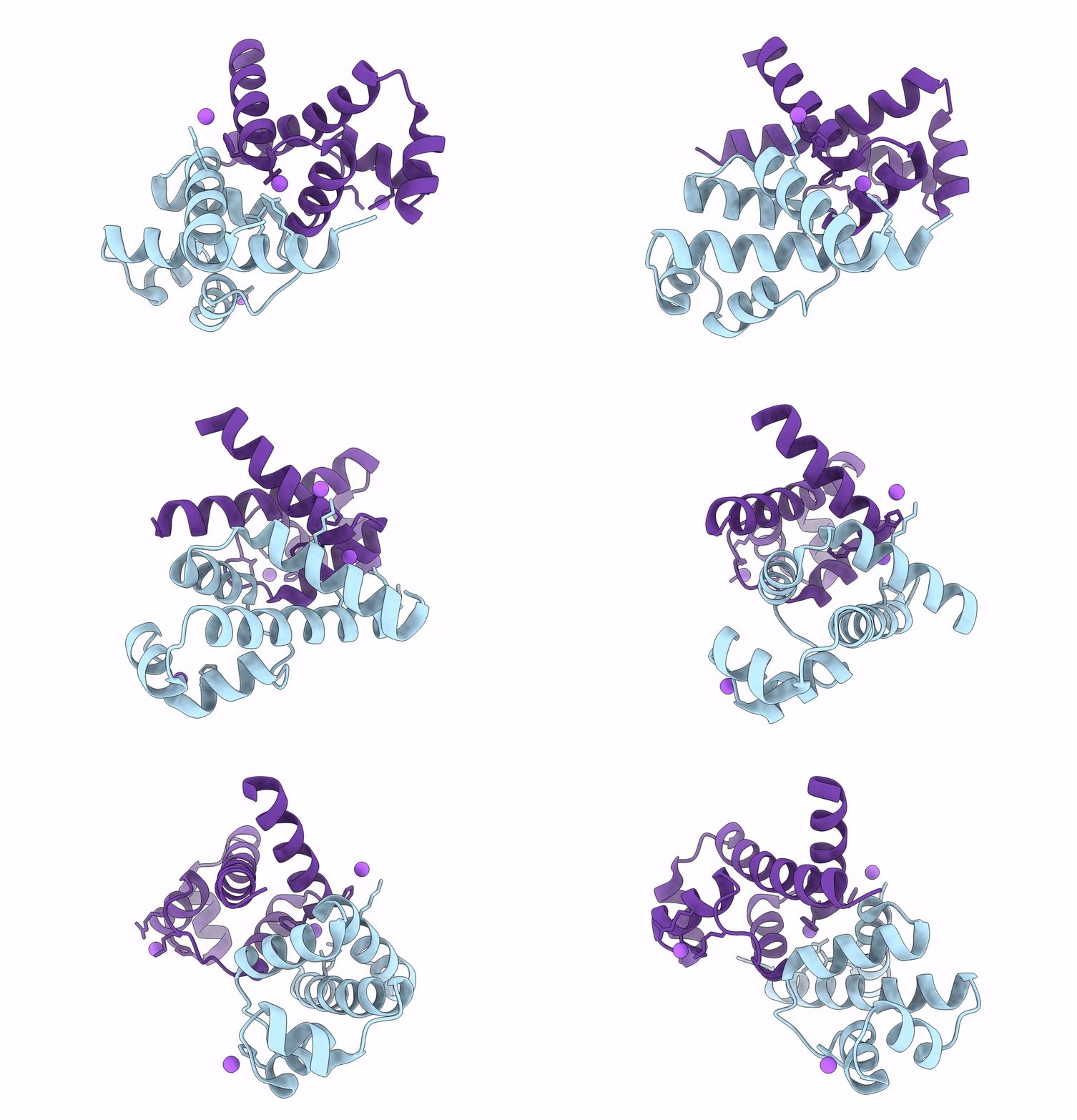
8DTQ image
Deposition Date 2022-07-26
Release Date 2023-08-02
Last Version Date 2024-11-20
Entry Detail
PDB ID:
8DTQ
Title:
Crystal Structure of Staphylococcus aureus pSK41 Cop
Biological Source:
Source Organism:
Method Details:
Experimental Method:
Resolution:
1.45 Å
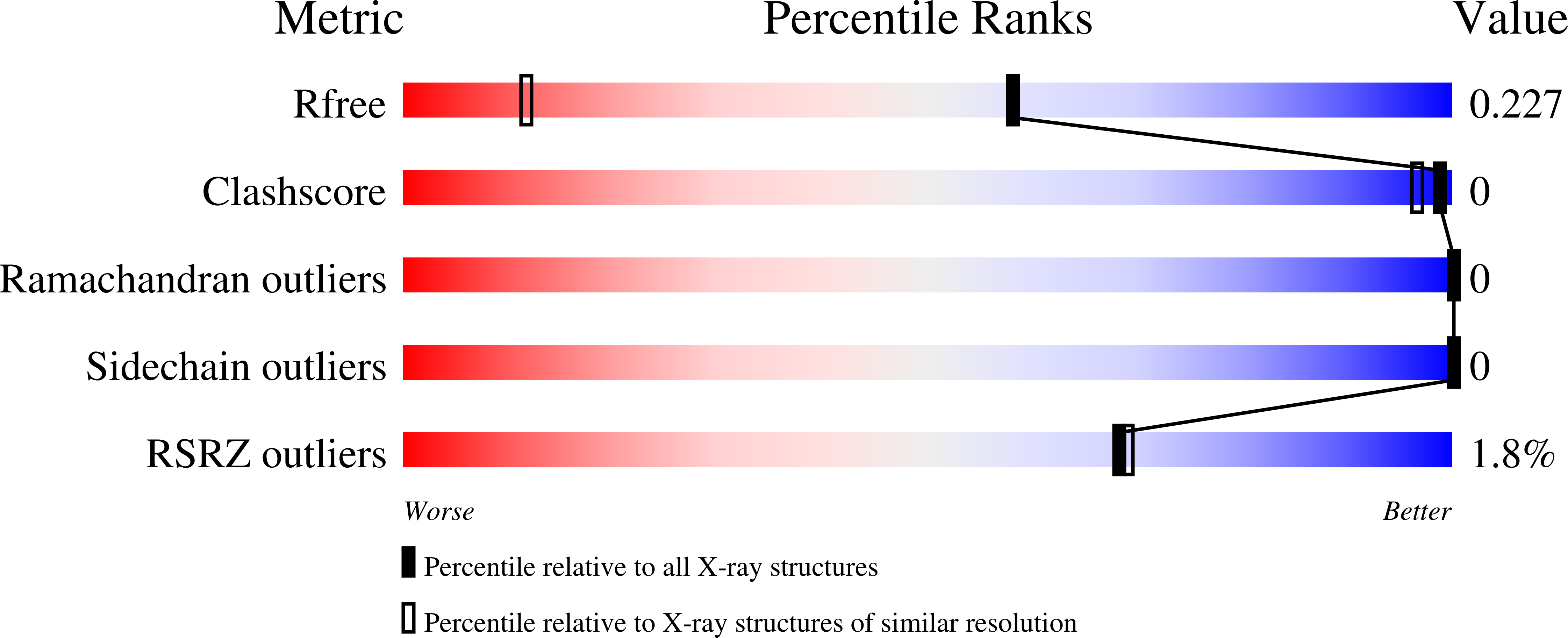
R-Value Free:
0.22
R-Value Work:
0.18
R-Value Observed:
0.19
Space Group:
P 1 21 1
Macromolecular Entities
Structures with similar UniProt ID
Protein Blast
Polymer Type:polypeptide(L)
Molecule:Helix-turn-helix domain
Gene (Uniprot):BN1321_460002, DQU50_15865, GQX37_01460, GQX52_13600, GZ111_013590, GZ164_11515, PGO1_p13, SAMEA2078260_02861, SAMEA2078588_02856, SAMEA2081063_02868, SAP014A_023, SAP015H_002, SAP068A_002, SAP069A_028, SAP079A_025, SAP080A_043, SAP082A_020, VRA0062
Chain IDs:A, B
Chain Length:89
Number of Molecules:2
Biological Source:Staphylococcus aureus
Modified Residue
Compound ID Chain ID Parent Comp ID Details 2D Image
MSE A MET modified residue
Primary Citation
pSK41/pGO1-family conjugative plasmids of Staphylococcus aureus encode a cryptic repressor of replication.
Plasmid 128 102708 102708 (2023)
PMID: 37967733 DOI: 10.1016/j.plasmid.2023.102708

Abstact

The majority of large multiresistance plasmids of Staphylococcus aureus utilise a RepA_N-type replication initiation protein, the expression of which is regulated by a small antisense RNA (RNAI) that overlaps the rep mRNA leader. The pSK41/pGO1-family of conjugative plasmids additionally possess a small (86 codon) divergently transcribed ORF (orf86) located upstream of the rep locus. The product of pSK41 orf86 was predicted to have a helix-turn-helix motif suggestive of a likely function in transcriptional repression. In this study, we investigated the effect of Orf86 on transcription of thirteen pSK41 backbone promoters. We found that Orf86 only repressed transcription from the rep promoter, and hence now redesignate the product as Cop. Over-expression of Cop in trans reduced the copy number of pSK41 mini-replicons, both in the presence and absence of rnaI. in vitro protein-DNA binding experiments with purified 6 × His-Cop demonstrated specific DNA binding, adjacent to, and partially overlapping the -35 hexamer of the rep promoter. The crystal structure of Cop revealed a dimeric structure similar to other known transcriptional regulators. Cop mRNA was found to result from "read-through" transcription from the strong RNAI promoter that escapes the rnaI terminator. Thus, PrnaI is responsible for transcription of two distinct negative regulators of plasmid copy number; the antisense RNAI that primarily represses Rep translation, and Cop protein that can repress rep transcription. Deletion of cop in a native plasmid did not appear to impact copy number, indicating a cryptic auxiliary role.

Legend

Protein

Chemical

Disease

Primary Citation of related structures
Feedback Form
Name
Email
Institute
Feedback