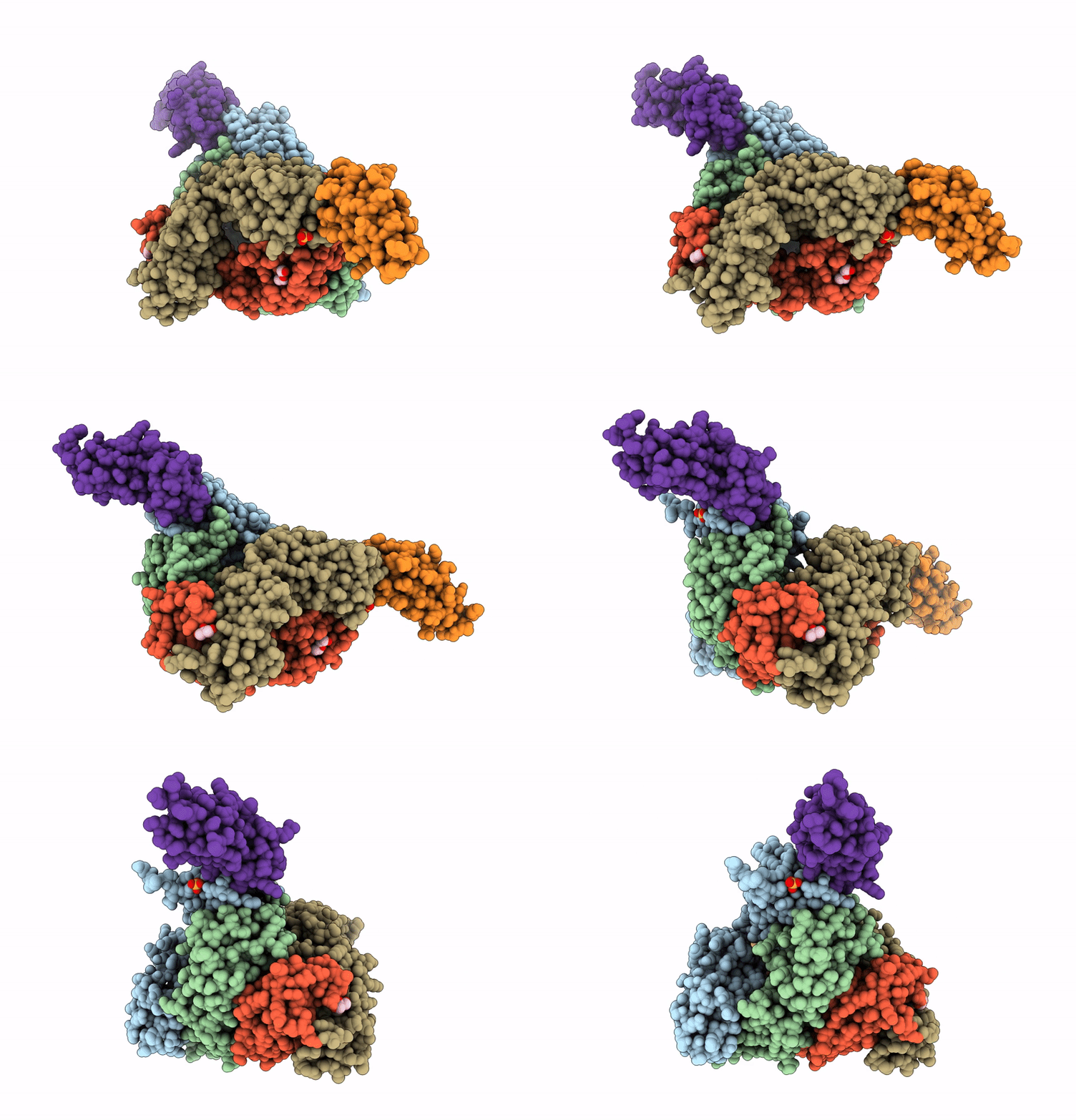
8DJG image
Deposition Date 2022-06-30
Release Date 2023-02-15
Last Version Date 2024-10-09
Entry Detail
PDB ID:
8DJG
Title:
ADGRL3-lectin domain in complex with an activating synthetic antibody fragment
Biological Source:
Source Organism(s):
Expression System(s):
Method Details:
Experimental Method:
Resolution:
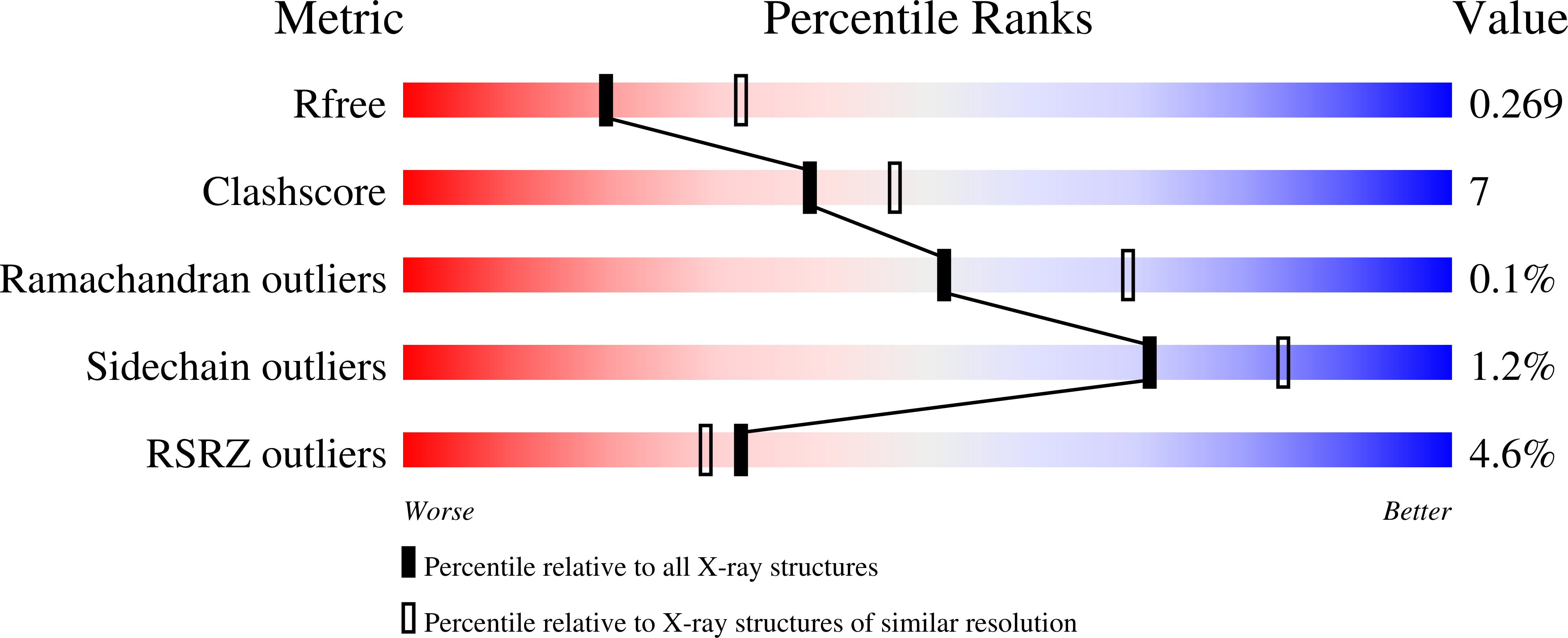
2.65 Å
R-Value Free:
0.27
R-Value Work:
0.23
R-Value Observed:
0.23
Space Group:
P 21 21 21
Macromolecular Entities
Polymer Type:polypeptide(L)
Molecule:sAB Heavy Chain
Chain IDs:A, C
Chain Length:233
Number of Molecules:2
Biological Source:synthetic construct
Polymer Type:polypeptide(L)
Molecule:sAB Light Chain
Chain IDs:B, D
Chain Length:215
Number of Molecules:2
Biological Source:synthetic construct
Structures with similar UniProt ID
Protein Blast
Polymer Type:polypeptide(L)
Molecule:Isoform 2 of Adhesion G protein-coupled receptor L3
Gene (Uniprot):ADGRL3
Chain IDs:E, F
Chain Length:109
Number of Molecules:2
Biological Source:Homo sapiens
Primary Citation
Isoform- and ligand-specific modulation of the adhesion GPCR ADGRL3/Latrophilin3 by a synthetic binder.
Nat Commun 14 635 635 (2023)
PMID: 36746957 DOI: 10.1038/s41467-023-36312-7

Abstact

Adhesion G protein-coupled receptors (aGPCRs) are cell-surface proteins with large extracellular regions that bind to multiple ligands to regulate key biological functions including neurodevelopment and organogenesis. Modulating a single function of a specific aGPCR isoform while affecting no other function and no other receptor is not trivial. Here, we engineered an antibody, termed LK30, that binds to the extracellular region of the aGPCR ADGRL3, and specifically acts as an agonist for ADGRL3 but not for its isoform, ADGRL1. The LK30/ADGRL3 complex structure revealed that the LK30 binding site on ADGRL3 overlaps with the binding site for an ADGRL3 ligand - teneurin. In cellular-adhesion assays, LK30 specifically broke the trans-cellular interaction of ADGRL3 with teneurin, but not with another ADGRL3 ligand - FLRT3. Our work provides proof of concept for the modulation of isoform- and ligand-specific aGPCR functions using unique tools, and thus establishes a foundation for the development of fine-tuned aGPCR-targeted therapeutics.

Legend

Protein

Chemical

Disease

Primary Citation of related structures
Feedback Form
Name
Email
Institute
Feedback