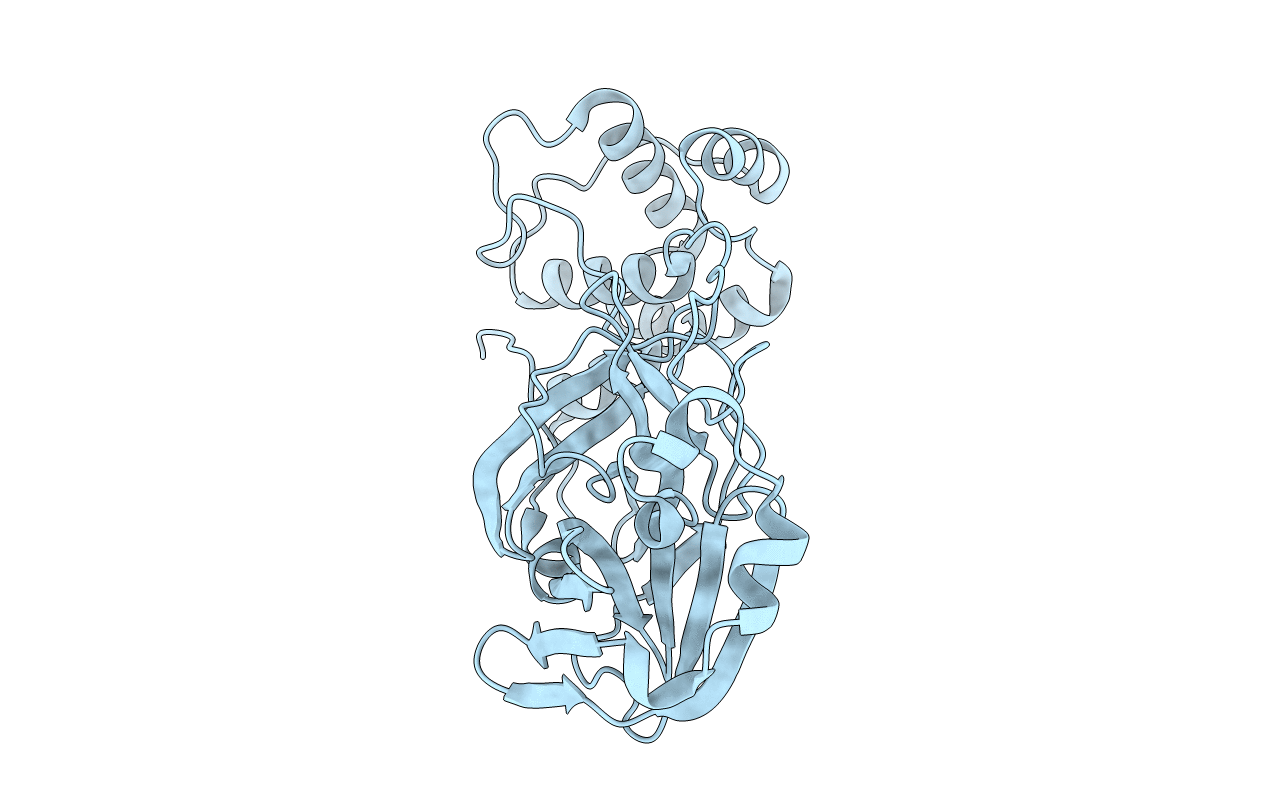
8DDI image
Deposition Date 2022-06-18
Release Date 2022-08-31
Last Version Date 2023-10-25
Entry Detail
PDB ID:
8DDI
Keywords:
Title:
Crystal Structure of SARS-CoV-2 Main Protease (Mpro) E166N Mutant
Biological Source:
Host Organism:
Method Details:
Experimental Method:
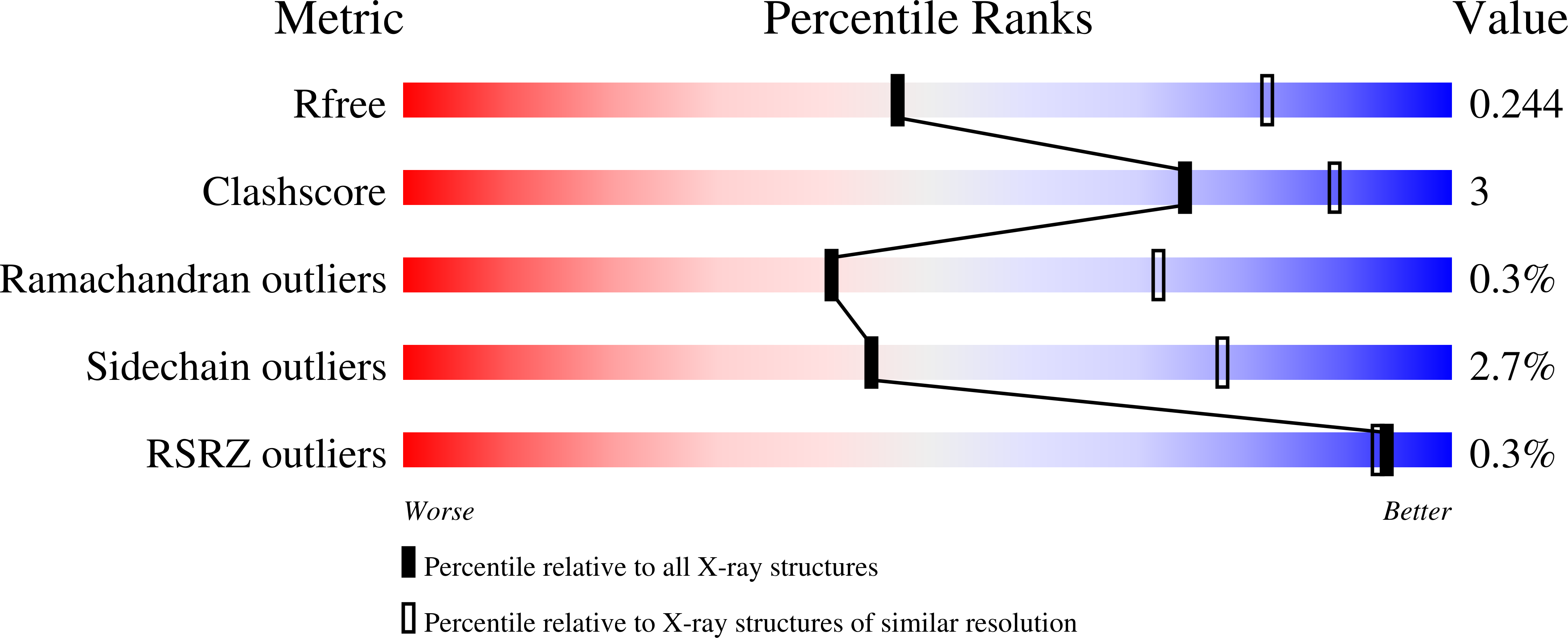
Resolution:
2.80 Å
R-Value Free:
0.24
R-Value Work:
0.17
R-Value Observed:
0.18
Space Group:
C 1 2 1
Macromolecular Entities
Structures with similar UniProt ID
Protein Blast
Polymer Type:polypeptide(L)
Molecule:3C-like proteinase nsp5
Gene (Uniprot):rep
Mutagens:E166N
Chain IDs:A
Chain Length:306
Number of Molecules:1
Biological Source:Severe acute respiratory syndrome coronavirus 2
Primary Citation
A yeast-based system to study SARS-CoV-2 Mpro structure and to identify nirmatrelvir resistant mutations.
Plos Pathog. 19 e1011592 e1011592 (2023)
PMID: 37651467 DOI: 10.1371/journal.ppat.1011592

Abstact

The SARS-CoV-2 main protease (Mpro) is a major therapeutic target. The Mpro inhibitor, nirmatrelvir, is the antiviral component of Paxlovid, an orally available treatment for COVID-19. As Mpro inhibitor use increases, drug resistant mutations will likely emerge. We have established a non-pathogenic system, in which yeast growth serves as an approximation for Mpro activity, enabling rapid identification of mutants with altered enzymatic activity and drug sensitivity. The E166 residue is known to be a potential hot spot for drug resistance and yeast assays identified substitutions which conferred strong nirmatrelvir resistance and others that compromised activity. On the other hand, N142A and the P132H mutation, carried by the Omicron variant, caused little to no change in drug response and activity. Standard enzymatic assays confirmed the yeast results. In turn, we solved the structures of Mpro E166R, and Mpro E166N, providing insights into how arginine may drive drug resistance while asparagine leads to reduced activity. The work presented here will help characterize novel resistant variants of Mpro that may arise as Mpro antivirals become more widely used.

Legend

Protein

Chemical

Disease

Primary Citation of related structures
Feedback Form
Name
Email
Institute
Feedback