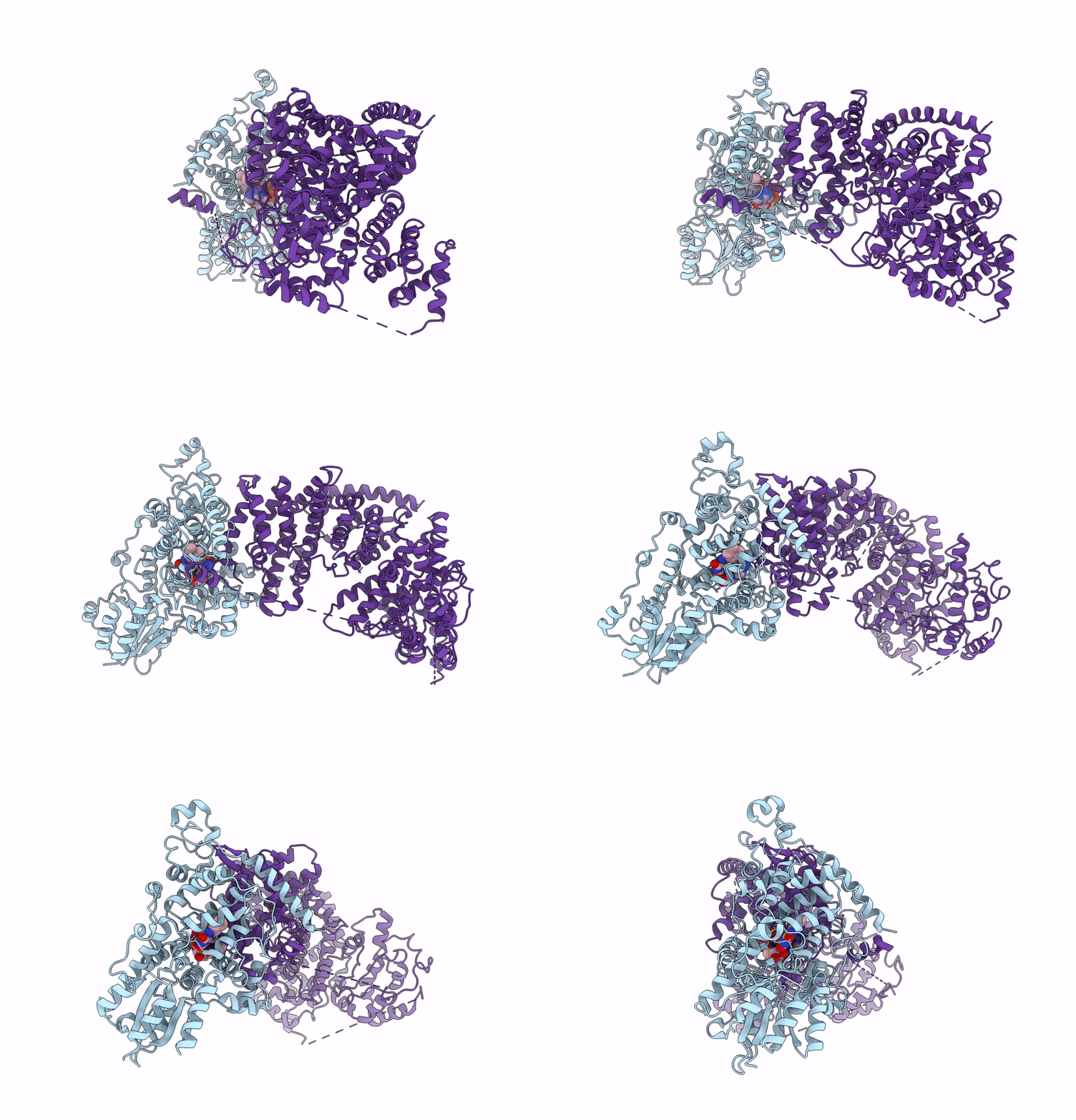
8DD7 image
Deposition Date 2022-06-17
Release Date 2023-02-15
Last Version Date 2024-06-12
Entry Detail
PDB ID:
8DD7
Title:
The Cryo-EM structure of Drosophila Cryptochrome in complex with Timeless
Biological Source:
Source Organism:
Method Details:
Experimental Method:
Resolution:
3.30 Å
Aggregation State:
PARTICLE
Reconstruction Method:
SINGLE PARTICLE
Macromolecular Entities
Protein Blast
Polymer Type:polypeptide(L)
Molecule:Methylated-DNA--protein-cysteine methyltransferase,Cryptochrome-1 fusion
Gene (Uniprot):cry
Chain IDs:A
Chain Length:746
Number of Molecules:1
Biological Source:Homo sapiens, Drosophila melanogaster
Protein Blast
Polymer Type:polypeptide(L)
Molecule:Protein timeless,Methylated-DNA--protein-cysteine methyltransferase fusion
Gene (Uniprot):tim
Chain IDs:B
Chain Length:1618
Number of Molecules:1
Biological Source:Drosophila melanogaster, Homo sapiens
Ligand Molecules
Primary Citation
Cryptochrome-Timeless structure reveals circadian clock timing mechanisms.
Nature 617 194 199 (2023)
PMID: 37100907 DOI: 10.1038/s41586-023-06009-4

Abstact

Circadian rhythms influence many behaviours and diseases1,2. They arise from oscillations in gene expression caused by repressor proteins that directly inhibit transcription of their own genes. The fly circadian clock offers a valuable model for studying these processes, wherein Timeless (Tim) plays a critical role in mediating nuclear entry of the transcriptional repressor Period (Per) and the photoreceptor Cryptochrome (Cry) entrains the clock by triggering Tim degradation in light2,3. Here, through cryogenic electron microscopy of the Cry-Tim complex, we show how a light-sensing cryptochrome recognizes its target. Cry engages a continuous core of amino-terminal Tim armadillo repeats, resembling how photolyases recognize damaged DNA, and binds a C-terminal Tim helix, reminiscent of the interactions between light-insensitive cryptochromes and their partners in mammals. The structure highlights how the Cry flavin cofactor undergoes conformational changes that couple to large-scale rearrangements at the molecular interface, and how a phosphorylated segment in Tim may impact clock period by regulating the binding of Importin-α and the nuclear import of Tim-Per4,5. Moreover, the structure reveals that the N terminus of Tim inserts into the restructured Cry pocket to replace the autoinhibitory C-terminal tail released by light, thereby providing a possible explanation for how the long-short Tim polymorphism adapts flies to different climates6,7.

Legend

Protein

Chemical

Disease

Primary Citation of related structures
Feedback Form
Name
Email
Institute
Feedback