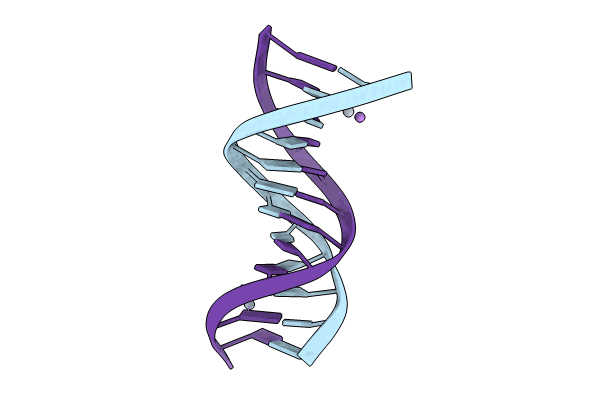
8C64 image
Deposition Date 2023-01-11
Release Date 2024-01-31
Last Version Date 2024-02-28
Entry Detail
PDB ID:
8C64
Keywords:
Title:
Crystal structure of arsenoplatin-1/B-DNA adduct obtained upon 48 h of soaking
Biological Source:
Source Organism:
Method Details:
Experimental Method:
Resolution:
2.51 Å
R-Value Free:
0.23
R-Value Work:
0.17
R-Value Observed:
0.18
Space Group:
P 21 21 21

Macromolecular Entities
Polymer Type:polydeoxyribonucleotide
Molecule:DNA (5'-D(*CP*GP*CP*GP*AP*AP*TP*TP*CP*GP*CP*G)-3')
Chain IDs:A, B
Chain Length:12
Number of Molecules:2
Biological Source:synthetic construct
Primary Citation
On the mechanism of action of arsenoplatins: arsenoplatin-1 binding to a B-DNA dodecamer.
Dalton Trans 53 3476 3483 (2024)
PMID: 38270175 DOI: 10.1039/d3dt04302a

Abstact

The reaction of Pt-based anticancer agents with arsenic trioxide affords robust complexes known as arsenoplatins. The prototype of this family of anticancer compounds is arsenoplatin-1 (AP-1) that contains an As(OH)2 fragment linked to a Pt(II) moiety derived from cisplatin. Crystallographic and spectrometric studies of AP-1 binding to a B-DNA double helix dodecamer are presented here, in comparison with cisplatin and transplatin. Results reveal that AP-1, cisplatin and transplatin react differently with the DNA model system. Notably, in the AP-1/DNA systems, the Pt-As bond can break down with time and As-containing fragments can be released. These results have implications for the understanding of the mechanism of action of arsenoplatins.

Legend

Protein

Chemical

Disease

Primary Citation of related structures
Feedback Form
Name
Email
Institute
Feedback