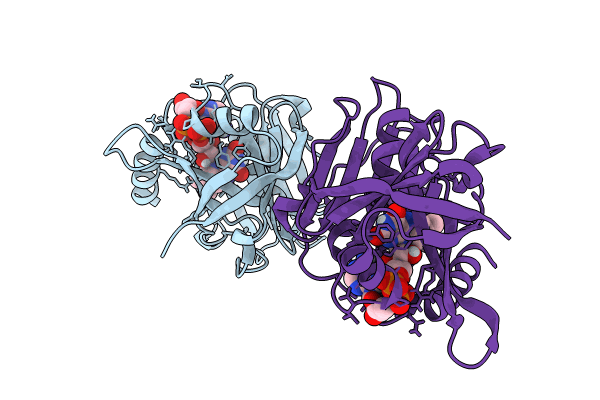
8C4L image
Deposition Date 2023-01-04
Release Date 2024-01-17
Last Version Date 2025-07-30
Entry Detail
PDB ID:
8C4L
Title:
Ferric-siderophore reduction in Shewanella biscestrii: Structural and functional characterization of SbiSIP reveals unforeseen specificity
Biological Source:
Source Organism(s):
Expression System(s):
Method Details:
Experimental Method:
Resolution:
1.86 Å
R-Value Free:
0.19
R-Value Work:
0.16
R-Value Observed:
0.16
Space Group:
P 43 21 2

Macromolecular Entities
Structures with similar UniProt ID
Protein Blast
Polymer Type:polypeptide(L)
Molecule:Vibriobactin utilization protein ViuB
Chain IDs:A, B
Chain Length:251
Number of Molecules:2
Biological Source:Shewanella bicestrii
Ligand Molecules
Primary Citation
Flavin-containing siderophore-interacting protein of Shewanella putrefaciens DSM 9451 reveals common structural and functional aspects of ferric-siderophore reduction.
J.Biol.Inorg.Chem. 30 241 255 (2025)
PMID: 40080164 DOI: 10.1007/s00775-025-02106-z

Abstact

Shewanella are bacteria widespread in marine and brackish water environments and emergent opportunistic pathogens. Their environmental versatility depends on the ability to produce numerous iron-rich proteins, mainly multiheme c-type cytochromes. Although iron plays a vital role in the versatility of Shewanella species, very few studies exist regarding the strategies by which these bacteria scavenge iron from the environment. Siderophore-mediated iron transport is a commonly employed strategy for iron acquisition, and it was identified among Shewanella spp. over two decades ago. Shewanella species produce hydroxamate-type siderophores and iron removal from these compounds can occur in the cytoplasm via Fe(III)-siderophore reduction mediated by siderophore-interacting proteins (SIPs). The genome of Shewanella putrefaciens DSM 9451 isolated from an infected child contains representatives of the two different families of SIPs: the flavin-containing siderophore reductase (SbSIP) and the iron-sulfur cluster-containing ferric-siderophore reductase (SbFSR). Here, we report their expression, purification, and further biochemical characterization of SbSIP. The structural and functional characterization of SbSIP and comparison with the homologous SIP from Shewanella frigidimarina (SfSIP) revealed similarities between these proteins including a common binding pocket for NADH, NADPH, and siderophore substrates plus a pronounced redox-Bohr effect that ensures coupled transfer of electrons and protons in the physiological pH range. These mechanistic aspects open the door for further investigations on developing drugs that interfere with the iron metabolism of these bacteria and thereby prevent their spread.

Legend

Protein

Chemical

Disease

Primary Citation of related structures
Feedback Form
Name
Email
Institute
Feedback