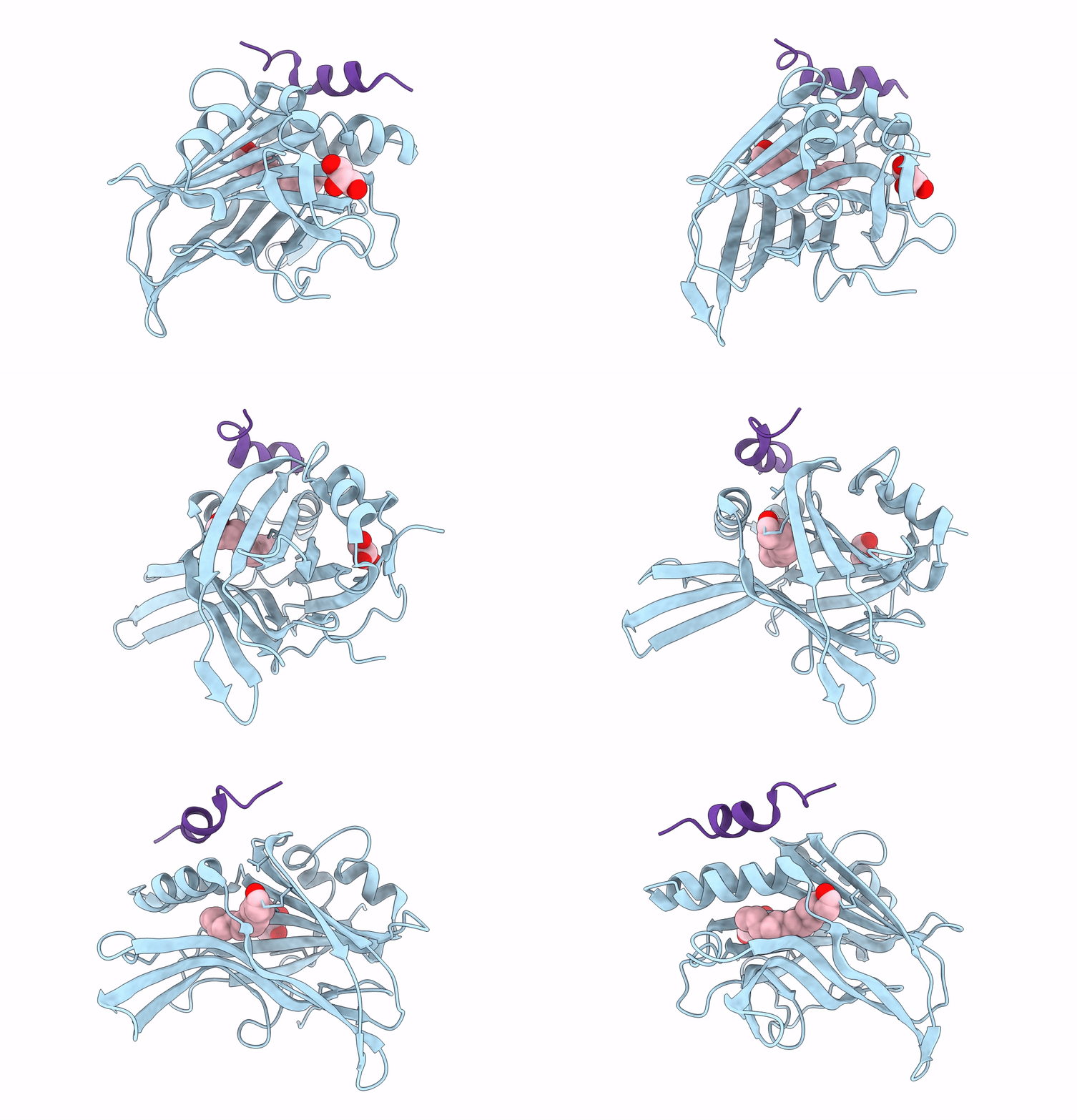
8C17 image
Deposition Date 2022-12-20
Release Date 2023-03-15
Last Version Date 2024-05-29
Entry Detail
PDB ID:
8C17
Keywords:
Title:
Crystal structure of TEAD4 in complex with peptide 1
Biological Source:
Source Organism:
Method Details:
Experimental Method:
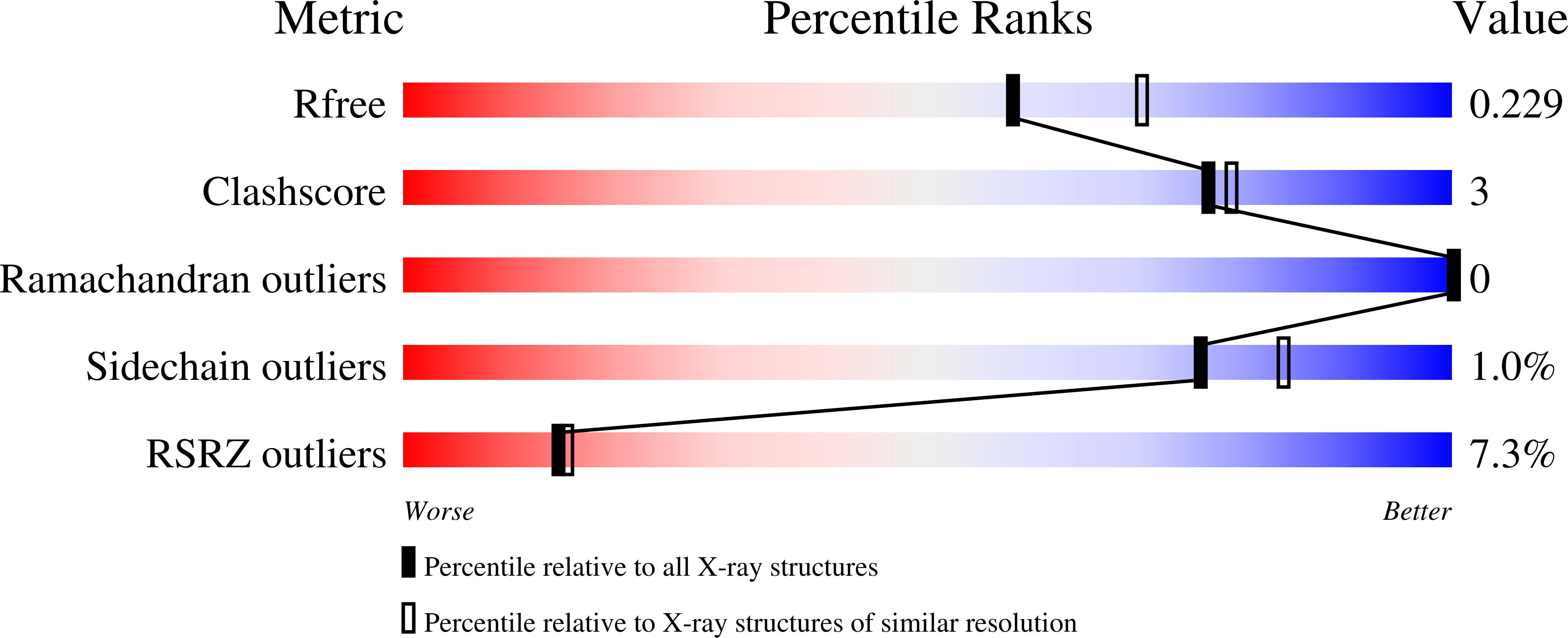
Resolution:
2.25 Å
R-Value Free:
0.23
R-Value Work:
0.20
R-Value Observed:
0.21
Space Group:
P 31 2 1
Macromolecular Entities
Structures with similar UniProt ID
Protein Blast
Polymer Type:polypeptide(L)
Molecule:Transcriptional enhancer factor TEF-3
Gene (Uniprot):TEAD4
Chain IDs:A
Chain Length:220
Number of Molecules:1
Biological Source:Homo sapiens
Polymer Type:polypeptide(L)
Molecule:Stapled peptide
Chain IDs:B
Chain Length:19
Number of Molecules:1
Biological Source:Synthetic construct
Primary Citation
Biochemical and Structural Characterization of a Peptidic Inhibitor of the YAP:TEAD Interaction That Binds to the alpha-Helix Pocket on TEAD.
Acs Chem.Biol. 18 643 651 (2023)
PMID: 36825662 DOI: 10.1021/acschembio.2c00936

Abstact

The TEAD transcription factors are the most distal elements of the Hippo pathway, and their transcriptional activity is regulated by several proteins, including YAP. In some cancers, the Hippo pathway is deregulated and inhibitors of the YAP:TEAD interaction are foreseen as new anticancer drugs. The binding of YAP to TEAD is driven by the interaction of an α-helix and an Ω-loop present in its TEAD-binding domain with two distinct pockets at the TEAD surface. Using the mRNA-based display technique to screen a library of in vitro-translated cyclic peptides, we identified a peptide that binds with a nanomolar affinity to TEAD. The X-ray structure of this peptide in complex with TEAD reveals that it interacts with the α-helix pocket. Under our experimental conditions, this peptide can form a ternary complex with TEAD and YAP. Furthermore, combining it with a peptide binding to the Ω-loop pocket gives an additive inhibitory effect on the YAP:TEAD interaction. Overall, our results show that it is possible to identify nanomolar inhibitors of the YAP:TEAD interaction that bind to the α-helix pocket, suggesting that developing such compounds might be a strategy to treat cancers where the Hippo pathway is deregulated.

Legend

Protein

Chemical

Disease

Primary Citation of related structures
Feedback Form
Name
Email
Institute
Feedback