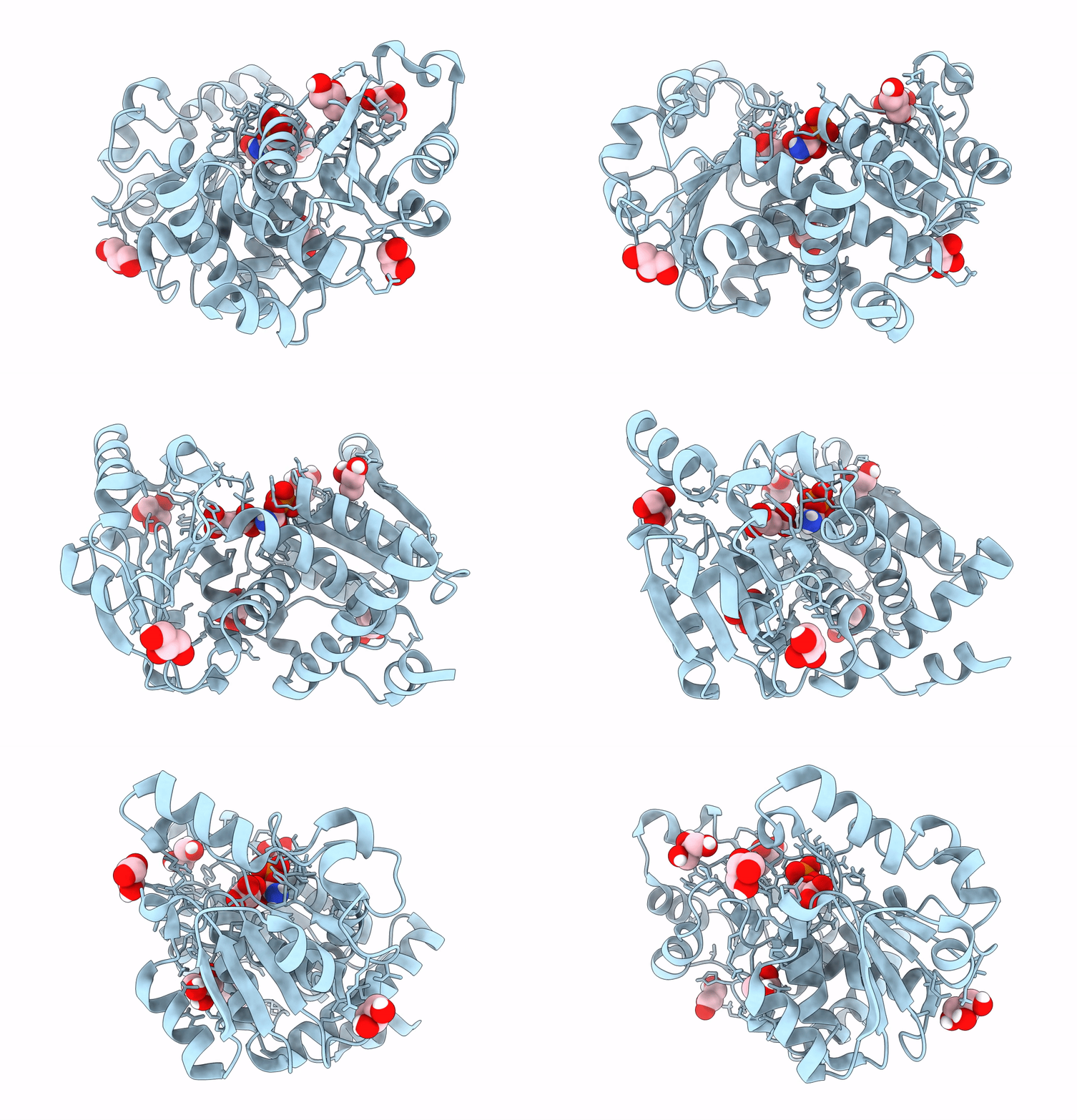
8BPL image
Deposition Date 2022-11-16
Release Date 2023-02-01
Last Version Date 2024-10-09
Entry Detail
PDB ID:
8BPL
Keywords:
Title:
Aspartate transcarbamoylase mutant (N2045C, R2238C) from Chaetomium thermophilum CAD-like bound to carbamoyl phosphate
Biological Source:
Source Organism:
Method Details:
Experimental Method:
Resolution:
1.58 Å
R-Value Free:
0.17
R-Value Work:
0.13
R-Value Observed:
0.13
Space Group:
P 43 3 2
Macromolecular Entities
Structures with similar UniProt ID
Protein Blast
Polymer Type:polypeptide(L)
Molecule:Carbamoyl-phosphate synthase (glutamine-hydrolyzing)
Gene (Uniprot):CTHT_0032600
Mutagens:N2045C, R2238C
Chain IDs:A
Chain Length:316
Number of Molecules:1
Biological Source:Thermochaetoides thermophila
Primary Citation
A Tailored Strategy to Crosslink the Aspartate Transcarbamoylase Domain of the Multienzymatic Protein CAD.
Molecules 28 ? ? (2023)
PMID: 36677714 DOI: 10.3390/molecules28020660

Abstact

CAD is a 1.5 MDa hexameric protein with four enzymatic domains responsible for initiating de novo biosynthesis of pyrimidines nucleotides: glutaminase, carbamoyl phosphate synthetase, aspartate transcarbamoylase (ATC), and dihydroorotase. Despite its central metabolic role and implication in cancer and other diseases, our understanding of CAD is poor, and structural characterization has been frustrated by its large size and sensitivity to proteolytic cleavage. Recently, we succeeded in isolating intact CAD-like particles from the fungus Chaetomium thermophilum with high yield and purity, but their study by cryo-electron microscopy is hampered by the dissociation of the complex during sample grid preparation. Here we devised a specific crosslinking strategy to enhance the stability of this mega-enzyme. Based on the structure of the isolated C. thermophilum ATC domain, we inserted by site-directed mutagenesis two cysteines at specific locations that favored the formation of disulfide bridges and covalent oligomers. We further proved that this covalent linkage increases the stability of the ATC domain without damaging the structure or enzymatic activity. Thus, we propose that this cysteine crosslinking is a suitable strategy to strengthen the contacts between subunits in the CAD particle and facilitate its structural characterization.

Legend

Protein

Chemical

Disease

Primary Citation of related structures
Feedback Form
Name
Email
Institute
Feedback