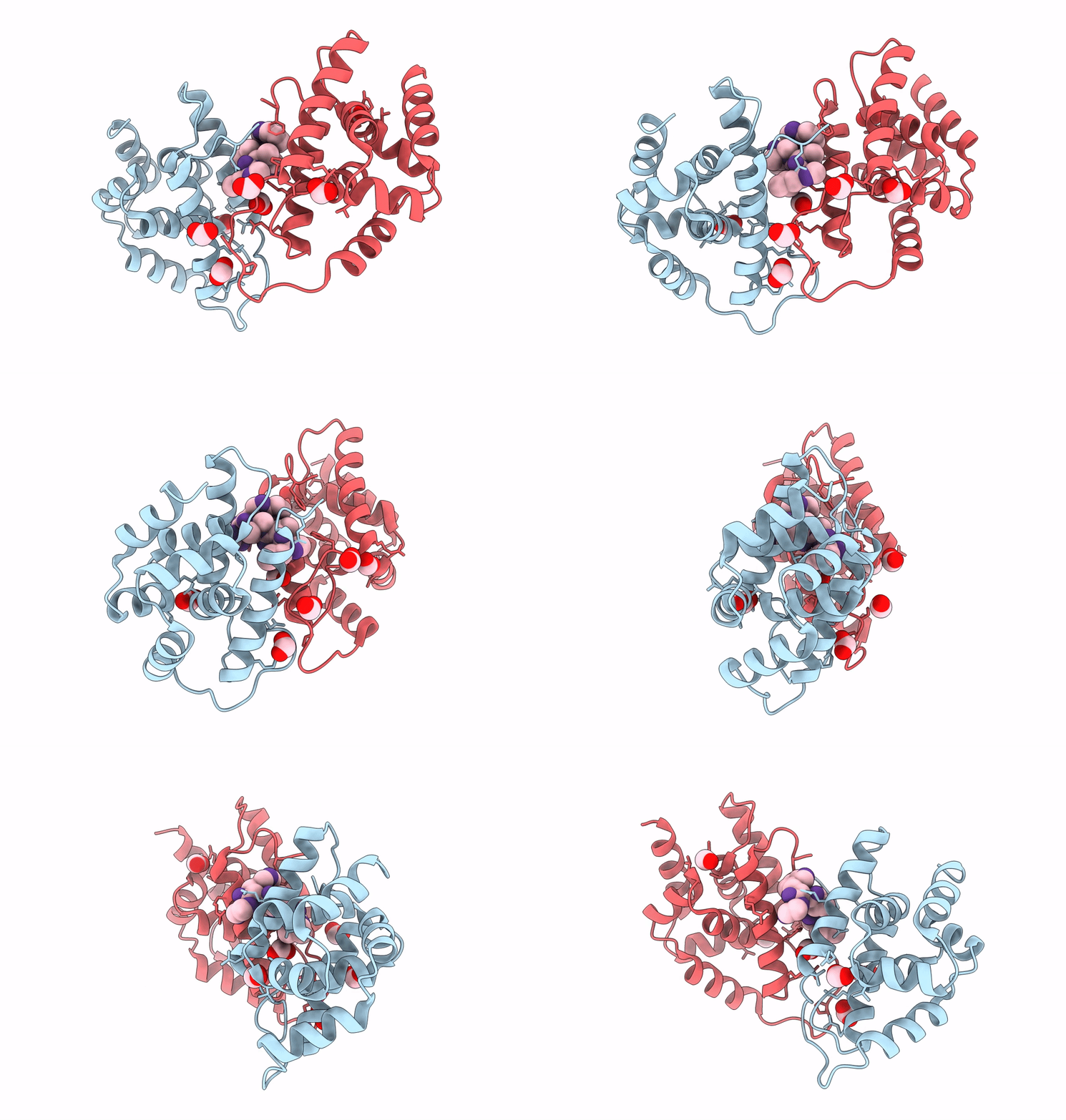
8B9U image
Deposition Date 2022-10-10
Release Date 2023-07-05
Last Version Date 2024-10-16
Entry Detail
PDB ID:
8B9U
Keywords:
Title:
Structure of ClpC1 NTD from Mycobacterium tuberculosis
Biological Source:
Method Details:
Experimental Method:
Resolution:
2.25 Å
R-Value Free:
0.24
R-Value Work:
0.21
R-Value Observed:
0.21
Space Group:
P 32 2 1
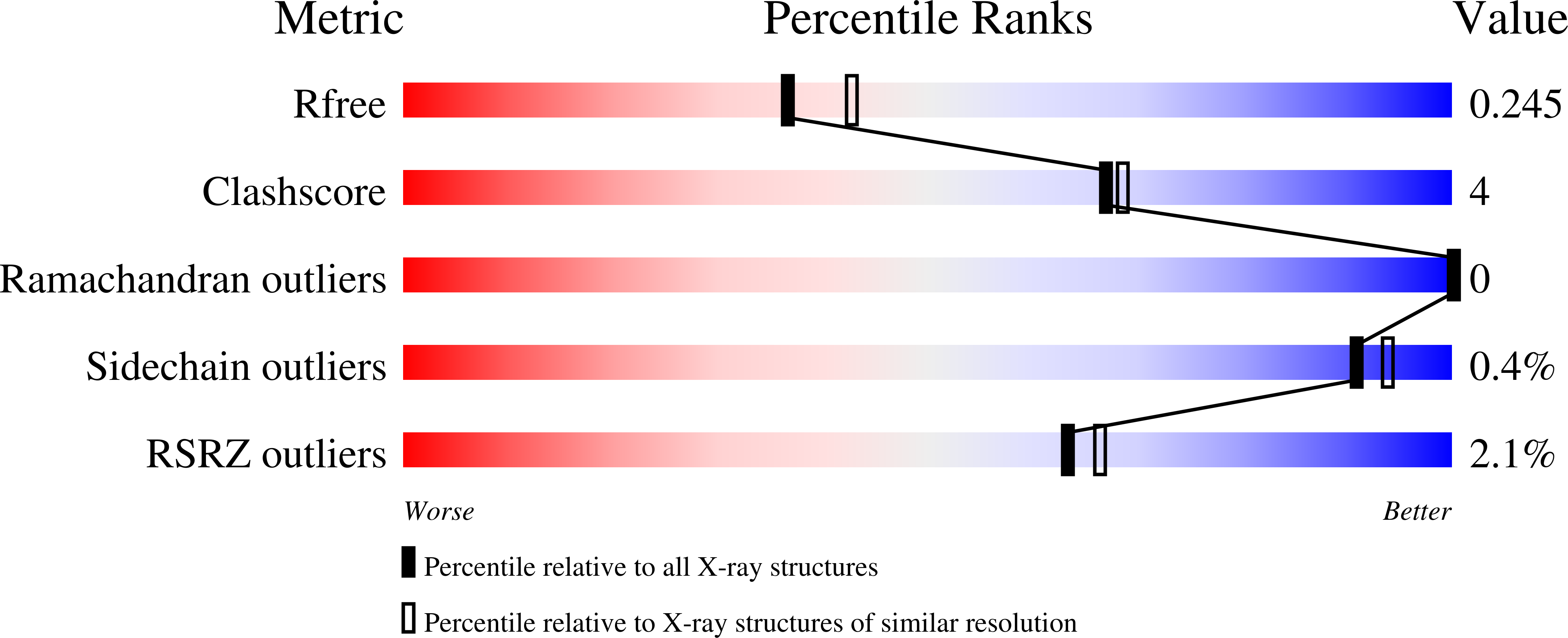
Macromolecular Entities
Structures with similar UniProt ID
Protein Blast
Polymer Type:polypeptide(L)
Molecule:ATP-dependent Clp protease ATP-binding subunit ClpC1
Gene (Uniprot):clpC1
Chain IDs:A, B
Chain Length:144
Number of Molecules:2
Biological Source:Mycobacterium tuberculosis (strain ATCC 25618 / H37Rv)
Polymer Type:polypeptide(L)
Molecule:(MLE)V(MAA)(E9M)G
Chain IDs:C
Chain Length:5
Number of Molecules:1
Biological Source:Nonomuraea sp. MJM5123
Ligand Molecules
Primary Citation

Abstact

The ClpC1:ClpP1P2 protease is a core component of the proteostasis system in mycobacteria. To improve the efficacy of antitubercular agents targeting the Clp protease, we characterized the mechanism of the antibiotics cyclomarin A and ecumicin. Quantitative proteomics revealed that the antibiotics cause massive proteome imbalances, including upregulation of two unannotated yet conserved stress response factors, ClpC2 and ClpC3. These proteins likely protect the Clp protease from excessive amounts of misfolded proteins or from cyclomarin A, which we show to mimic damaged proteins. To overcome the Clp security system, we developed a BacPROTAC that induces degradation of ClpC1 together with its ClpC2 caretaker. The dual Clp degrader, built from linked cyclomarin A heads, was highly efficient in killing pathogenic Mycobacterium tuberculosis, with >100-fold increased potency over the parent antibiotic. Together, our data reveal Clp scavenger proteins as important proteostasis safeguards and highlight the potential of BacPROTACs as future antibiotics.

Legend

Protein

Chemical

Disease

Primary Citation of related structures
Feedback Form
Name
Email
Institute
Feedback