8AB2 image
Deposition Date 2022-07-04
Release Date 2022-08-03
Last Version Date 2024-02-07
Entry Detail
PDB ID:
8AB2
Keywords:
Title:
Crystal Structure of the Lactate Dehydrogenase of Cyanobacterium Aponinum in its apo form.
Biological Source:
Source Organism:
Host Organism:
Method Details:
Experimental Method:
Resolution:
2.10 Å
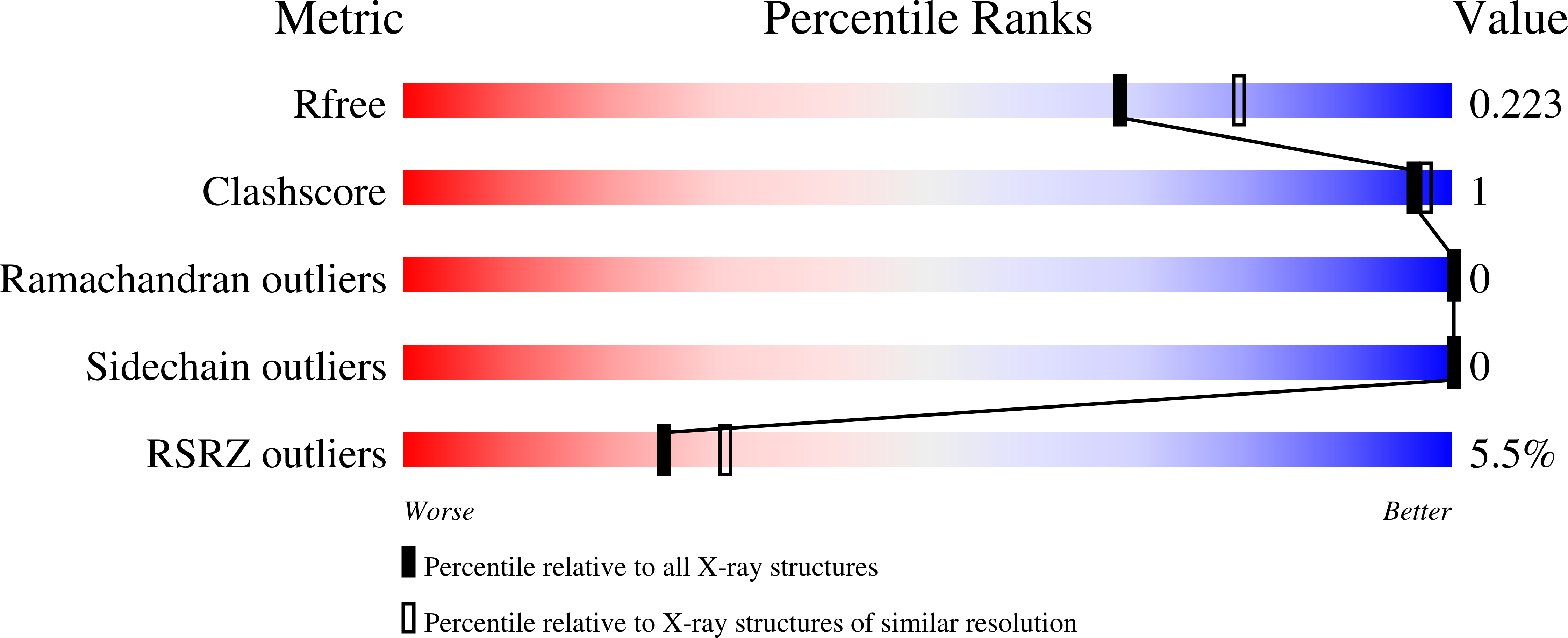
R-Value Free:
0.22
R-Value Work:
0.18
R-Value Observed:
0.18
Space Group:
I 41 2 2
Macromolecular Entities
Structures with similar UniProt ID
Protein Blast
Polymer Type:polypeptide(L)
Molecule:L-lactate dehydrogenase
Gene (Uniprot):ldh
Mutagens:Cter 6 histidine tag
Chain IDs:A
Chain Length:337
Number of Molecules:1
Biological Source:Cyanobacterium aponinum
Primary Citation
Deciphering Evolutionary Trajectories of Lactate Dehydrogenases Provides New Insights into Allostery.
Mol.Biol.Evol. 40 ? ? (2023)
PMID: 37797308 DOI: 10.1093/molbev/msad223

Abstact

Lactate dehydrogenase (LDH, EC.1.1.127) is an important enzyme engaged in the anaerobic metabolism of cells, catalyzing the conversion of pyruvate to lactate and NADH to NAD+. LDH is a relevant enzyme to investigate structure-function relationships. The present work provides the missing link in our understanding of the evolution of LDHs. This allows to explain (i) the various evolutionary origins of LDHs in eukaryotic cells and their further diversification and (ii) subtle phenotypic modifications with respect to their regulation capacity. We identified a group of cyanobacterial LDHs displaying eukaryotic-like LDH sequence features. The biochemical and structural characterization of Cyanobacterium aponinum LDH, taken as representative, unexpectedly revealed that it displays homotropic and heterotropic activation, typical of an allosteric enzyme, whereas it harbors a long N-terminal extension, a structural feature considered responsible for the lack of allosteric capacity in eukaryotic LDHs. Its crystallographic structure was solved in 2 different configurations typical of the R-active and T-inactive states encountered in allosteric LDHs. Structural comparisons coupled with our evolutionary analyses helped to identify 2 amino acid positions that could have had a major role in the attenuation and extinction of the allosteric activation in eukaryotic LDHs rather than the presence of the N-terminal extension. We tested this hypothesis by site-directed mutagenesis. The resulting C. aponinum LDH mutants displayed reduced allosteric capacity mimicking those encountered in plants and human LDHs. This study provides a new evolutionary scenario of LDHs that unifies descriptions of regulatory properties with structural and mutational patterns of these important enzymes.

Legend

Protein

Chemical

Disease

Primary Citation of related structures
Feedback Form
Name
Email
Institute
Feedback