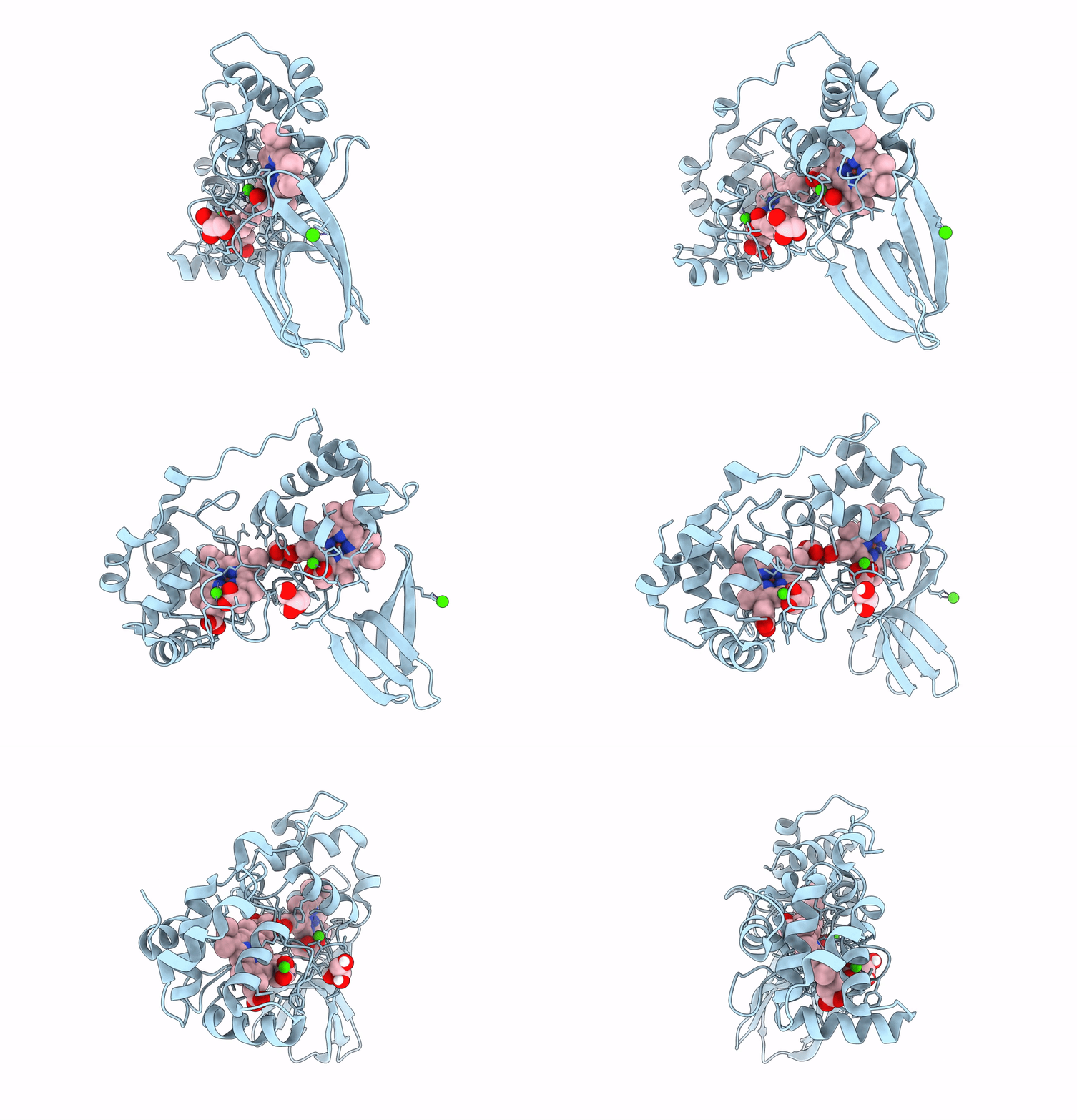
7zs1 image
Deposition Date 2022-05-05
Release Date 2023-05-17
Last Version Date 2025-01-22
Entry Detail
PDB ID:
7ZS1
Title:
Diheme cytochrome c Kustd1711 from Kuenenia stuttgartiensis, M292C mutant
Biological Source:
Source Organism:
Method Details:
Experimental Method:
Resolution:
1.70 Å
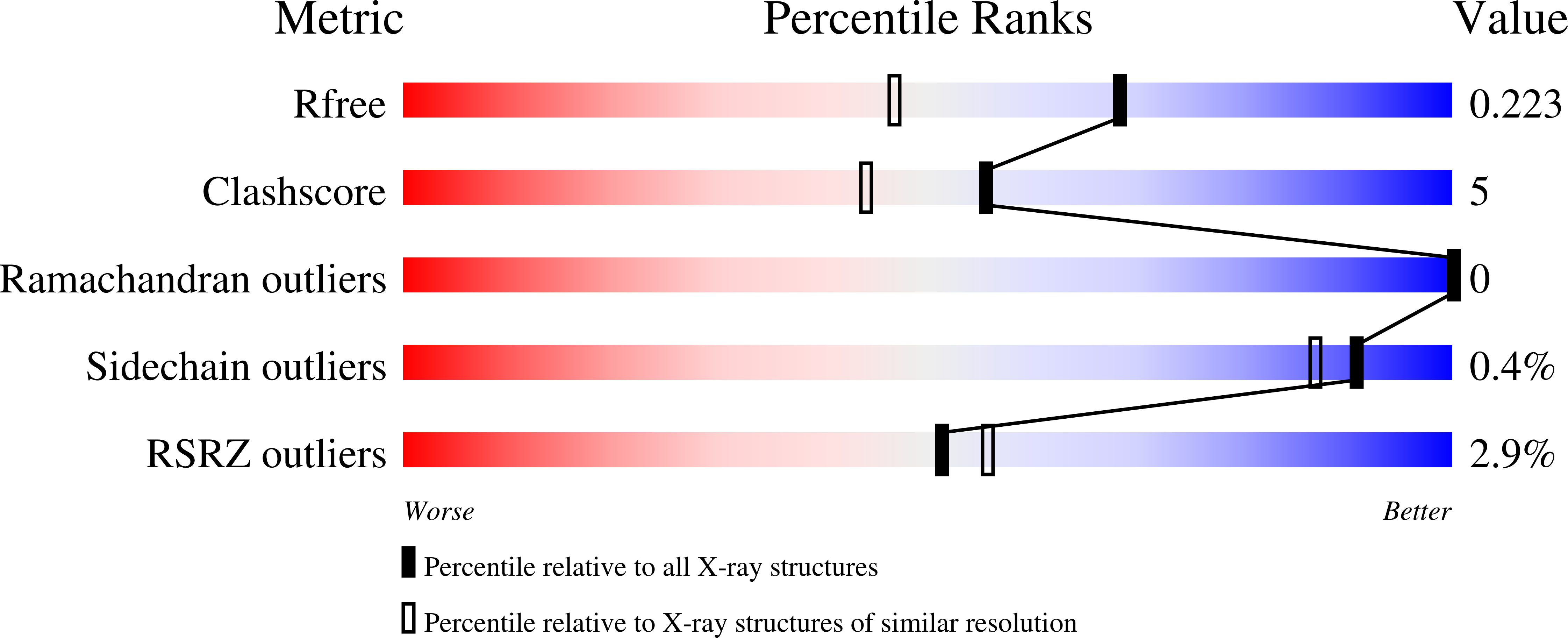
R-Value Free:
0.22
R-Value Work:
0.19
R-Value Observed:
0.19
Space Group:
P 21 21 2
Macromolecular Entities
Structures with similar UniProt ID
Protein Blast
Polymer Type:polypeptide(L)
Molecule:Hypothetical (Diheme) protein
Gene (Uniprot):KsCSTR_07890, KSMBR1_1466, kustd1711
Chain IDs:A
Chain Length:316
Number of Molecules:1
Biological Source:Candidatus Kuenenia
Primary Citation
Redox potential tuning by calcium ions in a novel c-type cytochrome from an anammox organism.
J.Biol.Chem. ? 108082 108082 (2024)
PMID: 39675707 DOI: 10.1016/j.jbc.2024.108082

Abstact

The electrochemical potentials of redox-active proteins need to be tuned accurately to the correct values for proper biological function. Here, we describe a diheme cytochrome c with high heme redox potentials of about +350 mV, despite having a large overall negative charge, which typically reduces redox potentials. High-resolution crystal structures, spectroelectrochemical measurements, and high-end computational methods show how this is achieved: each heme iron has a calcium cation positioned next to it at a distance of only 6.9 Å, raising their redox potentials by several hundred millivolts through electrostatic interaction. We suggest that this has evolved to provide the protein with a high redox potential despite its large negative surface charge, which it likely requires for interactions with redox partners.

Legend

Protein

Chemical

Disease

Primary Citation of related structures
Feedback Form
Name
Email
Institute
Feedback