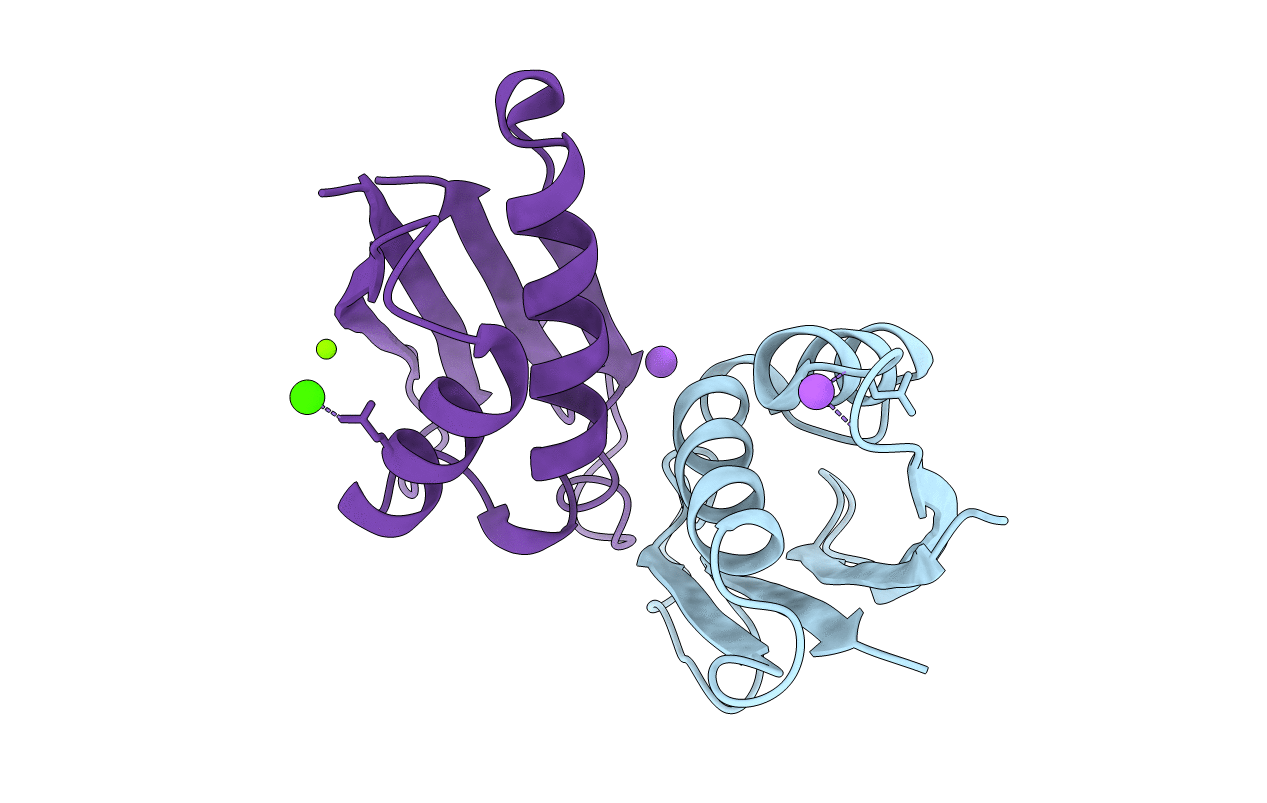
7o86 image
Deposition Date 2021-04-14
Release Date 2021-09-22
Last Version Date 2024-01-31
Entry Detail
PDB ID:
7O86
Title:
1.73A X-ray crystal structure of the conserved C-terminal (CCT) of human SPAK
Biological Source:
Source Organism:
Homo sapiens (Taxon ID: 9606)
Host Organism:
Method Details:
Experimental Method:
Resolution:
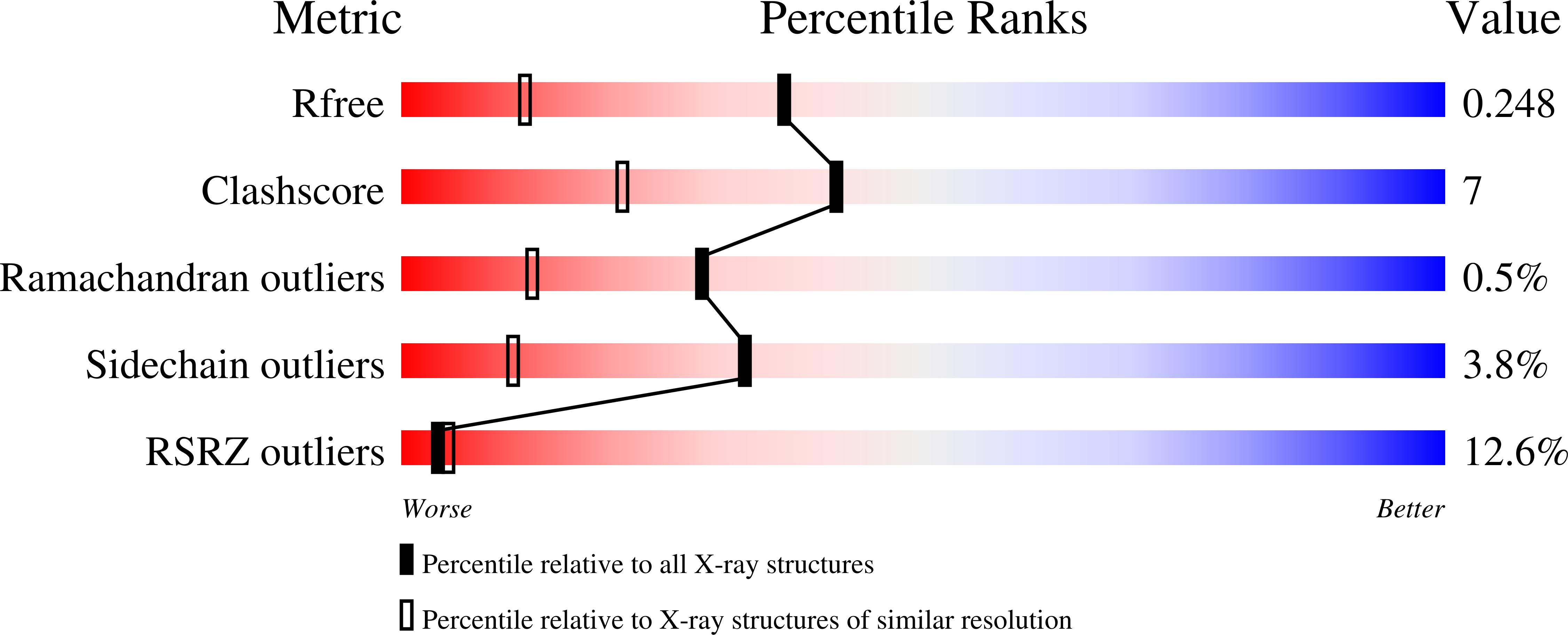
1.73 Å
R-Value Free:
0.23
R-Value Work:
0.19
R-Value Observed:
0.20
Space Group:
P 21 21 21
Macromolecular Entities
Structures with similar UniProt ID
Protein Blast
Polymer Type:polypeptide(L)
Molecule:STE20/SPS1-related proline-alanine-rich protein kinase
Gene (Uniprot):STK39
Chain IDs:A, B
Chain Length:106
Number of Molecules:2
Biological Source:Homo sapiens
Primary Citation
Structures of the Human SPAK and OSR1 Conserved C-Terminal (CCT) Domains.
Chembiochem 23 e202100441 e202100441 (2022)
PMID: 34726826 DOI: 10.1002/cbic.202100441

Abstact

STE20/SPS1-related proline/alanine-rich kinase (SPAK) and oxidative stress responsive 1 (OSR1) kinase are two serine/threonine protein kinases that regulate the function of ion co-transporters through phosphorylation. The highly conserved C-terminal (CCT) domains of SPAK and OSR1 bind to RFx[V/I] peptide sequences from their upstream 'With No Lysine Kinases (WNKs), facilitating their activation via phosphorylation. Thus, the inhibition of SPAK and OSR1 binding, via their CCT domains, to WNK kinases is a plausible strategy for inhibiting SPAK and OSR1 kinases. To facilitate structure-guided drug design of such inhibitors, we expressed and purified human SPAK and OSR1 CCT domains and solved their crystal structures. Interestingly, these crystal structures show a highly conserved primary pocket adjacent to a flexible secondary pocket. We also employed a biophysical strategy and determined the affinity of SPAK and OSR1 CCT domains to short peptides derived from WNK4 and NKCC1. Together, this work provides a platform that facilitates the design of CCT domain specific small molecule binders that inhibit SPAK- and OSR1-activation by WNK kinases, and these could be useful in treating hypertension and ischemic stroke.

Legend

Protein

Chemical

Disease

Primary Citation of related structures
Feedback Form
Name
Email
Institute
Feedback