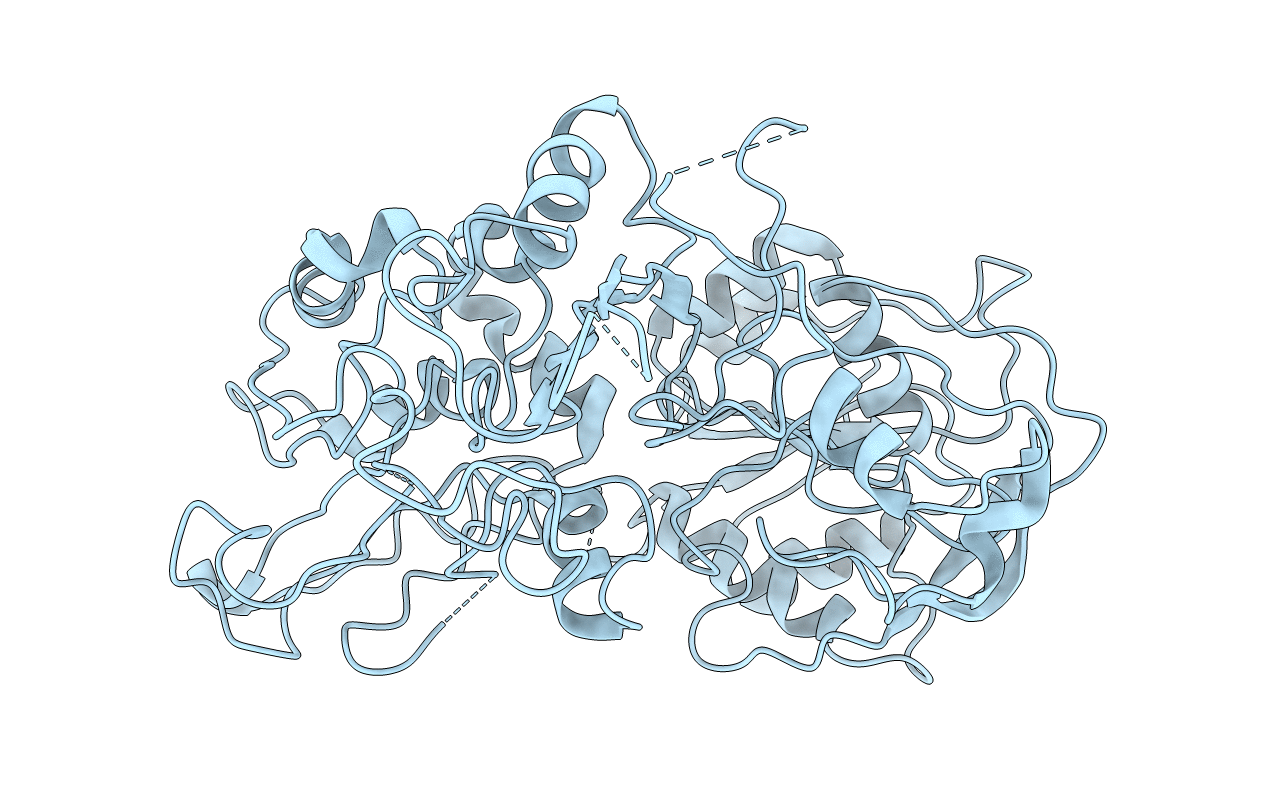
7ZU9 image
Deposition Date 2022-05-11
Release Date 2022-08-10
Last Version Date 2024-02-07
Entry Detail
PDB ID:
7ZU9
Keywords:
Title:
CRYSTAL STRUCTURE OF THE C89A_C113A GMP SYNTHETASE INACTIVE DOUBLE MUTANT FROM PLASMODIUM FALCIPARUM
Biological Source:
Source Organism:
Host Organism:
Method Details:
Experimental Method:
Resolution:
2.80 Å
R-Value Free:
0.31
R-Value Work:
0.27
R-Value Observed:
0.27
Space Group:
C 1 2 1

Macromolecular Entities
Structures with similar UniProt ID
Protein Blast
Polymer Type:polypeptide(L)
Molecule:Glutamine amidotransferase
Gene (Uniprot):GMPS
Mutagens:C89A and C113A
Chain IDs:A
Chain Length:568
Number of Molecules:1
Biological Source:Plasmodium falciparum 3D7
Primary Citation
Tertiary and Quaternary Structure Organization in GMP Synthetases: Implications for Catalysis.
Biomolecules 12 ? ? (2022)
PMID: 35883427 DOI: 10.3390/biom12070871

Abstact

Glutamine amidotransferases, enzymes that transfer nitrogen from Gln to various cellular metabolites, are modular, with the amidotransferase (GATase) domain hydrolyzing Gln, generating ammonia and the acceptor domain catalyzing the addition of nitrogen onto its cognate substrate. GMP synthetase (GMPS), an enzyme in the de novo purine nucleotide biosynthetic pathway, is a glutamine amidotransferase that catalyzes the synthesis of GMP from XMP. The reaction involves activation of XMP though adenylation by ATP in the ATP pyrophosphatase (ATPPase) active site, followed by channeling and attack of NH3 generated in the GATase pocket. This complex chemistry entails co-ordination of activity across the active sites, allosteric activation of the GATase domain to modulate Gln hydrolysis and channeling of ammonia from the GATase to the acceptor active site. Functional GMPS dimers associate through the dimerization domain. The crystal structure of the Gln-bound complex of Plasmodium falciparum GMPS (PfGMPS) for the first time revealed large-scale domain rotation to be associated with catalysis and leading to the juxtaposition of two otherwise spatially distal cysteinyl (C113/C337) residues. In this manuscript, we report on an unusual structural variation in the crystal structure of the C89A/C113A PfGMPS double mutant, wherein a larger degree of domain rotation has led to the dissociation of the dimeric structure. Furthermore, we report a hitherto overlooked signature motif tightly related to catalysis.

Legend

Protein

Chemical

Disease

Primary Citation of related structures
Feedback Form
Name
Email
Institute
Feedback