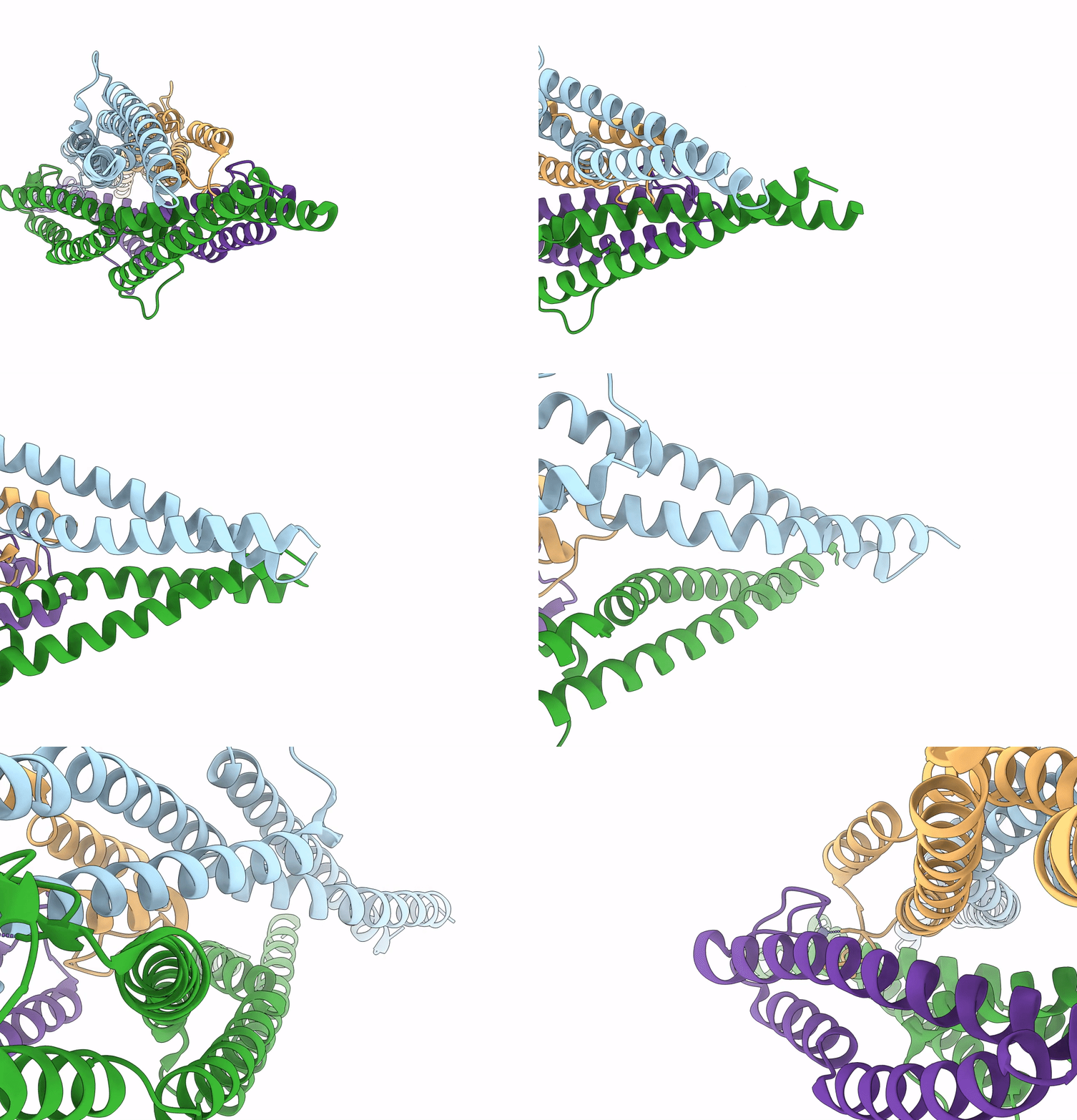
7ZQY image
Deposition Date 2022-05-03
Release Date 2022-12-28
Last Version Date 2024-05-01
Entry Detail
PDB ID:
7ZQY
Keywords:
Title:
Chaetomium thermophilum Rad50 Zn hook
Biological Source:
Source Organism:
Host Organism:
Method Details:
Experimental Method:
Resolution:
2.51 Å
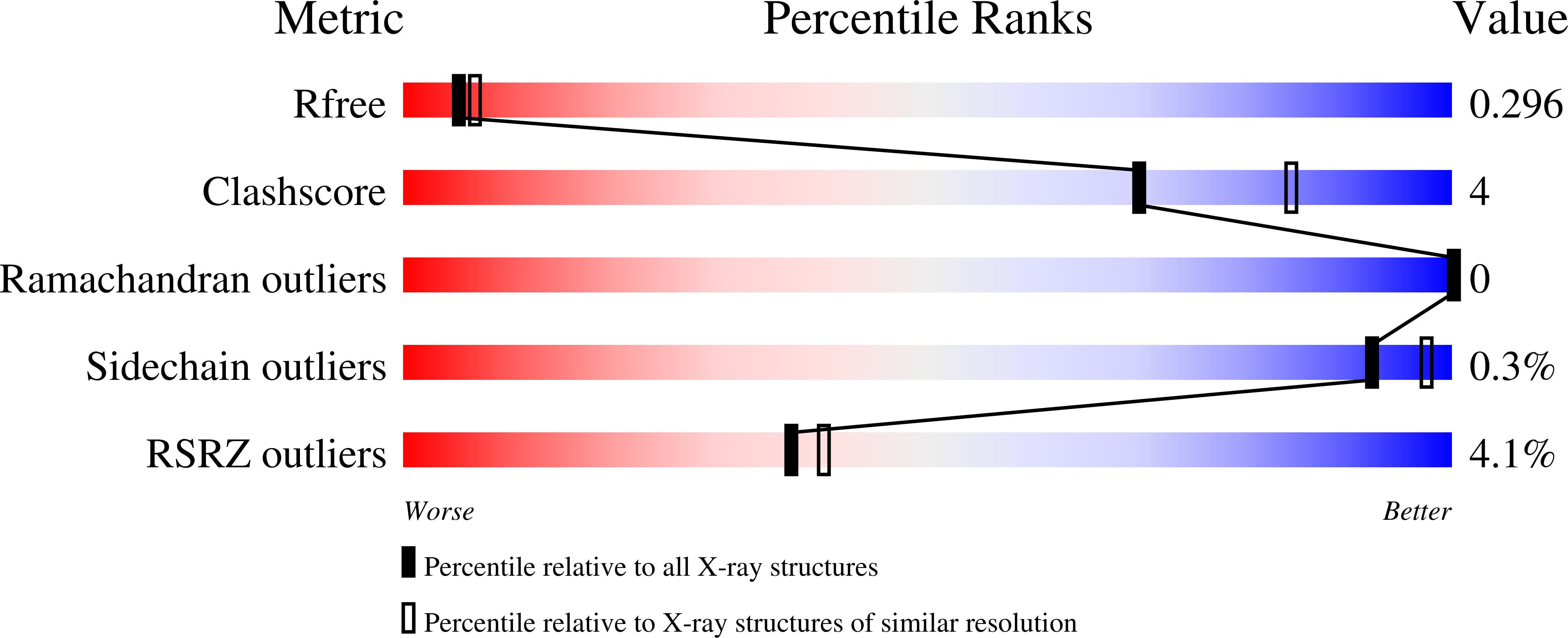
R-Value Free:
0.28
R-Value Work:
0.26
R-Value Observed:
0.26
Space Group:
P 1
Macromolecular Entities
Structures with similar UniProt ID
Protein Blast
Polymer Type:polypeptide(L)
Molecule:DH domain-containing protein
Gene (Uniprot):RAD50
Chain IDs:A, B, C, D
Chain Length:177
Number of Molecules:4
Biological Source:Thermochaetoides thermophila
Ligand Molecules
Primary Citation
Cryo-EM structure of the Mre11-Rad50-Nbs1 complex reveals the molecular mechanism of scaffolding functions.
Mol.Cell 83 167 185.e9 (2023)
PMID: 36577401 DOI: 10.1016/j.molcel.2022.12.003

Abstact

The DNA double-strand break repair complex Mre11-Rad50-Nbs1 (MRN) detects and nucleolytically processes DNA ends, activates the ATM kinase, and tethers DNA at break sites. How MRN can act both as nuclease and scaffold protein is not well understood. The cryo-EM structure of MRN from Chaetomium thermophilum reveals a 2:2:1 complex with a single Nbs1 wrapping around the autoinhibited Mre11 nuclease dimer. MRN has two DNA-binding modes, one ATP-dependent mode for loading onto DNA ends and one ATP-independent mode through Mre11's C terminus, suggesting how it may interact with DSBs and intact DNA. MRNs two 60-nm-long coiled-coil domains form a linear rod structure, the apex of which is assembled by the two joined zinc-hook motifs. Apices from two MRN complexes can further dimerize, forming 120-nm spanning MRN-MRN structures. Our results illustrate the architecture of MRN and suggest how it mechanistically integrates catalytic and tethering functions.

Legend

Protein

Chemical

Disease

Primary Citation of related structures
Feedback Form
Name
Email
Institute
Feedback