7ZPG image
Deposition Date 2022-04-27
Release Date 2022-09-21
Last Version Date 2024-05-01
Entry Detail
PDB ID:
7ZPG
Keywords:
Title:
CRYSTAL STRUCTURE OF HUMAN MONOGLYCERIDE LIPASE WITH LIGAND
Biological Source:
Source Organism:
Homo sapiens (Taxon ID: 9606)
Host Organism:
Method Details:
Experimental Method:
Resolution:
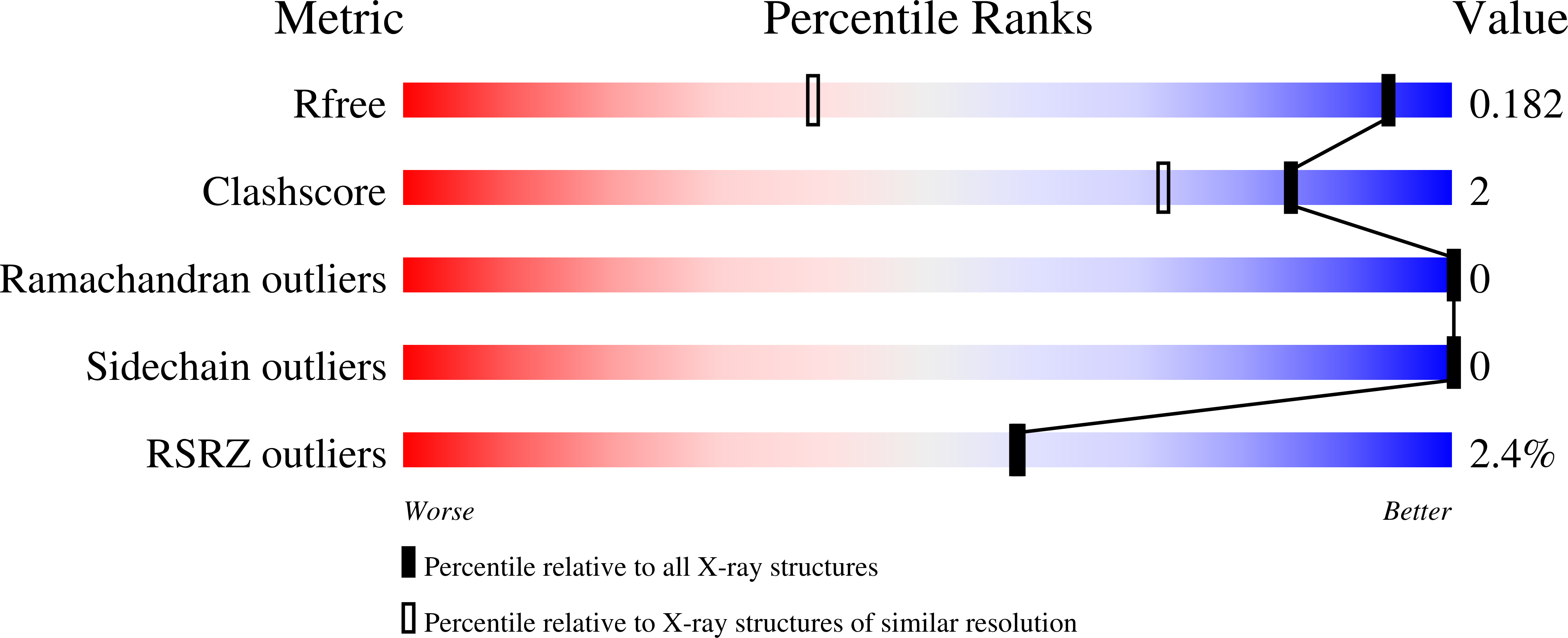
1.16 Å
R-Value Free:
0.18
R-Value Work:
0.17
R-Value Observed:
0.17
Space Group:
C 2 2 21
Macromolecular Entities
Structures with similar UniProt ID
Protein Blast
Polymer Type:polypeptide(L)
Molecule:Monoglyceride lipase
Gene (Uniprot):MGLL
Chain IDs:A
Chain Length:323
Number of Molecules:1
Biological Source:Homo sapiens
Ligand Molecules
Primary Citation
A potent and selective inhibitor for the modulation of MAGL activity in the neurovasculature.
Plos One 17 e0268590 e0268590 (2022)
PMID: 36084029 DOI: 10.1371/journal.pone.0268590

Abstact

Chronic inflammation and blood-brain barrier dysfunction are key pathological hallmarks of neurological disorders such as multiple sclerosis, Alzheimer's disease and Parkinson's disease. Major drivers of these pathologies include pro-inflammatory stimuli such as prostaglandins, which are produced in the central nervous system by the oxidation of arachidonic acid in a reaction catalyzed by the cyclooxygenases COX1 and COX2. Monoacylglycerol lipase hydrolyzes the endocannabinoid signaling lipid 2-arachidonyl glycerol, enhancing local pools of arachidonic acid in the brain and leading to cyclooxygenase-mediated prostaglandin production and neuroinflammation. Monoacylglycerol lipase inhibitors were recently shown to act as effective anti-inflammatory modulators, increasing 2-arachidonyl glycerol levels while reducing levels of arachidonic acid and prostaglandins, including PGE2 and PGD2. In this study, we characterized a novel, highly selective, potent and reversible monoacylglycerol lipase inhibitor (MAGLi 432) in a mouse model of lipopolysaccharide-induced blood-brain barrier permeability and in both human and mouse cells of the neurovascular unit: brain microvascular endothelial cells, pericytes and astrocytes. We confirmed the expression of monoacylglycerol lipase in specific neurovascular unit cells in vitro, with pericytes showing the highest expression level and activity. However, MAGLi 432 did not ameliorate lipopolysaccharide-induced blood-brain barrier permeability in vivo or reduce the production of pro-inflammatory cytokines in the brain. Our data confirm monoacylglycerol lipase expression in mouse and human cells of the neurovascular unit and provide the basis for further cell-specific analysis of MAGLi 432 in the context of blood-brain barrier dysfunction caused by inflammatory insults.

Legend

Protein

Chemical

Disease

Primary Citation of related structures
Feedback Form
Name
Email
Institute
Feedback